“ Beyond the church, by the roadside, were the dwelling-houses. Some of them were a tangle of rafters mixed up with heaps of brick and miscellaneous rubbish—stoves, pots and pans, chair-legs, pictures, bedding, boxes, and all kinds of household articles. Others had been dispersed around. Others seemed to have been tipped up bodily, so that all their contents had been spilt into the street, and then to have been dropped back again with such an impact that they had collapsed on their own foundations. ”
Pile dwelling
Definition and stakes
The theme of “pile dwelling” has been addressed by authors such as Lewis Falley Allen, Rene Bache, Harriet Martineau, Various and G. Hartwig. It is often associated with terms like house, building, cottage, apartment and room.
Quotes about “pile dwelling”
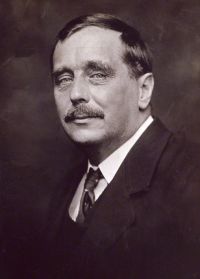 Herbert George Wells,
The Works of H. G. Wells
(1924)
“ It has been my lot recently to follow in detail the process of building a private dwelling-house, and the solemn succession of deliberate, respectable, perfectly satisfied men who have contributed each so many days of his life to this accumulation of weak compromises, has enormously intensified my constitutional amazement at my fellow-creatures. The chief ingredient in this particular house-wall is the common brick, burnt earth, and but one step from the handfuls of clay of the ancestral mud hut, small in size and permeable to damp. ”
 Lewis Falley Allen,
Rural Architecture
“ The whole stands in open grounds, and may be separated from each other by enclosures, as convenience or fancy may direct.The roofs of all the buildings are broad and sweeping, well protecting the walls from storm and frosts, as well as the glaring influences of the sun, and combining that comfortable idea of shelter and repose so grateful in a well-conditioned country house. It is true, that the dwelling might be more extensive in room, and the purposes of luxury enlarged ”
Lewis Falley Allen,
Rural Architecture
“ Nothing has been attempted for appearance, solely, beyond what is necessary and proper in the dwelling of a planter of good estate, who wants his domestic affairs well regulated, and his family, and servants duly provided with convenient accommodation. The form of the main dwelling is nearly square, upright, with two full stories, giving ample area of room and ventilation, together with that appropriate indulgence to ease which the enervating warmth of a southern climate renders necessary. ”
“ I repeat, let no man think I have disclosed the weaknesses of the neighborhood, nor rashly open that closet which contains the secret skeleton of his dwelling. My carpets have been altered to fit all sized odd-shaped apartments from parallelopiped to hexagons. Much of my furniture has been distributed among my former dwellings. These limbs have stretched upon uncarpeted floors, or have been let down suddenly from imperfectly established bedsteads. I have dined in the parlor and slept in the back kitchen. ”
 William Dean Howells,
Short Stories and Essays (from Literature and Life…
“ The inexperienced in such matters may be surprised, and if they have hearts they may be grieved, to learn that the fire-proof storage of the furniture of the average house would equal the rent of a very comfortable domicile in a small town, or a farm by which a family’s living can be earned, with a decent dwelling in which it can be sheltered. ”
 Harriet Martineau,
Once a Week, Series 1, Volume VI…
(1861-1862)
“ The most comfortable known dwelling is understood to be the well-constructed log-house, which is built in a week, is free from damp, easily kept clean, cool in summer, and warm in winter, stable and unreverberating, and more durable than the generality of brick dwellings. ”
kniaz Petr Alekseevich Kropotkin, The Conquest of Bread
“ Come to such a place this evening; all the neighbourhood will be there; we are going to redistribute the dwelling-houses. If you are tired of your slum-garret, come and choose one of the flats of five rooms that are to be disposed of, and when you have once moved in you shall stay, never fear. The people are up in arms, and he who would venture to evict you will have to answer to them. ”
 James Fenimore Cooper,
The Pilot: A Tale of the Sea
“ If any accident should bring you in sight of the dwelling, you will know our rooms by the three smoky vanes that whiffle about its pointed roof, and also, by the windows in that story being occasionally open. Opposite to our windows, at the distance of half a mile, is a retired unfrequented ruin, concealed, in a great measure, from observation by a wood, and affording none of the best accommodations, it is true, but shelter in some of its vaults or apartments. ”
Lewis Falley Allen,
Rural Architecture
“ Ground, in the country, being the cheapest item which the farmer can devote to building purposes, his object should be to spread over, rather than to go deeply into it, or climb high in the air above it. We repudiate cellar kitchens, or under-ground rooms for house work, altogether, as being little better than a nuisance—dark, damp, unhealthy, inconvenient, and expensive. The several rooms of a farm dwelling house should be compact in arrangement, and contiguous as may be to the principally-occupied apartments. Such arrangement is cheaper, more convenient, and labor-saving ”
Rene Bache, The Black Cat (1895)
“ It frequently happens, of course, that a building is put up on ground previously occupied by another dwelling. You must understand, though I might have supposed you knew it, that, while the material parts of a tenement may be removed at any time, its astral shell remains in perpetuity. ”
Ernest Young, The Kingdom of the Yellow Robe
“ These floating structures are comparatively clean, cool, and comfortable, and possess one great advantage over a fixed dwelling upon land, in the fact that, provided the house is the property of the tenant, he may remove to a new locality without any of the inconvenience of an ordinary removal, by the simple process of shifting at the same time both his habitation and all that it contains. ”
 Richard Jefferies,
The Toilers of the Field
“ Except visitors, no one comes to the front door or passes unpleasantly close to the windows. Labourers and others all go to the courtyard at the back. The other plans upon which farmsteads are built are far from affording similar privacy. There are some which, in fact, are nothing but an enlarged and somewhat elongated cottage, with the dwelling-rooms at one end and the dairy and offices at the other, and the bedrooms over both. Everybody and everything brought to or taken from the place has to pass before the dwelling-room windows—a most unpleasant arrangement. ”
Charles F. G. Masterman, The condition of England (1909)
“ One type of dwelling, indeed, is found to be more or less prevalent through all the urban aggregation. That is the small four or five-roomed cottage, containing on the ground floor a front parlour, a kitchen, and a scullery built as an addition to the main part [101] of the house; and on the upper floor the bedrooms, the third bedroom in the five-roomed house being built over the scullery. And in such dwelling-places, if anywhere, is concealed the secret of the future of the people of England. ”
 Maturin M. Ballou,
Due South; or, Cuba Past and Present
“ The dwelling-houses are universally so constructed as to form an open square in the centre, which constitutes the only yard or court that is attached. The house is divided into a living-room, a store-room, chambers, and stable, these all upon one floor, while the family vehicle blocks up in part the only entrance, which is used in common by horses, ladies, slaves, and gentlemen callers. ”
George Vivian Poore, The Dwelling House
“ Those who in the present day put closets and waste-pipes within the four walls which enclose the living-rooms are not abreast of modern civilisation. The simplest plan for effecting my object in the present case seemed to be to throw an arch across the entrance to the stable yard, to place the ventilated passage on the top of the arch, and the closet on the far side of it, on a level with the first floor, and with a capacious vault or 'catch' beneath it. ”
Various, Blackwood's Edinburgh Magazine…
“ It soon became apparent, on more particularly noting the character of the locality, that, by availing himself of the shelter afforded by one or two neighbouring cottages, a person might approach obliquely, without being noticed from the dwelling itself, right up to the end wall of the wood-house, where the rubbish was lying on the ground. ”
James Hamilton Fyfe, Once a Week (1863)
“ The majority of the dwelling-houses are villas of moderate size, plain and elegant, with none of the elaborate coxcombry of what your cockney calls his cottage ornée. They are the refuge of government clerks and other officials—men with fixed salaries of not too liberal a figure, who have been driven from their old quarters on a third floor in the heart of the capital by the Emperor’s demolitions and buildings. The new mansions are too dear for them. ”
Jr. Horatio Alger, Tony, the Hero; Or, A Brave Boy's Adventures with a Tramp
“ As they went over the house they found a trap-door opening into a small vault, which had evidently once been used for the family cellar—for the ancient dwelling was rather cramped in size and accommodations—and, boy-like, they all went down into the moldy hole. ”
 George Sand,
Les beaux messieurs de Bois-Doré Vol…
(1901)
“ The dwelling-houses, which were filthy and pestilential in the Marche and the Bourbonnais, were, at least in our neighborhood, stoutly built and healthy, as is proved by a large number of old country houses of the sixteenth and seventeenth centuries, which are still standing and easily recognizable by their vast tiled roofs, their windows framed with stone cut in the shape of prisms, and their attic windows surmounted by great sheaves of grain moulded in terra cotta. ”
 Lewis Henry Morgan,
Houses and House-Life of the American Aborigines
“ A dwelling of average capacity has four or five rooms, though in some there are as many as eight. Some of the larger apartments are paved with flagging, but the floors are usually plastered with clay, like the walls. Both are kept in constant repair by the women, who mix a reddish-brown earth with water to the proper consistency and then spread it by hand, always laying it in semicircles. ”
George Vivian Poore, The Dwelling House
“ On the top floor the staircase ends in an unventilated cul-de-sac formed by four bedrooms, a dark 'box-room,' and a water-closet which is wedged in between two bedrooms.This house has, if one may say so, been over-plumbered. There are five closets, five sinks, and a bath-waste (eleven trapped waste-pipes) for a maximum of twelve people. The closet on the second floor, and the one in the basement between the servants' hall and kitchen, should be abolished, and the fixed bath on the second floor should be removed. A bath-room wants light and air, and should always be against an outside wall. ”
 Alice Morse Earle,
Sabbath in Puritan New England
“ The first meeting-houses were often built in the valleys, in the meadow lands; for the dwelling-houses must be clustered around them, since the colonists were ordered by law to build their new homes within half a mile of the meeting-house. ”
Dale Carnegie, The Art of Public Speaking
“ They that soar too high, often fall hard, making a low and level Dwelling preferable. The tallest Trees are most in the Power of the Winds, and Ambitious Men of the Blasts of Fortune. Buildings have need of a good Foundation, that lie so much exposed to the Weather. ”
 John Ruskin,
Selections From the Works of John Ruskin
“ I would have, then, our ordinary dwelling-houses built to last, and built to be lovely; as rich and full of pleasantness as may be, within and without; with what degree of likeness to each other in style and manner, I will say presently, under another head; [164] but, at all events, with such differences as might suit and express each man's character and occupation, and partly his history. ”
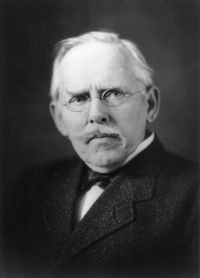 Jacob A. Riis,
The Battle with the Slum
“ The roof and eaves gutters leak, rendering the apartments wet. The two apartments on the first floor consist of one room each, in which the tenants are compelled to cook, eat, and sleep. The back walls are defective, the house wet and damp, and unfit for human habitation. It robs the surrounding houses of light. ”
 Jesse Lynch Williams,
Back to the Town
(1915)
“ I will merely say that such problems as furnaces, gardens, garages, snow-shovelling, taking down screens and putting up storm-windows, erecting glass inclosures and laying plank walks, do not enter into the truly simple life of the modern apartment house, where the water-pipes never freeze and you have no roof to leak. ”
Henry James, A Little Tour of France
“ I took a particular fancy to the roof, high, steep, old, with its slope of bluish slate, and the way the weather-worn chimneys seemed to grow out of it—living things in a deep soil. The single defect of the house is the blankness and bareness of its walls, which have none of that delicate parasitic deposit that agrees so well—to the eye—with the surface of old dwellings. ”
Eliot Gregory, Worldly Ways & Byways
“ On being taken the other day through a large and costly residence, with the thoroughness that only the owner of a new house has the cruelty to inflict on his victims, not allowing them to pass a closet or an electric bell without having its particular use and convenience explained, forcing them to look up coal-slides, and down air-shafts and to visit every secret place, from the cellar to the fire-escape, I noticed that a peculiar arrangement of the rooms repeated itself on each floor, and several times on a floor. ”
 Rudyard Kipling,
France at War: On the Frontier of Civilization
“ At first the horror of wrecked apartment-houses and big shops laid open makes one waste energy in anger. It is not seemly that rooms should be torn out of the sides of buildings as one tears the soft heart out of English bread; that villa roofs should lie across iron gates of private garages, or that drawing-room doors should flap alone and disconnected between two emptinesses of twisted girders. ”
Ernest Young, Peeps at Many Lands: Siam — Chapter 11 Houses (1908)
“ Through the holes that are left, the air comes up from below, keeping the rooms cool, but at the same time filling them with most unpleasant odours. A great deal of the ordinary domestic refuse is got rid of by the simple plan of pushing it through the holes in the floor, and leaving it to rot in the space between the house and the ground. ”
 Anne Hollingsworth Wharton,
In Château Land
“ These underground dwellings, burrowed out like rabbits' warrens, with earth floors, no ventilation except a chimney cut in the tufa roof to let the smoke out, and only the one window and door in the front to admit light and air, seem utterly cheerless and uncomfortable, despite our chauffeur's assurances that they have many advantages. ”
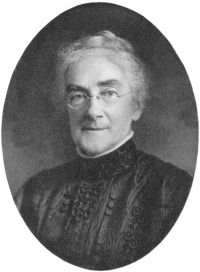 Ellen H. Richards,
The Cost of Shelter
“ The family homestead in the country set low on the ground with damp walls and dark cellar, one of a cluster of rambling buildings; with a well, the only water supply, in close proximity to various sources of pollution. These houses are for the most part now abandoned to the foreigner, who uses them for the primitive purposes of shelter without the ennobling intellectual life they once harbored. Now and then a grandson rescues the old place, brings water from a spring or brook, digs a drain, lets light into the cellar, and builds on a kitchen and dining-room. ”
Fullerton L. Waldo, Good housing that pays (1917)
“ The houses round about—not Association property—have ruinous shacks at the rear that hold broken boxes and barrels, superannuated chairs and bedding and broken-down baby carriages. There is no clear space to sit under a shade-tree, or plant morning-glories, or put a sandpile. One longs to see the workmen who are paving the Octavia Hill courtyard below turn their attention to the whole vicinity. ”
 Helen Hunt Jackson,
Mercy Philbrick's Choice
“ Be that as it may, the little, clumsy, meaningless jog ruined the house,--gave it an uncomfortably awry look, like a dining-table awkwardly pieced out for an emergency by another table a little too narrow.The house had been for several years occupied by families of mill operatives, and had gradually acquired that indefinable, but unmistakable tenement-house look, which not even neatness and good repair can wholly banish from a house. The orchard behind the house had so run down for want of care that it looked more like a tangle of wild trees than like any thing which had ever been an orchard. ”
 Henry David Thoreau,
Walden
(1854)
“ My dwelling was small, and I could hardly entertain an echo in it; but it seemed larger for being a single apartment and remote from neighbors. All the attractions of a house were concentrated in one room; it was kitchen, chamber, parlor, and keeping-room; and whatever satisfaction parent or child, master or servant, derive from living in a house, I enjoyed it all. Cato says, the master of a family (patremfamilias) must have in his rustic villa “cellam oleariam, vinariam, dolia multa, uti lubeat caritatem expectare, et rei, et virtuti, et gloriæ erit,” that is, ”
Related terms
Authors who wrote about “pile dwelling”
Lewis Falley AllenRene BacheHarriet MartineauVariousG. HartwigHerbert George Wells Bret HarteWilliam Dean Howellskniaz Petr Alekseevich Kropotkin
 H. G. WellsF. A. VoigtJames Fenimore CooperAnonymousErnest YoungRichard JefferiesCharles F. G. MastermanMaturin M. BallouJames Hamilton FyfeJr. Horatio AlgerGeorge Sand
