Polygenism

Definition and stakes

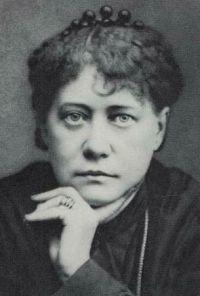
Portrait of H. P. Blavatsky H. P. Blavatsky,  The Secret Doctrine, Vol. 2 of 4

“ And this is diametrically opposed to the now generally accepted theories of evolution and the descent of man from an animal ancestor.
Let us, giving to Cæsar what is Cæsar's, examine, first of all, the chances for the polygenetic theory among the men of Science.
Now the majority of the Darwinian Evolutionists incline to a polygenetic explanation of the origin of races. On this particular question, however, as in many other cases, Scientists are at sixes and sevens; they agree to disagree.
Does man descend from one single couple or from several groups—monogenism or polygenism?
”
Source: Gutenberg

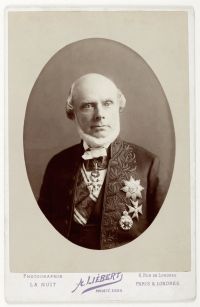
Portrait of A. de Quatrefages A. de Quatrefages,  The human species (1879)

“ The question of acclimatisation for the polygenist is reduced to a small number of facts almost exclusively modern, human populations being in his eyes naturally formed for living under the conditions of life in which they were born.
The question of the formation of races disappears entirely for the polygenist, since the different species admitted by him have appeared with all the characters which distinguish the different human groups. At most he has to concern himself with the results of some modern crossings which are too evident to be denied.
”
Source: Gutenberg

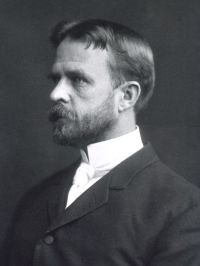
Portrait of Paul Broca Paul Broca,  On the Phenomena of Hybridity in the Genus Homo

“ They found, however, but few imitators; and many polygenists are to this day content to assign a distinct origin to each of the five principal trunks, which constitute for the monogenists the five fundamental races, but which are to us only natural groups formed by the union of races or species of the same type. They continue also very often to use the term race to designate the ensemble of all individuals of each group, adopting thus by a sort of transaction the language of those whose system they reject ”
Source: Gutenberg

Get perspective with Kwize: daily news enlightened by great literature