Polyp (biology)

Definition and stakes

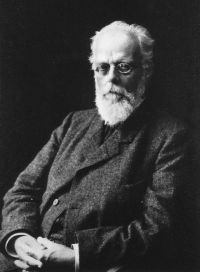
Portrait of Edward Alfred Minchin Edward Alfred Minchin,  1911 Encyclopædia Britannica (1911)

“ The polyp (hydropolyp) is of simple structure, typically much longer than broad, without ectodermal oesophagus or mesenteries, such as are seen in the anthopolyp (see article Anthozoa) ; the mouth is usually raised above the peristome on a short conical elevation or hypostome; the ectoderm is without cilia. (2) With very few exceptions, the polyp is not the only type of individual that occurs, but alternates in the life-cycle of a given species, with a distinct type, the medusa (q.v.) ”

Source: Wikisource

Agnes Giberne,  The mighty deep (1902)

“ Some few even among coral-polyps live individual lives, but the greater number follow the community-system. This must always be looked upon as an inferior way of existence.
The most usual way in which polyps increase is by “budding”—not unlike the growth of a plant by buds. A small lump appears on one side of the parent, which increases fast in size, develops a mouth and tentacles, and by-and-by gives birth itself to other buds. The increase of numbers is enormous. One polyp may produce in a short time thousands or even tens of thousands of descendants.
”
Source: Gutenberg

Portrait of Edward Alfred Minchin Edward Alfred Minchin,  1911 Encyclopædia Britannica (1911)

“ The Hertwigs when they discovered the endoderm-lamella showed on morphological grounds that polyp and medusa are independent types, each produced by modification in different directions of a more primitive type represented in development by the actinula-stage. If a polyp, such as Hydra, be regarded simply as a sessile actinula, we must certainly consider the polyp to be the older type, and it may be pointed out that in the Anthozoa only polyp-individuals occur. ”
Source: Wikisource

Get perspective with Kwize: daily news enlightened by great literature