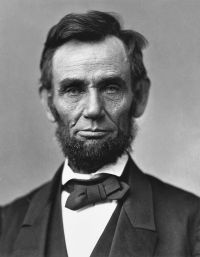
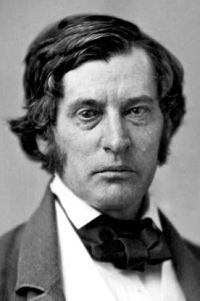
Popular sovereignty is the principle that political authority originates from the collective will of the people, who serve as the ultimate source of legitimacy for governance. This idea, grounded in philosophers such as Rousseau and Hobbes, highlights the social contract and the populace's right to influence laws and leadership. Thinkers like Carl Schurz described it as the authority of all individuals united to express shared intent, while Abraham Lincoln associated it with personal freedom and limits on government power.
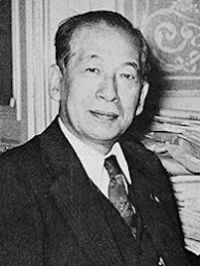
Tokujirō Kanamori observed its development as an acknowledgment of the people’s role, even as national unity remained intact. The theme’s complexity is clear in its diverse applications, ranging from democratic systems to disputed historical instances like the Kansas-Nebraska Act, demonstrating how popular sovereignty includes both idealistic principles and practical, often conflicting, realities.
 Carl Schurz,
Speeches of Carl Schurz
(1865)
Carl Schurz,
Speeches of Carl Schurz
(1865)