“ These, though professing no devotion to the interest of others, and little that could be called public spirit, did nevertheless understand that in return for the high rank, the great power, and the liberal remuneration they would enjoy, they were bound to consider primarily the public interest in the performance of their functions—the right of society to just or at least to carefully legal judgment, and diligent efficient administration. ”
Public power
Definition and stakes
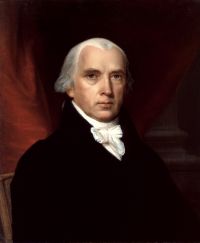
The theme of “public power” has been addressed by authors such as Daniel Webster, Alexander Hamilton, Jonathan Elliot, James Madison and Junius. It is often associated with terms like democracy, government, state, legislature and rights.
Quotes about “public power”
 John Stuart Mill,
Considerations on Representative Government
(1861)
John Stuart Mill,
Considerations on Representative Government
(1861)
“ The supposition is, that absolute power, in the hands of an eminent individual, would insure a virtuous and intelligent performance of all the duties of government. Good laws would be established and enforced, bad laws would be reformed; the best men would be placed in all situations of trust; justice would be as well administered, the public burdens would be as light and as judiciously imposed, every branch of administration would be as purely and as intelligently conducted as the circumstances of the country and its degree of intellectual and moral cultivation would admit. ”
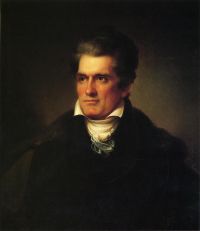 John C. Calhoun,
Works of John C. Calhoun
(1854)
John C. Calhoun,
Works of John C. Calhoun
(1854)
“ Every enlargement of the powers of the government which may be made, every measure which may be adopted to aggrandize the dominant combination which may control the government for the time, must necessarily enlarge, in a greater or less degree, his patronage and influence. With their enlargement, his power to control the other departments of the government, and the organs of public opinion, and through them, the community at large, must increase, and in the same degree. ”
 E. E. Brown,
The Life and Public Services of James A. Garfield
E. E. Brown,
The Life and Public Services of James A. Garfield
“ The most alarming feature of our situation is the fact, that so many citizens of high character and solid judgment pay but little attention to the sources of political power, to the selection of those who shall make their laws.... ”
 Jean-Jacques Rousseau,
Emile, or On Education
(1762)
Jean-Jacques Rousseau,
Emile, or On Education
(1762)
“ On the other side, the greatness of the state gives the depositaries of public authority greater temptations and additional means of abusing that authority, so that the more power is required by the government to control the people, the more power should there be in the sovereign to control the government. ”
Matthew Henry, Commentary on the Whole Bible… (1700s)
“ That government involves a man in a great deal both of toil and care; he that is promoted over the trees must go up and down for them, and make himself a perfect drudge to business. [2.] That those who are preferred to places of public trust and power must resolve to forego all their private interests and advantages, and sacrifice them to the good of the community. ”
A. H. J. Greenidge, Roman Public Life
“ But the fundamental principles that lie behind the personal power in a state are too vast in their scope to apply immediately to the needs of human life. They require interpretation by means of legislative and executive authorities ”
“ In politics it is almost a triviality to say that public opinion now rules the world. The only power deserving the name is that of masses, and of governments while they make themselves the organ of the tendencies and instincts of masses. ”
Jonathan Elliot, Debates in the Several State Conventions on the Adoption of the Federal Constitution (1907)
“ Has philosophy suggested, has experience taught, that such a government ought not to be trusted with every thing necessary for the good of society? Sir, when you have divided and nicely balanced the departments of government; when you have strongly connected the virtue of your rulers with their interest; when, in short, you have rendered your system as perfect as human forms can be,—you must place confidence; you must give power. ”
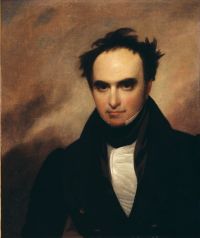 Daniel Webster,
The Great Speeches and Orations of Daniel Webster
(1879)
Daniel Webster,
The Great Speeches and Orations of Daniel Webster
(1879)
“ Having constituted the government, and declared its powers, the people have further said, that, since somebody must decide on the extent of these powers, the government shall itself decide; subject, always, like other popular governments, to its responsibility to the people. And now, Sir, I repeat, how is it that a State legislature acquires any power to interfere? ”
 Herbert Spencer,
Popular Science Monthly
(1881)
Herbert Spencer,
Popular Science Monthly
(1881)
“ Though the habit, general in past times, of regarding the powers of governments as inherent, has been, by the growth of popular institutions, a good deal qualified; yet, even now, there is no clear apprehension of the fact that governments are not themselves powerful, but are the instrumentalities of a power. ”
Roger Williams, The Bloudy Tenent of Persecution for Cause of Conscience Discussed and Mr…
“ But from this grant I infer, as before hath been touched, that the sovereign, original, and foundation of civil power, lies in the people—whom they must needs mean by the civil power distinct from the government set up: and if so, that a people may erect and establish what form of government seems to them most meet for their civil condition. ”
“ Every function superadded to those already exercised by the government, causes its influence over hopes and fears to be more widely diffused, and converts, more and more, the active and ambitious part of the public into hangers-on of the government, or of some party which aims at becoming the government. ”
 Theodore Parker,
Speeches, Addresses, and Occasional Sermons…
Theodore Parker,
Speeches, Addresses, and Occasional Sermons…
“ Here, all comes from the people, and the people have to take care of the government, meaning thereby the men in official [Pg 338] power; have to furnish them with ideas, and tell them what application to make thereof. There all comes from the government. ”
Daniel Webster,
Daniel Webster for Young Americans
“ A popular government of this extent, it was evident, could be framed only by carrying into full effect the principle of representation or of delegated power; and the world was to see whether society could, by the strength of this principle, maintain its own peace and good government, carry forward its own great interests, and conduct itself to political renown and glory. ”
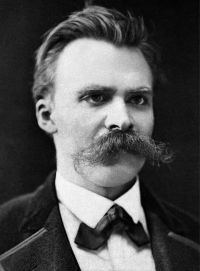 Friedrich Wilhelm Nietzsche,
Human, All-Too-Human: A Book for Free Spirits…
Friedrich Wilhelm Nietzsche,
Human, All-Too-Human: A Book for Free Spirits…
“ New and Old Conceptions of Government.—To draw such a distinction between Government and people as if two separate spheres of power, a stronger and higher, and a weaker and lower, negotiated and came to terms with each other, is a remnant of transmitted political sentiment, which still accurately represents the historic establishment of the conditions of power in most States. ”
Various, Blackwood's Edinburgh Magazine…
“ Take, for instance, the exercise of political power. Is a state free in proportion to the number of its subjects who are admitted to rank among its citizens, or to the degree in which its recognised citizens are invested with political authority? ”
Daniel Webster,
The Great Speeches and Orations of Daniel Webster
“ Let us endeavor to comprehend in all its magnitude, and to feel in all its importance, the part assigned to us in the great drama of human affairs. We are placed at the head of the system of representative and popular governments. Thus far our example shows that such governments are compatible, not only with respectability and power, but with repose, with peace, with security of personal rights, with good laws, and a just administration. ”
 Carl Schurz,
Speeches, correspondence and political papers of Carl Schurz
(1913)
Carl Schurz,
Speeches, correspondence and political papers of Carl Schurz
(1913)
“ The contending political parties in a republic should be such in point of mental and moral constitution and capability that the government may be intrusted to either without serious apprehension for the safety of the public interest. ”
Daniel Webster,
The Great Speeches and Orations of Daniel Webster
“ First and chief, no man makes a question, that the people are the source of all political power. Government is instituted for their good, and its members are their agents and servants. He who would argue against this must argue without an adversary. And who thinks there is any peculiar merit in asserting a doctrine like this, in the midst of twenty millions of people, when nineteen millions nine hundred and ninety-nine thousand nine hundred and ninety-nine of them hold it, as well as himself? ”
Carl Schurz,
Speeches, correspondence and political papers of Carl Schurz
(1913)
“ On the other hand, so clear and strong a proclamation of your purposes as will convince everybody of your inflexible determination to remain true to them will at once secure you the confidence of the best part of the people and evoke so strong a support of public opinion as to render the displeasure of politicians comparatively harmless. Moreover, you will in any event have to choose between controlling the politicians and being controlled by them. ”
John C. Calhoun,
Works of John C. Calhoun
(1854)
“ In the government of the concurrent majority, on the contrary, the same cause which prevents such strife, as the means of obtaining power, and which makes it the interest of each portion to conciliate and promote the interests of the others, would exert a powerful influence towards purifying and elevating the character of the government and the people, morally, as well as politically. ”
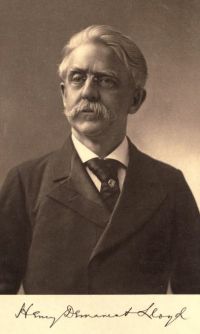 Henry Demarest Lloyd,
Wealth against commonwealth
Henry Demarest Lloyd,
Wealth against commonwealth
“ Government, therefore—municipal, State, national—is passing into the hands of these two classes, specialized for the functions of power by their appetite for the fruits of power. The power of citizenship is relinquished by those who do not and cannot know how to exercise it to those who can and do—by those who have a livelihood to make to those who make politics their livelihood. ”
 William Wordsworth,
The Prose Works of William Wordsworth
William Wordsworth,
The Prose Works of William Wordsworth
“ From these hints, if pursued further, might be demonstrated the expediency of the whole people 'intruding themselves' on the office of legislation, and the wisdom of putting into force what they may claim as a right. But government is divided into two parts—the legislative and executive. The executive power you would lodge in the hands of an individual. Before we inquire into the propriety of this measure, it will be necessary to state the proper objects of the executive power in governments where the principle of universal representation is admitted. ”
Jonathan Elliot, Debates in the Several State Conventions on the Adoption of the Federal Constitution (1907)
“ These very instances prove what I contend for. They prove that in whatever direction the popular weight leans, the current of power will flow; wherever the popular attachments lie, there will rest the political superiority. ”
 Hippolyte Taine,
History of English Literature Volume 2…
Hippolyte Taine,
History of English Literature Volume 2…
“ As to the share of power, authority, direction, which each individual ought to have in the management of the state, that I must deny to be amongst the direct original rights of man in civil society."—Ibid. ”
John Stuart Mill,
Considerations on Representative Government
“ We have from the first affirmed, and unvaryingly kept in view, the coequal importance of two great requisites of government—responsibility to those for whose benefit political power ought to be, and always professes to be, employed ”
Alexander Hamilton, The Federalist (1863, Dawson edition)
“ It at all times betrayed an ignorance of the true springs by which human conduct is actuated, and belied the original inducements to the establishment of civil power. Why has government been instituted at all? ”
Junius, Letters of Junius (1772)
“ Their purpose, however, is equally answered, by pushing forward this unhappy figure, and forcing it to bear the odium of measures, which they in reality direct. Without immediately appearing to govern, they possess the power, and distribute the emoluments of government as they think proper. ”
Alexander Hamilton, The Federalist Papers
“ To secure the public good and private rights against the danger of such a faction, and at the same time to preserve the spirit and the form of popular government, is then the great object to which our inquiries are directed. Let me add that it is the great desideratum by which this form of government can be rescued from the opprobrium under which it has so long labored, and be recommended to the esteem and adoption of mankind. ”
by the Socialist Party of Great Britain, Should the Working Class support the Liberal Party… (1911)
“ This is a very brief examination, but it will be sufficient to show that society to-day, with its rules and regulations, is shaped by those who are in possession of political power, and to sum the matter up, the possession of the means and the power of manipulating the forces I have mentioned, constitutes the essential operation of political power, and rests in the hands of Parliament. ”
John Stuart Mill,
Considerations on Representative Government
(1861)
“ A place where every interest and shade of opinion in the country can have its cause even passionately pleaded, in the face of the government and of all other interests and opinions, can compel them to listen, and either comply, or state clearly why they do not, is in itself, if it answered no other purpose, one of the most important political institutions that can exist any where, and one of the foremost benefits of free government. ”
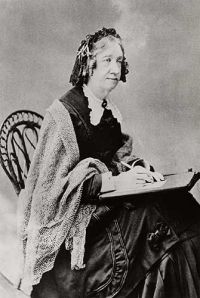 Catharine Esther Beecher,
An Essay on Slavery and Abolitionism
Catharine Esther Beecher,
An Essay on Slavery and Abolitionism
“ But the form of our government is such, that every measure that bears upon the public [112] or private interest of every citizen, is decided by public sentiment. All laws and regulations in civil, or religious, or social concerns, are decided by the majority of votes. And the present is a time when every doctrine, every principle, and every practice which influences the happiness of man, either in this, or in a future life, is under discussion. ”
 Edmund Burke,
A Letter to a Noble Lord
(1796)
Edmund Burke,
A Letter to a Noble Lord
(1796)
“ I have ever abhorred, since the first dawn of my understanding to this its obscure twilight, all the operations of opinion, fancy, inclination, and will, in the affairs of government, where only a sovereign reason, paramount to all forms of legislation and administration, should dictate. Government is made for the very purpose of opposing that reason to will and caprice, in the reformers or in the reformed, in the governors or in the governed, in kings, in senates, or in people. ”
 ʻAbdu'l-Bahá,
The Secret of Divine Civilization
ʻAbdu'l-Bahá,
The Secret of Divine Civilization
“ The focal center of the executive power is the government, while that of the legislative is the learned—and if this latter great support and pillar should prove defective, how is it conceivable that the state should stand? ”
John Stuart Mill,
Considerations on Representative Government
(1861)
“ The other negative defect which may reside in a government, that of not bringing into sufficient exercise the individual faculties, moral, intellectual, and active, of the people, has been exhibited generally in setting forth the distinctive mischiefs of despotism. As between one form of popular government and another, the advantage in this respect lies with that which most widely diffuses the exercise of public functions ”
Carl Schurz,
Speeches, correspondence and political papers of Carl Schurz
(1913)
“ Many a time you have given the people to understand that you regarded public office as a public trust. When you oppose what is generally looked upon as demanded by the public voice as well as the public interest, it must be expected that you have weighty reasons for it—reasons corresponding with your character and station. ”
 William Lyon Mackenzie King,
The Four Parties to Industry
(1919)
William Lyon Mackenzie King,
The Four Parties to Industry
(1919)
“ Government within the State has widened down from autocratic authority to authority broad-based upon a people's will. The expansion of the principle of representation is responsible for that development. ”
Herbert Spencer,
Popular Science Monthly
(1873)
“ A popular government, just made more popular, has established, without the slightest hindrance, a law and an official organization that treat with contempt the essential principles of constitutional rule. ”
Daniel Webster,
The Bunker Hill Monument
(1825)
“ Regarding government as an institution for the public good, they demand a knowledge of its operations, and a participation in its exercise. A call for the representative system, wherever it is not enjoyed, and where there is already intelligence enough to estimate its value, is perseveringly made. ”
Max Farrand, The Records of the Federal Convention of 1787 (1911)
“ In our complex system of polity, the public will, as a source of authority, may be the will of the people as composing one nation; or the will of the States in their distinct and independent capacities; or the federal will, as viewed, for example, through the Presidential electors, representing, in a certain proportion, both the nation and the States. ”
 Leslie Stephen,
The English Utilitarians, Volume 2…
Leslie Stephen,
The English Utilitarians, Volume 2…
“ The power of protection, says Mill, following the old theory, may be intrusted to the whole community, to a few, or to one; that is, we may have a democracy, an aristocracy, or a monarchy. A democracy, or direct government of all by all, is for the ordinary reasons pronounced impracticable. ”
 Joseph Clayton,
The Rise of the Democracy
Joseph Clayton,
The Rise of the Democracy
“ As long, then, as we can count on honesty, goodwill, and intelligence in our streets and market-places, as we can to-day, mankind does well to elect its representatives to council and Parliament and proclaim democracy—"Government of the people, by the people, for the people"—as the proper government for mankind. ”
Daniel Webster,
Select Speeches of Daniel Webster…
“ This government, Sir, is the independent offspring of the popular will. It is not the creature of State legislatures; nay, more, if the whole truth must be told, the people brought it into existence, established it, and have hitherto supported it, for the very purpose, amongst others, of imposing certain salutary restraints on State sovereignties. ”