Red ant

Definition and stakes

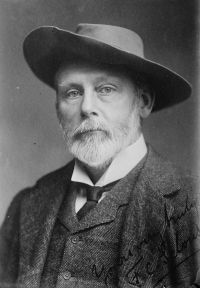
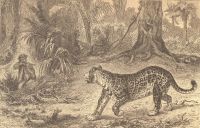
Portrait of Mayne Reid Mayne Reid,  Afloat in the Forest; Or, A Voyage among the Tree-Tops

“ Although an ant of ordinary size,—both in this and general appearance not differing greatly from the common red ant of England,—its bite and sting together are more dreaded than those of any other species. It crawls upon the limbs of the pedestrian who passes near its haunt, and, clutching his skin in its sharp pincer-like jaws, with a sudden twitch of the tail it inserts its venomous sting upon the instant, holding on after it has made the wound, and so tenaciously that it is often torn to pieces while being detached. It will even go out of its way to attack any one standing near. ”
Source: Gutenberg

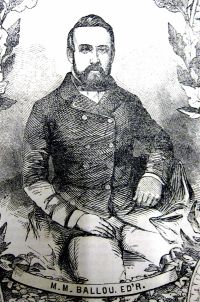
Portrait of Maturin M. Ballou Maturin M. Ballou,  Due South; or, Cuba Past and Present

“ There is an insidious and much dreaded insect with which the planters have to contend on the sugar and coffee plantations, but which is not met with in the cities; namely, the red ant, a much more formidable foe than any one not acquainted with its ravages would believe. These little creatures possess a power altogether out of proportion to their insignificant size, eating into the heart of the hardest wood, neither cedar, iron-wood, nor even lignum-vitæ being proof against them. They are not seen at the surface, as they never touch the outer shell of the wood whose heart they are consuming. ”
Source: Gutenberg

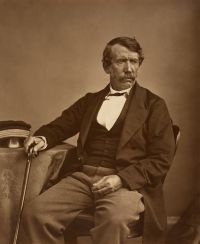
Portrait of David Livingstone David Livingstone,  Missionary Travels and Researches in South Africa

“ They perform a most important part in the economy of nature by burying vegetable matter as quickly beneath the soil as the ferocious red ant does dead animal substances. The white ant keeps generally out of sight, and works under galleries constructed by night to screen them from the observation of birds. At some given signal, however, I never could ascertain what, they rush out by hundreds, and the sound of their mandibles cutting grass into lengths may be heard like a gentle wind murmuring through the leaves of the trees. ”
Source: Gutenberg

Get perspective with Kwize: daily news enlightened by great literature