Reflecting telescope

Definition and stakes

by the United States government,  Chapters (2002)

“ A reflecting telescope collects light by means of a concave mirror; a refracting telescope by means of a lens or system of lenses. A Cassegrainian telescope is a reflecting telescope in which the immergent light is reflected from the main mirror onto a secondary mirror, where it is reflected through a hole in the main mirror to an eyepiece; a Newtonian telescope is a reflecting telescope in which the immergent beam is reflected from the main mirror onto a small plane mirror, and from there to an eyepiece at the side of the telescope. ”
Source: Wikisource

Sir Norman Lockyer,  Stargazing: Past and Present

“ These are in the main the four methods of arranging reflecting telescopes—the Gregorian, the Cassegrainian, the Newtonian, and the Herschelian.
In order to make large reflectors perfect—large telescopes of short focus, because that is one of the requirements of the modern astronomer—we have to battle against spherical aberration.
We have already seen that the power of substances to refract light differs for different colours, and we have seen the varied refraction of different parts of the spectrum, and the necessity of making lenses achromatic.
”
Source: Gutenberg

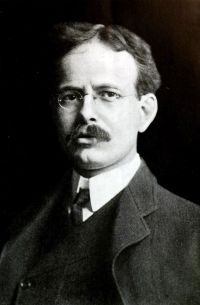
Portrait of George Ellery Hale George Ellery Hale,  The New Heavens

“ From the images of the brighter stars rays of light project in straight lines, but these also are instrumental phenomena, due to diffraction of light by the steel bars that support the small mirror in the tube of reflecting telescopes. In a word, the stars are so remote that the largest and most perfect telescopes show them only as extremely minute needle-points of light, without any trace of their true disks. ”
Source: Gutenberg

Get perspective with Kwize: daily news enlightened by great literature