“ Then the angles AOP and BOP will be found equal. These are called the angles of incidence and reflection respectively. The law of reflection is therefore stated: The angle of reflection is equal to the angle of incidence. These angles are in the same plane, that of the paper. This law applies in all cases of reflection of light. It is similar to the law of reflection of sound (Art. 326.) Important Topics1. Photometry, law of intensity, candle power, foot-candle. ”
Reflection (physics)
Definition and stakes
The theme of “reflection (physics)” has been addressed by authors such as Bertrand Russell, Richard Feynman, Arthur Eddington, Thomas Reid and William John Macquorn Rankine. It is often associated with terms like light, refraction, mirror, glass and color.
Quotes about “reflection (physics)”
“ Wherever the Rays which come from all the Points of any Object meet again in so many Points after they have been made to converge by Reflection or Refraction, there they will make a Picture of the Object upon any white Body on which they fall. ”
“ It is equally clear that an element exactly perpendicular to A B will be reflected from the hypothenuse face flatwise as it were, and will emerge without its ends being reversed so that the net effect of this single reflection is to invert the image without reversing it laterally at the same time. ”
 John Knox,
Proceedings of the Royal Society of London
(1833)
“ If either of the surfaces in contact be slightly curved, so as to be a portion of a large sphere, then rings of colours observed by Newton are seen, and are found to arise from reflection at the surfaces of contact, as is proved by their being intercepted by the middle shadow of the wire. ”
Henry Pemberton, A View of Sir Isaac Newton's Philosophy
“ Upon the whole, our great author concludes from some of the experiments made by him, that the reason why all transparent bodies refract part of the light incident upon them, and reflect another part, is, because some of the light, when it comes to the surface of the body, is in a fit of easy transmission, and some part of it in a fit of easy reflection ”
John William Strutt, 1911 Encyclopædia Britannica (1911)
“ According to mechanical principles the second reflection involves a change of sign, equivalent to a gain or loss of half an undulation. When a series of waves constituting any particular coloured light is reflected from an infinitely thin plate, the two partial reflections are in absolute discordance and, if of equal intensity, must give on superposition complete darkness. With the aid of this principle the sequence of colours in Newton’s rings is explained in much the same way as that of interference fringes (above, § 5) . ”
Carleton Washburne, Common Science
“ But to reflect light directly and to give a clear image, the surface the light strikes must be extremely smooth, just as a tennis court must be fairly smooth to make a tennis ball rebound accurately. Any surface that is smooth enough will act like a mirror, although naturally, if it lets most of the light go through, it will not reflect as well as if it sends all the light back. A pane of glass is very smooth, and you can see yourself in it, especially if there is not much light coming through the glass from the other side to mix up with your reflection. ”
 Thomas Dick,
The Practical Astronomer
“ When light impinges, or falls, upon a polished flat surface, rather more than the half of it is reflected, or thrown back in a direction similar to that of its approach; that is to say, if it fall perpendicularly on the polished surface, it will be perpendicularly reflected; but if it fall obliquely, it will be reflected with the same obliquity. Hence, the following fundamental law, regarding the reflection of light, has been deduced both from experiment and mathematical demonstration, namely, that the angle of reflection is, in all cases, exactly equal to the angle of incidence. ”
 Catharine Esther Beecher,
American Woman's Home: Or, Principles of Domestic Science…
“ Another principle is Reflection, by which heat radiated to a surface is turned back from it when not absorbed or allowed to pass through; just as a ball rebounds from a wall; just as sound is thrown back from a hill, making echo; just as rays of light are reflected from a mirror. And, as with light, the rays of heat are always reflected from a surface in an angle exactly corresponding to the direction in which it strikes that surface. ”
William Garnett, Heroes of Science: Physicists
“ The laws of reflection were readily explained, being the same as for a perfectly elastic ball; the laws of refraction admitted of very simple explanation, by supposing that the particles [220] of the denser medium exert a greater attraction on the particles of light than those of the rarer medium, but that this attraction acts only through very short distances, so that when the light-corpuscle is at a sensible distance from the surface, it is attracted equally all round, and moves as though there were no force acting upon it. ”
 James E. Gunn,
The Gravity Business
“ When light is polarized by passing through crystals or by reflection or refraction at non-metallic surfaces, the paths of the vibrations are still perpendicular to the ray, but they're in straight lines, circles or ellipses. ”
Fulgence Marion, The wonders of optics (1869)
“ Continuing our experiment, we shall find that when the candle passes the principal focus so as to be between it and the mirror, the reflected rays first become parallel and then divergent, and cannot consequently produce any focus beyond the mirror, but are reflected in the way shown in fig. 20. In experimenting on the plane mirror, we imagined we saw the object at a certain distance behind it; the same thing happens when we see ourselves reflected in a concave mirror, and the particular point at which we suppose we see our reflection is called the virtual focus. ”
Garrett Putman Serviss, Astronomy in a nutshell (1912)
“ By refraction is meant the property possessed by every transparent medium of bending, under particular circumstances, the rays of light which enter it out of their original course. The science of physics teaches us that if a ray of light passes from any transparent medium into another which is denser, and if the path of this ray is not perpendicular to the surface of the second medium, it will be turned from its original course in such a way as to make it more nearly perpendicular. ”
Popular Science Monthly (1873)
“ The lectures will embrace the phenomena and laws of light: reflection, refraction, analysis, synthesis, the doctrine of colors, and the extension of radiant action in both directions, beyond the light-giving rays into the region of invisible action. Then will follow the principles of spectrum analysis, the polarization of light, the phenomena of crystallization, the action of crystals upon light, the chromatic phenomena of polarized light, and the parallel phenomena of light and radiant heat. ”
 Leslie Stephen,
Dictionary of National Biography…
(1894)
“ To avoid dispute and make this hypothesis general, let every man take his fancy. Fifthly, it is to be supposed that light and æther mutually act upon one another.’ It is from this action that reflection and refraction came about. To explain colour Newton supposes that the rays of light impinging on a reflecting surface excite vibrations of various ‘bignesses’ (waves of different length, we should say) , and these, transmitted along the nerves to the brain, affect the sense with various colours according to their ‘bigness,’ the biggest with red, the least with violet. ”
 Sir Oliver Lodge,
Raymond; or, Life and Death
“ But attention may be more usefully directed to the extravagantly gratuitous guess involved in hypothesis 3. As a minor point, it is not even carefully worded; for entities which cannot be expressed in terms of matter and motion are common enough without going outside the domain of physics. Light, for instance, and Electricity, have not yet proved amenable, and do not appear likely to be amenable, to purely dynamical theory. ”
 Bertrand Russell,
The A B C of Relativity
(1925)
“ After working through whole strings of equations, in which the symbols stand for things whose intrinsic nature can never be known to us, he arrives at last at a result which can be interpreted in terms of our own perceptions, and utilized to bring about desired effects in our own lives. What we know about matter, abstract and schematic as it is, is enough, in principle, to tell us the rules according to which it produces perceptions and feelings in ourselves; and it is upon these rules that the practical uses of physics depend. ”
William Jackson, The Philosophy of Natural Theology
“ We observe, for instance, in his chapter on Sensation (p. 236 seq.) that all light-waves are the same in kind of movement, but differ in size as widely as the ripples on a sea-beach (round which happy children play) differ from the vast Atlantic ship-engulfing billows sixty or a hundred feet apart. All these undulations are similar in respect of reflection, refraction, interference, diffraction, and polarisation, as well as in their production of heat. [124] Now, it is the interpretation of such movements into its own language by which our eye gives us the sensation of colour. ”
Clive M. Countryman, Heat-Its Role in Wildland Fire… (1975)
“ Reflection of light is essential to the visual perception of substances. We could not see a substance if it did not reflect light—unless it is warm enough to emit radiation in the visible wavelengths. Selective reflection of light wavelengths determines the apparent color of a substance; a substance has a certain color because that wavelength is being reflected and the others absorbed. ”
Various, Astounding Stories of Super-Science January 1931
“ If, however, the observer would place himself inside a hollow sphere of glass so perfectly transparent as to be invisible, would not the refraction he would observe be taken by him to be the refraction of air when in reality it would be the combined refraction of the glass sphere and the air around him? ”
Worthington Hooker, Science for the School and Family…
“ The action of a concave mirror upon light may be illustrated by Fig. 230. If parallel rays, as represented, strike upon the mirror they will, in their reflection, be made to converge, or come together, at the focus, a. But suppose the light comes from this focus, the rays of course diverging, or going away from each other; then the rays, as reflected, will be parallel. If the light or object be nearer to the mirror than the focus, and the rays of course be more diverging, then the effect of the mirror will be to lessen the divergence when the rays are reflected. ”
Bertrand Russell,
Philosophy
(1927)
“ On coming in contact with the human body, the energy in the light-wave takes new forms, but there is still causal continuity. At last it reaches the brain, and there one of its constituent events is what we call a visual sensation. This visual sensation is popularly called seeing the object from149 which the light-waves started—or from which they were reflected if the object was not self-luminous.Thus what is called a perception is only connected with its object through the laws of physics. Its relation to the object is causal and mathematical ”
“ Reflexibility of Rays, is their Disposition to be reflected or turned back into the same Medium from any other Medium upon whose Surface they fall. And Rays are more or less reflexible, which are turned back more or less easily. As if Light pass out of a Glass into Air, and by being inclined more and more to the common Surface of the Glass and Air, begins at length to be totally reflected by that Surface; those sorts of Rays which at like Incidences are reflected most copiously, or by inclining the Rays begin soonest to be totally reflected, are most reflexible. ”
Richard Glazebrook, James Clerk Maxwell and Modern Physics
“ The changes of direction which light undergoes in passing from one medium to another are identical with the deviations of the path of a particle in moving through a narrow space in which intense forces act. This analogy, which extends only to the direction, and not to the velocity of motion, was long believed to be the true explanation of the refraction of light;150 and we still find it useful in the solution of certain problems, in which we employ it without danger as an artificial method. ”
“ And in general we find by other Experiments, that when the Rays which differ in Refrangibility are separated from one another, and any one Sort of them is considered apart, the Colour of the Light which they compose cannot be changed by any Refraction or Reflexion whatever, as it ought to be were Colours nothing else than Modifications of Light caused by Refractions, and Reflexions, and Shadows. ”
 William Whewell,
Astronomy and General Physics Considered with Reference to Natural Theology
“ Reflexion and refraction are therefore the essential and indispensable properties of light; and so far as we can understand, it appears that it was necessary that light should possess such properties, in order that it might form a medium of communication between man and the external world. ”
Edwin E. Slosson, Major Prophets of To-Day
“ The reflector therefore recoils like the cannon, but where is the ball if light is an immaterial wave motion? To be sure, if the ray of light strikes some planet out in space, it would give it an impulse equal and opposite to that originally imparted to the reflector on our earth. ”
“ XIV. Those Surfaces of transparent Bodies, which if the Ray be in a Fit of Refraction do refract it most strongly, if the Ray be in a Fit of Reflexion do reflect it most easily.For we shewed above, in Prop. 8. that the cause of Reflexion is not the impinging of Light on the solid impervious parts of Bodies, but some other power by which those solid parts act on Light at a distance. We shewed also in Prop. 9. that Bodies reflect and refract Light by one and the same power, variously exercised in various circumstances ”
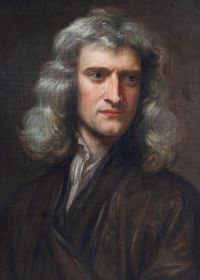 Isaac Newton,
Opticks (2nd Ed) — The First Book…
(1704)
“ Mathematicians usually consider the Rays of Light to be Lines reaching from the luminous Body to the Body illuminated, and the refraction of those Rays to be the bending or breaking of those lines in their passing out of one Medium into another. ”
Lucien Poincaré, The New Physics and Its Evolution
“ If we wished to represent to ourselves, by the mechanical properties of a medium filling the whole of the universe, all luminous, electric, and gravitation phenomena, we should be led to attribute to this medium very strange and almost contradictory characteristics ”
Isaac Newton,
../../
(1671)
“ And I saw by the variation of those places, that the light, tending to that end of the Image, towards which the refraction of the first Prisme was made, did in the second Prisme suffer a Refraction considerably greater then the light tending to the other end. And so the true cause of the length of that Image was detected to be no other, then that Light consists of Rays differently refrangible, which, without any respect to a difference in their incidence, were, according to their degrees of refrangibility, transmitted towards divers parts of the wall. ”
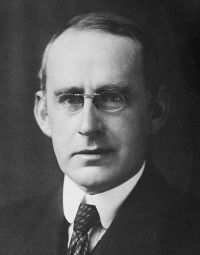 Sir Arthur Stanley Eddington,
The nature of the physical world
(1928)
“ The method of identification is the same. It is calculated that electromagnetic waves will have just those properties which light is observed to have; so too it is calculated that the ten coefficients of curvature have just those properties which energy, momentum and stress are observed to have. We refer here to physical properties only. No physical theory is expected to explain why there is a particular kind of image in our minds associated with light, nor why a conception of substance has arisen in our minds in connection with those parts of the world containing mass. ”
Marcus J. Martin, Wireless Transmission of Photographs
“ All liquid and solid bodies that are sufficiently transparent to allow light rays to pass through them possess the power of bending or refracting the rays, the degree of refraction, as already explained, depending upon the nature of the body. ”
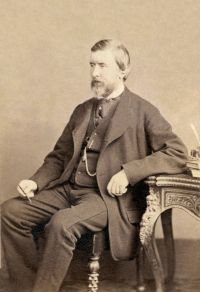 John Henry Pepper,
The Boy's Playbook of Science
“ When light passes out of a rare into a dense medium, as from air into water, the angle of incidence is greater than the angle of refraction. And when light passes from a dense into a rare medium, as out of water into air, the reverse takes place, and the angle of incidence is smaller than the angle of refraction. ”
 James Clerk Maxwell,
A Dynamical Theory of the Electromagnetic Field
(1865)
“ We have therefore some reason to believe, from the phenomena of light and heat, that there is an ethereal medium filling space and permeating bodies, capable of being set in motion and of transmitting that motion from one part to another, and of communicating that motion to gross matter so as to heat it and affect it in various ways. ”
Related terms
Authors who wrote about “reflection (physics)”
Bertrand Russell Richard Feynman
 Arthur Eddington
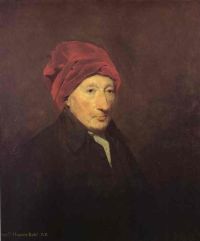 Thomas Reid
 William John Macquorn RankineThomas D. CopeCarleton WashburneThomas DickCatharine Esther BeecherJohn William StruttLouis BellIsaac NewtonJohn KnoxJames E. GunnWilliam GarnettHenry PembertonLeslie StephenGarrett Putman ServissFulgence MarionBertha May Clark
