“ Perhaps everybody had departed from the Hall save one aged and deaf retainer—he knew, from historical novels which he had glanced at in his youth, that in every Hall that respected itself an aged and deaf retainer was invariably left solitary during the absences of the noble owner. ”
Retainer
Definition and stakes
A retainer, historically, refers to an individual bound to a noble or lord, often functioning as a servant, soldier, or counselor, embodying the hierarchical structure of feudalism. Authors have examined this concept from various perspectives: Francis Douce described retainers as semi-independent attendants adorned with symbolic regalia, while Harriet Martineau illustrated their marginalized position within noble households.
In literature, Dorothy Canfield Fisher portrayed retainers as narrative challenges, and Shakespeare’s King Lear highlighted their loyal yet aging presence. These depictions emphasize the retainer’s dual function as both a social institution and a literary tool, reflecting power relations and human connections across different periods.
Quotes about “retainer”
 Francis Douce,
Illustrations of Shakspeare, and of Ancient Manners
Francis Douce,
Illustrations of Shakspeare, and of Ancient Manners
“ Another class of men called retainers, who appear to have been of no small importance among our ancestors, were habited in a similar manner. They were a sort of servants, not residing in the master's house like other menial domestics, but attending occasionally for the purpose of ostentation, and retained by the annual donation of a livery consisting of a hat or hood, a badge, and a suit of clothes. ”
An unknown Italian, A Year with the Saints — December… (1891)
“ For if a great noble goes to the house of one of his retainers with the intention of filling all his boxes and chests, but finds them full of chaff and earth and sand, he is forced to retire with regret. ”
 Harriet Martineau,
How to Observe: Morals and Manners
Harriet Martineau,
How to Observe: Morals and Manners
“ While the master is hunting, or gathering together his retainers for the feast, the women are spinning or sewing, gossiping, confessing, or doing penance; while the priest studies in his apartment, shares in the mirth, or soothes the troubles of the household, and rules the mind of the noble by securing the confidence of his wife. Out of doors, there are the retainers, by whatever name they may be called. Their poor dwellings are crowded round the castle of the lord ”
E. K. Chambers, The Elizabethan Stage, Vol. 1
“ The Statutes of Retainers, kept alive by the proclamations of 1572 and 1583, forbade the maintenance of retainers who were not in some real sense household servants. The consequent application made by his players to the Earl of Leicester in 1572 does not suggest that the distinction was a very vital one. Certainly they guard themselves against being supposed to be asking their lord for a fee. ”
 Dorothy Canfield Fisher,
What Shall We Do Now?: Five Hundred Games and Pastimes
Dorothy Canfield Fisher,
What Shall We Do Now?: Five Hundred Games and Pastimes
“ So, if the lovers are escaping and they find their way blocked by the father's retainers (the father and the wicked lover may have separate sets of retainers, in which case the war is always bitterest between the two rivals, as the father's retainers are sometimes spared for the damsel's sake) , they have to lose time by first overcoming the retainers and that gives time to their pursuers to come up. ”
 Joseph McCabe,
The War and the Churches
Joseph McCabe,
The War and the Churches
“ Every man was armed against possible trouble with his neighbour; every noble had his retainers and kept them well exercised; every prince was free, as far as the spiritual authorities were concerned, to covet and bloodily exact the lands of his neighbour. The noble, of either sex, found supreme delight in jousts which the modern sentiment finds as inhuman as a sordid quarrel of Apaches over a mistress ”
 William Shakespeare,
The Tragedy of King Lear
William Shakespeare,
The Tragedy of King Lear
“ But that thy strange mutations make us hate thee, Life would not yield to age. OLD MAN. O my good lord, I have been your tenant, and your father’s tenant these fourscore years. GLOUCESTER. Away, get thee away; good friend, be gone. Thy comforts can do me no good at all; Thee they may hurt. OLD MAN. You cannot see your way. GLOUCESTER. I have no way, and therefore want no eyes; I stumbled when I saw. Full oft ’tis seen Our means secure us, and our mere defects Prove our commodities. O dear son Edgar, The food of thy abused father’s wrath! ”
 James Joyce,
A Portrait of the Artist as a Young Man
(1916)
James Joyce,
A Portrait of the Artist as a Young Man
(1916)
“ Now what is the meaning of this word retreat and why is it allowed on all hands to be a most salutary practice for all who desire to lead before God and in the eyes of men a truly christian life? A retreat, my dear boys, signifies a withdrawal for awhile from the cares of our life, the cares of this workaday world, in order to examine the state of our conscience, to reflect on the mysteries of holy religion and to understand better why we are here in this world. ”
 Anna Katharine Green,
The Leavenworth Case
(1906)
Anna Katharine Green,
The Leavenworth Case
(1906)
“ Then bowing to the coroner with a grace and condescension which seemed at once to place him on the footing of a politely endured intruder in this home of elegance, she took the seat which her own servants hastened to procure for her, with an ease and dignity that rather recalled the triumphs of the drawing-room than the self-consciousness of a scene such as that in which we found ourselves. ”
 Angela Brazil,
A Terrible Tomboy
Angela Brazil,
A Terrible Tomboy
“ Folks had said that the Rector, like many a man who marries late in life, had made an idol of his motherless boy, and they had said, again, that the father's heart was broken and the print of death was on his face as he stood by his child's open grave. ”
 Florence L. Barclay,
The White Ladies of Worcester: A Romance of the Twelfth Century
Florence L. Barclay,
The White Ladies of Worcester: A Romance of the Twelfth Century
“ The Knight has my leave to lay the sick man before the holy relics, daily, for five days. I asked of him what he expected would result from so doing. He made answer: 'A great recovery and restoration.'"The Bishop paused, as if meditating upon the words. Then he slowly repeated them, taking evident pleasure in each syllable."A great recovery and restoration," said the Bishop, and smiled."Well? The blessèd relics can do much. They may avail to mend a broken head. Could they mend a broken heart? I know not. That were, of the two, the greater miracle."The Bishop glanced at the Prioress. ”

“ Somewhat fragile—a piece of delicate porcelain among the rough delf of this world—not able to endure much knocking about; fastidious, loving everything that was beautiful, and supporting with difficulty that which was not, the rector looked like a choice example of the very height of civilization and refinement. ”
Gallant Little Wales: Sketches of its people…
“ Inseparable from and a part of the spiritual beauty of this scene is the thought of the old blind rector, who is now custodian of the abbey and who still speaks lovingly of the beauty of the things he can no longer see. He has been there twenty-nine years, and through many of those years he has been going blind. Yet he told us cheerfully that he was greatly encouraged by our interest. “I never destroy anything that is old,” he said; “I stick to the old.” ”
Lallu Lal, The Baitâl Pachchisi; Or, The Twenty-Five Tales of a Sprite
“ Favour me with your commands in this matter.’ He said, ‘It is the duty of a servant to give up his life also after his master’s.’ This servant gladly went to the place where they had conveyed the king for cremation. During the time in which the king’s funeral pile was got ready, he, too, had quitted himself of his ablutions and devotions; and when they lighted the pile, he too drew near the pile, and raising his joined hands to the sun, began to say, ‘O Sun-deity! ”
“ Can one learn to convey consolation to the dying, to teach the ignorant, to comfort the sorrowful? Are these matters to be acquired by study, like Greek verbs or intricate measures? The Rector's heart said No. The Rector's imagination unfolded before him, in all its halcyon blessedness, that ancient paradise of All-Souls, where no such confounding demands ever disturbed his beatitude. The good man groaned within himself over the mortification, the labour, the sorrow, which this living was bringing upon him. ”
 Lydia Huntley Sigourney,
Scenes in my Native Land
(1845)
Lydia Huntley Sigourney,
Scenes in my Native Land
(1845)
“ Though a description of the Retreat has surely no connection with the title of this article, yet in noticing some of the objects that beautify our city, we trust to be forgiven for introducing the beauty of that benevolence which is the glory of any people, and which in this instance devotes itself to the mitigation of one of the severest ills that can afflict humanity. ”
 Robert Welles Ritchie,
The Great Cardinal Seal
(1914)
Robert Welles Ritchie,
The Great Cardinal Seal
(1914)
“ For an instant he sat in petrified awe, as did all of us for that matter, so compelling was the pure beauty of the ancient relic; then he suddenly bent forward on his knees as if to prostrate himself. ”
 Elizabeth Rundle Charles,
Chronicles of the Schonberg-Cotta Family
Elizabeth Rundle Charles,
Chronicles of the Schonberg-Cotta Family
“ To each his portion comes in time, and does not fail. Thou, therefore, do not seek to cast thy portion from thee, but rather receive it as a holy relic, to be enshrined, not in a gold or silver reliquary, but in the sanctuary of a golden, that is, a loving and submissive heart. ”
William Henry Lowe Watson, Adventures of a Despatch Rider
“ And when new ground is covered and new troops are seen, we capture sometimes those sharp delightful moments of thirsting interest that made the Retreat into an epic and the Advance a triumphant ballad. ”
Lord Ernest Hamilton, The First Seven Divisions
“ The name of Mons will always be associated in the public mind with the idea of retreat, and retreat is the traditional companion of defeat. Incidentally, too, retreat is bitterly distasteful both to the soldier and the onlooking public. ”
 David Hume,
Philosophical Works, v. 1 (of 4…
David Hume,
Philosophical Works, v. 1 (of 4…
“ Arrived at this agreeable asylum, to which I have travelled so far in search of repose, I ought to find it in a retired, convenient, and pleasant habitation; the master of which, a man of understanding and worth, spares for nothing to render it agreeable to me. But what repose can be tasted in life, when the heart is agitated? ”
 John Seely Hart,
The Young Rector
(1852)
John Seely Hart,
The Young Rector
(1852)
“ Yet, if “millions of spiritual creatures walk the earth,” might not this be one, sent on a mission of mercy to his suffering, struggling spirit; to raise him from despondency; to bid him bear on unmurmuringly, and, while wearing the cross, to look ever upward and onward to the promised crown? When the Rector awoke the next morning, the sun was brighter to his eye, the wind fell more softly on his cheek, and stirred the light clustering hair upon his brow. He was no more alone, for that ministering angel had taken up her abode within his soul, and her serene smile was fixed upon him ever. ”
Charles Coppens, The spiritual exercises of St. Ignatius (1916)
“ If any have unfortunately already lost their balance, and are hurrying along to destruction by the commission of serious faults, or by yielding to a no less dangerous tendency to tepidity, a good retreat is almost the only way of saving them from ruin. ”
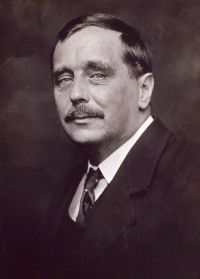 Herbert George Wells,
The Plattner Story and Others
(1897)
Herbert George Wells,
The Plattner Story and Others
(1897)
“ I must confess that the oddness of these three old pensioners in whose charge her ladyship had left the castle, and the deep-toned, old-fashioned furniture of the housekeeper's room in which they foregathered, affected me in spite of my efforts to keep myself at a matter-of-fact phase. They seemed to belong to another age, an older age, an age when things spiritual were different from this of ours, less certain; an age when omens and witches were credible, and ghosts beyond denying. Their very existence was spectral; the cut of their clothing, fashions born in dead brains. ”
Joseph McCabe,
Twelve Years in a Monastery — Chapter VIII. Ministry in London
“ Another form of outside work which is less understood is the practice of giving ‘retreats’ to monasteries, nunneries, and other religious establishments. A retreat is a period of recollection in which the inmates of a convent suspend all study and secular occupation, and occupy themselves exclusively with religious exercises ”
Bernard Ward, The Priestly Vocation
“ Let us learn to esteem that little more, and to make it the opportunity of overhauling our whole life, and making good resolutions for the future. Let us always remember that some day we shall make a Retreat which will prove to be our last serious preparation for death. We have been frequent witnesses of this in others: one day it will happen to ourselves. Yet when we are making the Retreat, we probably shall not know such to be the case. We may be well and strong, and with a good prospect of life before us: yet God may know that this is our last great opportunity. ”
Arthur Corbett-Smith, The Retreat from Mons
“ The glory of the achievement lay not merely in the hourly repulse, over a period of fourteen days, of an overwhelming attack, and of a continued retirement, which somehow never broke, before such an inveterate pursuit. ”
R. Austin Freeman, A Silent Witness — Chapter 11 (1915)
“ A cleric would not be thrilled by the sight of a clinical thermometer or an ophthalmoscope. It was the reliquary that had caught his eye. That was an article in his own line of business.With deliberate mischief, I left the little bauble exposed to view as I very slowly and methodically conveyed the other things one by one, each to its established pocket. Last of all, I picked up the reliquary and held it irresolutely as if debating where I should stow it. ”
 Thomas Bulfinch,
The Age of Fable
Thomas Bulfinch,
The Age of Fable
“ We whose voices you hear are your servants and shall obey all your commands with our utmost care and diligence. Retire, therefore, to your chamber and repose on your bed of down, and when you see fit repair to the bath. ”
1911 Encyclopædia Britannica, Volume 23… (1911)
“ In religious usage, a “retreat” is a period and place set apart for prayer, self-examination and other spiritual exercises. Such “retreats” conducted by a director have long been the practice in the Roman Church. They were introduced into the English Church by Pusey. The word is also used of an institution or home where insane persons or habitual inebriates may be treated. ”
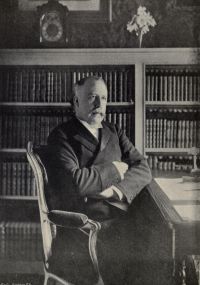 George William Erskine Russell,
Seeing and Hearing
George William Erskine Russell,
Seeing and Hearing
“ The Retreat of the Ten Thousand, which used to worry us in our youth, was not half so formidable an affair as the Advance of the Ten Thousand, schoolboys though they be, who just now overrun the land. ”
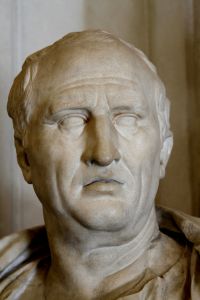 Marcus Tullius Cicero,
Cicero's Tusculan Disputations
(1888)
Marcus Tullius Cicero,
Cicero's Tusculan Disputations
(1888)
“ But suppose all these misfortunes to meet in one person: suppose him blind and deaf—let him be afflicted with the sharpest pains of body, which, in the first place, generally of themselves make an end of him; still, should they continue so long, and the pain be so exquisite, that we should be unable to assign any reason for our being so afflicted—still, why, good Gods! should we be under any difficulty? For there is a retreat at hand: death is that retreat—a shelter where we shall forever be insensible. ”
 John Turvill Adams,
The Knight of the Golden Melice…
John Turvill Adams,
The Knight of the Golden Melice…
“ As for the pale lady who, always clothed in black, appeared to be devoured by some secret sorrow, and whom the Knight called his cousin, it did not seem at all strange that she should love retirement, to indulge the sad luxury of grief. ”
 Richard Le Gallienne,
The Romance of Zion Chapel [3d ed…
Richard Le Gallienne,
The Romance of Zion Chapel [3d ed…
“ Such were the fathers that slumbered on in a well-earned repose, and which, far from desiring new readers, were so old that they were glad to rest undisturbed,--being far too self-important to confuse a considerate regard for their repose with neglect. ”
The Mirror of Taste, and Dramatic Censor…
“ After some time they began to apprehend that their retreat would be discovered either by accident or the vigilance of the old folks, and this had the effect of increasing their caution and sharpening their ingenuity and cunning. ”
 Ida Pfeiffer,
A Woman's Journey Round the World
Ida Pfeiffer,
A Woman's Journey Round the World
“ The relic itself is only shown to a prince or some other great personage; all other people must be content to believe the priest, who, for a small gratuity, has the politeness to describe the size and beauty of the tooth. ”
James Joyce,
A Portrait of the Artist as a Young Man
(1916)
“ I need hardly remind you that during the days of the retreat all boys are expected to preserve a quiet and pious demeanour and to shun all loud unseemly pleasure. The elder boys, of course, will see that this custom is not infringed and I look especially to the prefects and officers of the sodality of Our Blessed Lady and of the sodality of the holy angels to set a good example to their fellow-students. —Let us try, therefore, to make this retreat in honour of St. Francis with our whole heart and our whole mind. God's blessing will then be upon all your year's studies. ”
 Robert Means Lawrence,
Primitive Psycho-Therapy and Quackery
Robert Means Lawrence,
Primitive Psycho-Therapy and Quackery
“ CHAPTER XV REMEDIAL VIRTUES ASCRIBED TO RELICSA relic has been defined as an object held in reverence or affection, because connected with some sacred or beloved person deceased. And specifically, in the Roman Catholic and Greek churches, a saint's body or portions of it, or an object supposed to have been associated with the life or body of Christ, of the Virgin Mary, or of some saint or martyr, and regarded therefore as a personal memorial, worthy of religious veneration. ”

“ If a man wanted the ordinary consolations of religion, his case was not the special case the Retreat was founded to meet. When nobody could help a man, and nothing was left for him but to go through with the struggle in his own soul, then he came to the Retreat. There he stayed till he reached some conclusion: that is, if he could reach one within a reasonable time; for the pretense of unconquerable hesitation was not received. ”
George Stuart Gordon, The Retreat from Mons
“ For though the Army had grown outwardly fitter and more cheerful during the last seven days, the profound distaste which was felt by all ranks for the perpetual retirement poisoned every activity. Was it never to end, this Retreat? Were we retiring, then, to the Pyrenees? With such bitter questions and mock-humorous answers, they beguiled the march. When the news came it was as if a great sickness had been lifted from their minds, and for the first time, perhaps, they realized fully, as men do when they rise from sickness, how infinitely tired and weary they had been. ”
