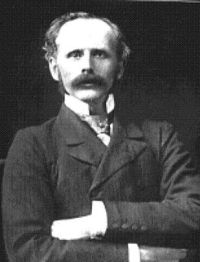
“ It may be that the strip of riverbank widens, fan-like, a little farther down-stream, but this divergence is in no way important. It is, however, remarkable what a diversity of landscape this limited region affords—even, though one explore only the playground which lies along the river, explore it with restraint and moderation, like Bashan and myself. Our forays seldom exceed two hours, counting the advance and the retreat. ”
Riverbank
Definition and stakes
A riverbank, the transitional zone between water and land, has long functioned as a liminal space in literature, reflecting both natural beauty and human interaction. From Thomas Mann’s measured exploration of its “diversity of landscape” to James Joyce’s melancholic gaze at Dublin’s “stunted houses,” authors have portrayed riverbanks as sites of observation, struggle, and reflection.
Whether describing their geological structures, ecological importance, or symbolic meaning, writers like René Caillié, Elizabeth W. Allston Pringle, and Octavius Rooke emphasize their role as dynamic boundaries shaped by movement, erosion, and human influence. These varied perspectives converge into a unified vision: the riverbank as a microcosm of nature’s endurance and humanity’s adaptive engagement with it.
Quotes about “riverbank”
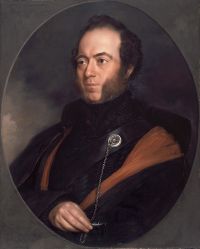
T. L. Mitchell,
Three Expeditions into the Interior of Eastern Australia…
“ From the number of huts along the riverbank it was obvious that the inhabitants were numerous, and I was therefore the more surprised that our depot could have continued so long near them without their discovering it. After following the river upwards of eight miles without meeting with the Murrumbidgee I came to a place where it seemed to have formerly had a different channel, and to have left a basin where the banks of the stream were of easy access, the breadth being only 110 yards. ”
James Joyce,
Dubliners
(1914)
“ As he crossed Grattan Bridge he looked down the river towards the lower quays and pitied the poor stunted houses. They seemed to him a band of tramps, huddled together along the riverbanks, their old coats covered with dust and soot, stupefied by the panorama of sunset and waiting for the first chill of night bid them arise, shake themselves and begone. ”
Carl Van Vechten,
The Tattooed Countess
(1924)
“ A fairly broad stream—of deep water ran down one side of the naked bed, near the bank, and streamlets trickled here and there, but most of the bed lay dry and baking under the burning rays of the sun. Above the dam, however, the river was full from bank to bank, a broad sheet of water, across which pleasant, wooded hills, dotted here and there with wind-mills, siloes, and farmhouses, presented themselves against the turquoise dome of the sky. ”
E. H. Davis, Ancient Monuments of the Mississippi Valley
“ A terrace, apparently artificial, and thirty feet wide, occurs on the northern bank, at about midway from the water to the top. It may be a natural feature, and caused by the subsidence of the bank from the undermining of the stream. The creek, at one time, unquestionably ran close under the banks of the peninsula; whether or not the recession, leaving the intervening low bottom, B, took place subsequently to the erection of the work, it is of course impossible to determine. ”
René Caillié,
Travels through Central Africa to Timbuctoo and across the Great Desert to Morocco performed in the year 1824-1828…
(1830)
“ A little to the north of the village the river is intersected by a sand-bank. This bank was covered by a multitude of water-fowl of various kinds, whose white plumage looked like a sheet of snow in the midst of the river. The channel for the passage of canoes is near the right bank. The surrounding country is very barren: not a single shrub is to be seen. The soil consists of immense marshes, which are inundated at the swell of the waters. The shore on either side is so extremely low that the river seems on the point of overflowing its banks. ”
Elizabeth W. Allston Pringle,
A Woman Rice Planter
“ Marcus asked me to go round the bank with him, and after thinking it well over I have concluded to throw out three of my fields and make up a straight bank from the upland down to the Black River, a distance of half a mile, high, wide, and strong enough to act as a river bank, and resist the rushing water which comes with immense force in the Black River, for it is the deepest stream in this section, in many places 60 or 70 feet deep. ”
Octavius Rooke, The Life of the Moselle
“ The river is in parts so shallow that breakwaters are built out from the banks, in order to deepen the centre of the stream; this, of course, makes the water run swifter, and it requires great toil of many horses to tug the barges up the stream. Floating down these rapids is agreeable enough, and the descent is made with very little labour, towns and villages succeeding each other on the banks, the approaches to them being lined with fruit-trees, of which the walnut and cherry are the most conspicuous. ”
Isabella Lucy Bird Bishop, The Golden Chersonese and the Way Thither… (1883)
“ But in truth the most prominent objects from the river are the "godowns" of the pawnbrokers, lofty, square towers of gray brick which dominate the city, play a very important part in its social economy, and are very far removed from those establishments with the trinity of gilded balls, which hide themselves shamefacedly away in our English by-streets. At one part of the riverside there are some substantial looking foreign houses among trees, on the site of the foreign factories of former days, but they and indeed all else are hidden by a crowd of boats, a town of boats, a floating suburb. ”
Edward S. Mogg, Survey of the High Roads of England and Wales…
“ The Lambourne river, which passes through the park in front of the house, has been judiciously enlarged, forming a spacious sheet of water about a mile in length, most tastefully serpentined; and interspersed with islands, which, together with its banks, are ornamented with groves and clumps of trees, affording protection to a vast assemblage of the feathered inhabitants of the lake, which also abounds with fish of various kinds. The grounds are well furnished with wood, and possess every attraction of luxuriant nature shining in all the radiance of tasteful cultivation. ”
Charles Lanman,
Letters from the Alleghany Mountains
“ This river rises on the Black Mountain, is a charming tributary of the French Broad, from five to twenty yards in width, cold and clear, very rapid, and throughout its entire length is overshaded by a most luxuriant growth of graceful and sweet-scented trees and vines. The plantations on this stream are highly cultivated, the surrounding scenery is mountainous, graceful, and picturesque, and among the small but numerous waterfalls which make the first half of its course exceedingly romantic, may be enjoyed the finest of trout fishing. ”
“ One cannot reproduce the charm of the strong river in pool and stream, of the steep rich bank that it rushes or lingers by, of the green and heathery hills beyond, or the bare slopes where the blue slate breaks through among the dark old thorn-trees, remnants of the forest. It is all homely and all haunted, and, if a Tweedside fisher might have his desire, he would sleep the long sleep in the little churchyard that lies lonely above the pool of Caddon-foot, and hard by Christopher North’s favourite quarters at Clovenfords. ”
D. O. Van Slyke, Found at Last: the Veritable Garden of Eden
“ The second bank is high and dry above the hightest water mark,—and generally smooth prairie, and ready in the state of nature for the garden plow—extending back on one or both sides of the river for miles, making a valley at this place, of about ten miles in the widest, when we reach the bank, bluff, or rocky wall, which rises—on each side of our garden—to the altitude of 600 feet above the river, being the point of the highest bluffs on the Mississippi. ”
Samuel Nelson, Howard v. Ingersoll — Separate
“ Where land adjoining a freshwater river, or above tide-water, is described as bounded by a monument, whether natural or artificial, such as a tree or a stake standing on the bank, and a course is given as running from it up or down the river to another monument standing upon the bank, these words necessarily imply, as a general rule, that the line is to follow the river, according to its meanderings and turnings, and the grantee takes to the middle of the river. ”
George Bird Grinnell,
Jack the Young Explorer: A Boy's Experiances in the Unknown Northwest
“ Then from one of these little ponds where the water is deep, they’ll dig a tunnel off at right angles to the stream, pretty well under the ground, about on a level, and when they get thirty or forty feet from the creek they’ll enlarge it and make a room, and there is where they’ll live for a little while. In the bottom of the tunnel there is water for quite a little way, but when they have dug up and made a room it’s pretty dry there, except for the water that they pack in on their fur. ”
Hubert Howe Bancroft,
The Native Races of the Pacific States
(1886)
“ River-banks are crowded with magnificent forest-trees, and the broad savanas farther back marked off into natural plantations of the valuable dye-woods which abound there, by a network of branch streams and canals, which serve both for irrigation and as a medium of transport for the native products that play no unimportant rôle in the world's commerce. ”
Verney Lovett Cameron,
In Savage Africa
“ I could see lights in the blockhouses as I passed them, and soon afterwards could see large villages on the banks of the river. Then the stream began to narrow{106} rapidly, and after about two hours’ drifting my canoe grounded on the southern bank of the river, the creek in which I had left the schooner being on the northern side. I was bitterly cold, and being without clothes or the means of making a fire, I did what was perhaps the wisest thing—scraped a hole in a bank of dry sand which lay above high-water mark and covered myself up in it. ”
Stewart Edward White,
The Riverman
“ Three days later the rear crew ran into the head of the pond above Reed's dam. To every one's surprise, Orde called a halt on the work and announced a holiday. Now, holidays are unknown on drive. Barely is time allowed for eating and sleeping. Nevertheless, all that day the men lay about in complete idleness, smoking, talking, sleeping in the warm sun. The river, silenced by the closed sluice-gates, slept also. The pond filled with logs. From above, the current, aided by a fair wind, was driving down still other logs—the forerunners of the little drive astern. ”
William Dickey Gunning,
Popular Science Monthly
(1872)
“ If a tourist will stand on the New Suspension Bridge and cast his eye along these ancient banks, his first impression will be that the Niagara which flowed against them was vastly greater than the river which flows now nearly 200 feet below him. But, if his eye will follow the Canadian terrace above the Horseshoe, he will see it falling lower and lower, till, at the head of the Rapids, it merges into the present bank. From this point upward the river is contained within low banks, and bounded by a plain whose monotony is not broken by a hill or terrace. ”
R. Talbot Kelly, Peeps at Many Lands: Egypt
“ These "spurs" are little embankments which project into the river at a slight angle pointing down-stream, and are made in order to turn the direction of the current towards the middle of the river, and so protect the banks from the scour of the water; for each year a portion of the banks is lost, and in many places large numbers of palm-trees and dwellings are swept away, for the native seems incapable of learning how unwise it is to build at the water's edge. ”
Leitch Ritchie, The Wye and Its Associations: A Picturesque Ramble
“ The banks for the most part rise abruptly from the edge of the water, and are clothed with forests, or are broken into cliffs. In some places they approach so near that the river occupies the whole intermediate space, and nothing is seen but woods, rocks, and water; in others, they alternately recede, and the eye catches an occasional glimpse of hamlets, ruins, and detached buildings, partly seated on the margin of the stream, and partly scattered on the rising grounds. ”
Edward Eldridge, A California Girl
“ One afternoon I was walking along the banks of the beautiful river which flows through the suburbs of the city of Semhee, and saw a number of boys and girls, also men and women, all enjoying themselves swimming. They would swim awhile and then come out, stand or sit on the bank of the river for another while. Sometimes there would be seen several hundred persons of all ages on the banks of the river. They no more thought about their respective natures than they did about the number of hairs on their head. ”
Reuben Gold Thwaites,
Historic Waterways—Six Hundred Miles of Canoeing Down the Rock…
“ The land along the river banks is a flat prairie some half-mile in width, with rolling country beyond, sprinkled with oak groves. The banks are of black, sandy loam, from twelve to twenty feet high, based with sandy beaches. The shores are now and then cut with deep ravines, at the mouths of which are fine, gravelly beaches, sometimes forming considerable spits. ”
Augustus Charles Gregory,
Journals of Australian Explorations
“ The banks of the stream are sandstone and sand, and the channel scarcely three yards wide, with a strip of grassy thicket twenty yards in width along the stream, which is the only feed near the river, as the plain through which it runs produces nothing but scrub and banksia with a few grass-trees. ”
Benjamin Ellis Martin, Old Chelsea: A Summer-Day's Stroll
“ On the slope which rises from the river—as we see it p. 19in our print of those days—stand, in trim gardens, the grand mansions which first made the little village famous. Back from these isolated houses and between them stretch fair fields, and fertile meadows, and wooded slopes; and along the river bank runs a row of fishermen’s thatched cottages. Here and there on the shore, are nestled noted taverns and pleasure-gardens, much frequented by town visitors, reputable or not, coming up the river on excursions—as does Pepys, “to make merry at the Swan.” ”
Stewart Edward White,
The Riverman
“ Having accomplished this formidable labour—for the trees had to be cut and hauled, the stone carted, and the earth shovelled—the crew next moved down a good ten miles to where the river dropped over a rapids rough and full of boulders. Here were built and placed a row of stone-filled log cribs in a double row down stream to define the channel and to hold the drive in it and away from the shallows near either bank. The profile of these cribs was that of a right-angled triangle, the slanting side up stream. Booms chained between them helped deflect the drive from the shoals. ”
Jean Thomas, Blue Ridge Country
“ Today the old riverfront lives only in memory. That part of the county seat is a ghost town. Timbermen and loggers gather no more for revelry at the riverfront saloon. And should you ask the reason, the old river rat will answer with a slow-breaking smile, “See off yonder—locks and dams! Can’t run the logs through that!” Forests that were felled a quarter of a century ago are once again ready for the woodsman’s ax. The present generation of timbermen look upon a very different scene. ”
John Boyle O'Reilly,
Athletics and Manly Sport
(1890)
“ If the middle locks were opened, the lake would be lowered eight feet, and the whole swamp west of the lake would drain into it, while that portion to the east would drain into the canal. If there be a doubt of the consequence, look at some of the wonderful farm lands lying east of the canal from Deep Creek to South Mills. Miles and miles of fertility almost incomparable on the surface of the earth. Half a century ago every foot of this land was Dismal Swamp, forsaken morass, full of reptiles and wild animals. ”
John MacGregor,
A Thousand Miles in the Rob Roy Canoe on Rivers and Lakes of Europe
“ The river-banks one would call tame if seen from shore are altogether new when you open up the vista from the middle of the stream. The picture that is rolled sideways to the common traveller now pours out from before you, ever enlarging from a centre, and in the gentle sway of the stream the landscape seems to swell on this side and on that with new things ever advancing to meet you in succession. ”
Intercolonial Railway, Summer Provinces by the Sea
“ In many cases the only way to fish or view some pleasant water-course is to walk in the water—for the banks generally rise abruptly. It is only by the wider streams that gravel strips or edges of green sward give a dry foothold. The pretty brooks and streams between Grand River and Cascapedia have pure and sparkling water in their channels, and these, like the streams to the east, are bordered by perpendicular banks that are grass-grown and plentifully covered with a profusion of wild flowers. ”
Sir Samuel White Baker,
The Rifle and the Hound in Ceylon
“ In the first a mere brook, it rapidly increases as it traverses the lower portions of every valley, until it attains a width of twenty or thirty yards, within a mile of the spot where it is first discernible as a stream. Every plain in succession being lower than the first, the course of the river is extremely irregular; now a maze of tortuous winding, then a broad, still stream, bounded by grassy undulations ”
Henry Drummond,
Tropical Africa
“ One interests oneself in these things more particularly because there is nothing at first especially striking about the river scenery itself. Ten or twenty feet of bank cuts off the view on either side, and large and varied features are wanting. The banks are lined with the densest jungle of mangroves and aquatic grasses, while creepers of a hundred kinds struggle for life among the interlacing stems. ”