Secondary feather

Definition and stakes

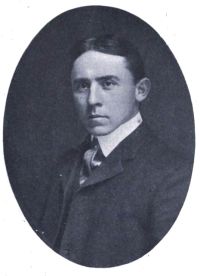
Portrait of Philip Henry Gosse Philip Henry Gosse,  The Romance of Natural History…

“ The forehead and crown carry a crest of tall feathers capable of erection, and making a fine ornament. The whole under parts are velvet black; the back and rump warm brown, with paler wavy bands and lines. The coverts and secondary feathers of the wings are of the richest blue, each feather tipped with velvety black. But the tail is the grand display. It is a true tail, not a train of superincumbent feathers as in the peacock, the quill-feathers being of great length and breadth, and the whole capable of being widely expanded into an enormous rounded fan. ”
Source: Gutenberg

Various,  Encyclopaedia Britannica, 11th Edition…

“ FEATHER (O. Eng. fether, Ger. Feder, from an Indo-European root seen also in Gr. πτερόν, and πέτεσθαι, to fly) , a horny outgrowth of the skin of birds homologous with the scale of the reptile. The body-covering of birds is, without exception, comprised of feathers, and by this character alone birds may be distinguished from all other animals.
The most perfect form of feather is made up of a long, tapering rod, fringed on either side, for the greater part of its length, by a secondary series of slender and tapering rods forming a more or less acute angle with the central axis.
”
Source: Gutenberg

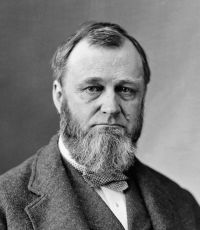
Portrait of Spencer Fullerton Baird Spencer Fullerton Baird,  A History of North American Birds…

“ Ground-color of the lower parts white, each feather with a medial stripe of black, this throwing off distinct bars to the edge of the feather; the medial black is largest on sides of the breast, where it expands into very large conspicuous spots, having a slight rusty exterior suffusion; the abdomen medially, the anal region, and the lower tail-coverts, are almost unvaried white. ”
Source: Gutenberg

Get perspective with Kwize: daily news enlightened by great literature