“ Nevertheless, a great many of us who would shudder at the iniquity of a toothpick, thrust our fingers into our mouths and free our back teeth with these natural ‘cure-dents,’ which gives a singularly wolfish and awful appearance to the operator, and makes the onlooker regret the insular prejudice which will not rather use the universal continental toothpick, wherein, at least, if properly and delicately done, is no kind of indecency or disgust. ”
Toothpick
Definition and stakes
The theme of “toothpick” has been addressed by authors such as Alfred Ayres, Irvin S. Cobb and Thomas Dyer Tuttle. It is often associated with terms like tooth, gum, alveolus, pain and enamel.
Quotes about “toothpick”
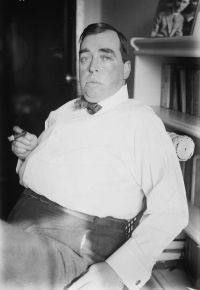
“ Over there, a toothpick is a family heirloom and is handed down from one generation to another, and is operated in company ostentatiously. In its use some Europeans are absolutely gifted. But then we beat the world at open-air gum-chewing—so I reckon the honors are about even. ”
A Plain and Literal Translation of the Arabian Nights Entertainments…
“ In the Ass. of Barka’id the toothpick is described as a beautiful girl. The use of this cleanly article was enjoined by Mohammed:—“Cleanse your mouths with toothpicks; for your mouths are the abode of the guardian angels; whose pens are the tongues, and whose ink is the spittle of men; and to whom naught is more unbearable than remains of food in the mouth.” A mighty apparatus for a small matter; but in very hot lands cleanliness must rank before godliness. ”
Thomas Dyer Tuttle, Principles of Public Health
“ Teeth are so hard that they are brittle, that is, they break easily. Glass is brittle, and you can chip off a piece of glass with a pin by sticking the pin into a crack in the glass. In just the same way you can chip off a piece of a tooth by sticking a pin between two teeth. That is what often happens when people pick their teeth with pins, or with any other hard substance. A metal toothpick is just as bad as a pin. ”
American lady, The Ladies' Vase; Or, Polite Manual for Young Ladies
“ The general use of them creates so large a demand, that students at Coimbra sometimes support themselves by whittling toothpicks, which are sold tied in small bunches like matches. They are made of willow, on account of its toughness and pliability. Toothpicks of metal are too hard, and are apt to injure the gums. ”
Parodies of the works of English & American authors… (1889)
“ Punch. August 23, 1884. On Toothpicks.By Professor Buskin.I came the other day quite by chance on this piece of news in my Daily Telegraph:—“It is said that no less than 25 millions of Toothpicks are annually made in England. This is just one to each person.” “Just one?” No, there is no justice here, it is all injustice. Think of this—25 millions, and think further of the 25 millions of Englishmen who can use them. Yes, this is what England has come to be—a nation of Toothpickers; for mark this, each man can use a toothpick if he will ”
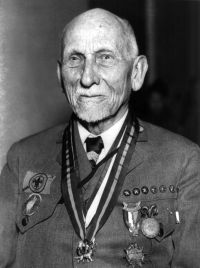 Daniel Carter Beard,
New Ideas for American Boys; The Jack of All Trades
Daniel Carter Beard,
New Ideas for American Boys; The Jack of All Trades
“ Wooden Toothpicksoffer many opportunities for amusement. I have seen grown men, in the reading-rooms of our great hotels, amuse themselves and companions for hours with only a handful of wooden toothpicks. ”
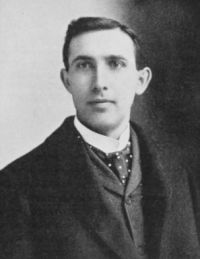 Alvin Davison,
Health Lessons, Book 1
Alvin Davison,
Health Lessons, Book 1
“ Never pick the teeth with a pin or needle. The biting off of thread, finger nails, and other hard material may crack the enamel. It may also be softened and eaten away by acid formed where food remains about a tooth. For this reason a quill or wooden pick or piece of tough thread, called dental floss, should be used to clear the teeth of food after each meal. Slimy matter collects over the whole surface of the teeth, and is likely to cause decay in spots unless it is cleaned off night and morning with brush and water. ”
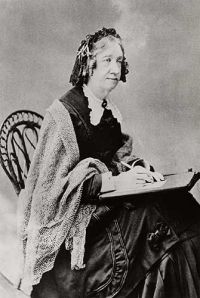 Catharine Esther Beecher,
Miss Beecher's Housekeeper and Healthkeeper
Catharine Esther Beecher,
Miss Beecher's Housekeeper and Healthkeeper
“ Every woman, and especially every mother, should know the time and order in which the infant teeth come, and, when any of the above symptoms appear, should examine the mouth, and if a gum is swollen and inflamed, should either have a physician lance it, or if this can not be done, should perform the operation herself. A sharp pen-knife and steady hand, making an incision to touch the rising tooth, will cause no more pain than a simple scratch of the gum, and usually will give speedy relief. ”
 Bernarr Macfadden,
Vitality Supreme
Bernarr Macfadden,
Vitality Supreme
“ In other words, if you sit down to a meal after chewing gum for two or three hours, the saliva that you mix with your food will not have the normal digestive elements. One might say that the "strength" of the saliva has been lost while chewing gum.If your teeth are decayed the offending members should be removed or the cavities filled. It is always wise to retain every tooth you can until extraction is practically compulsory. Decayed teeth should be filled promptly. As long as a tooth can be filled it should not be extracted. A good dentist should be consulted at frequent intervals. ”
Alvin Davison,
Health Lessons, Book 1
“ The front teeth are called incisors because they are used to cut the food. The back teeth are named molars because they are used in grinding the food. Fig. 32 —Photograph of teeth not kept clean, showing how germs and a sour substance called acid eat holes in them and thus cause decay and toothache.Toothache.—Toothache is a common ailment, and yet it can be entirely prevented. A tooth does not ache until it has a hole in it. The tender nerve within gives us warning that it is being hurt. The dentist can stop the ache and mend the tooth so that it will not ache again. ”
Adelia B. Beard, Indoor and Outdoor Recreations for Girls
“ If you can find an apple with a bump on one side, you may make a porcupine in less than five minutes, for all that is necessary is to stick the apple full of wooden toothpicks, and that work will be as easy as putting pins into a cushion. Let the bump on the apple form the head of the animal. Bend four toothpicks like Fig. 361 and push them up into the apple to serve as legs and feet. Make the bent toothpicks balance the apple perfectly, so that the porcupine will stand firmly on its feet without other support. Use black pins for eyes and broom straws for the whiskers. ”
 Charles Dudley Warner,
Saunterings
Charles Dudley Warner,
Saunterings
“ Down he goes into the cavern, and digs away for a quarter of a minute, the man the while as immovable as a stone image, when he holds up the bloody tooth. The patient still persists in sitting with his mouth stretched open to its widest limit, waiting for the operation to begin, and will only close the orifice when he is well shaken and shown the tooth. The dentist gives him some yellow liquid to hold in his mouth, which the man insists on swallowing, wets a handkerchief and washes his face, roughly rubbing his nose the wrong way, and lets him go. ”
Sidney H. Reynolds, The Vertebrate Skeleton
“ The hard parts of a tooth commonly enclose a central pulp-cavity into which projects the pulp, a papilla of the dermis including blood-vessels and nerves. As long as growth continues the outer layers of this pulp become successively calcified and added to the substance of the dentine. In young growing teeth the pulp-cavity remains widely open, but in mammals the general rule is that as a tooth gets older and the crown becomes fully formed, the remainder of the pulp becomes converted into one or more tapering roots which are imbedded in the alveolar cavities of the jaws. ”
Vincenzo Guerini, A History of Dentistry from the most Ancient Times until the end of the Eighteenth Century (May 3, 2016 [EBook #51991])
“ It is necessary, therefore, to avoid acting like the ignorant and foolish barbers, who in their temerity do not observe any of the above-mentioned rules, and therefore very often cause the patients great injuries, the least among which is the breaking of the tooth, the root being left in the socket, or else the taking away, together with the tooth, of a piece of the maxillary bone, as the author often happened to see. After the extraction the patient must rinse his mouth with wine, or with vinegar and salt. ”
Vincenzo Guerini, A History of Dentistry from the most Ancient Times until the end of the Eighteenth Century (May 3, 2016 [EBook #51991])
“ In this latter case the pain is usually very violent, and principally localized in the root of the tooth, but also extending along the jaw, and the tooth itself is often, as it were, benumbed. When, however, the pain is not situated either in the gums or in the dental nerve, but in the very substance of the tooth, this latter is very often corroded (carious) , and very often in the hollow there exists a worm; and this may be deduced from the fact that during the intervals of calm the patient sometimes feels a peculiar sensation, the movement of the worm in the diseased tooth ”
Vincenzo Guerini, A History of Dentistry from the most Ancient Times until the end of the Eighteenth Century (May 3, 2016 [EBook #51991])
“ It depends, in many cases, on a humorous fluxion of a hot or cold nature which flows into the alveolus, forcing the tooth outward, loosening it, and causing the patient so much pain on the slightest pressure being exercised on it, that he cannot dare to bite with it in the least. If, however, the tooth is corroded, hollowed out, or pierced to the root, the pain is so strong, when the patient drinks—particularly if the liquid is cold—that he seems to have had a stab with a stiletto inside the tooth. ”
 William Berryman Scott,
A history of land mammals in the Western Hemisphere
(1913)
William Berryman Scott,
A history of land mammals in the Western Hemisphere
(1913)
“ The scalpriform incisors of the rodents, already alluded to, have the enamel band on the front face of the tooth; the softer dentine behind wears away more rapidly, keeping the cutting surface bevelled, like the edge of a chisel, while the hard enamel forms the sharp edge. In some instances the enamel is absent altogether and the teeth are composed entirely of dentine, as in the elephant tusk. ”
Vincenzo Guerini, A History of Dentistry from the most Ancient Times until the end of the Eighteenth Century (May 3, 2016 [EBook #51991])
“ The small twigs which penetrate into the roots of the incisor and canine teeth are less slender than those which enter the roots of the molars, and are easily to be seen not only in large animals, but also in man. If the tooth of an ox or that of a ram be split through the middle, the mucous substance contained in the interior is seen to be traversed by small bloodvessels; and one perceives, besides, certain fibers, which are probably nerves. All these things, says Eustachius, I have observed many times in different animals, in some cases more, in others less distinctly. ”
Edward Mayhew, The Horse's Mouth, Showing the age by the teeth
“ The tooth, which previously seemed to be on the eve of piercing the gum, after the extraction of the milk incisor never came up,—nor will any person who has thought for an instant, wonder if the violence, necessarily used, does occasionally injure or rupture the delicate vessels and gelatinous tissues of the pulp. More often the breeder’s impatient interference breaks the tooth off at the neck and leaves the fang in the jaw. ”
Vincenzo Guerini, A History of Dentistry from the most Ancient Times until the end of the Eighteenth Century
“ A tooth must not be sacrificed excepting when it is loose and attacked by incipient necrosis, so as to leave no hope of arresting the putrefactive process. It is then our duty, says Heurn, to remove the tooth without causing much pain. For this purpose, after the tooth has been separated all around from the gums, it must be raised somewhat from the alveolus; then it must be sprinkled with powder of euphorbia, or a paste made with flour and the juice of the tithymalus must be applied around it, taking care, however, to cover the neighboring teeth with wax. ”
Vincenzo Guerini, A History of Dentistry from the most Ancient Times until the end of the Eighteenth Century (May 3, 2016 [EBook #51991])
“ The ashes of the head of a hare is a useful dentifrice; and if spikenard be added, it will lessen the bad smell of the mouth. Some mix with it the ashes of the heads of mice. In the side of the hare is a bone as sharp as a needle; and many advise pricking the teeth with this when they ache. The heel of the ox kindled and brought close to loose teeth makes them firm. The ashes of this bone mingled with myrrh is a good dentifrice. A good dentifrice is also made from the ashes of the feet of a goat. ”
 James George Frazer,
The Golden Bough
(1922)
James George Frazer,
The Golden Bough
(1922)
“ Thus in many parts of the world it is customary to put extracted teeth in some place where they will be found by a mouse or a rat, in the hope that, through the sympathy which continues to subsist between them and their former owner, his other teeth may acquire the same firmness and excellence as the teeth of these rodents. For example, in Germany it is said to be an almost universal maxim among the people that when you have had a tooth taken out you should insert it in a mouse's hole. To do so with a child's milk-tooth which has fallen out will prevent the child from having toothache. ”
Vincenzo Guerini, A History of Dentistry from the most Ancient Times until the end of the Eighteenth Century (May 3, 2016 [EBook #51991])
“ The brain of the hare can, by being rubbed on the gums and jaws, serve for two important purposes, since it has not only the virtue of facilitating dentition, but also of making teeth grow again to those who have lost them! The brain of a partridge applied to a carious tooth makes it fall in pieces!The treatment of odontalgia embraces, according to Gaddesden, both general and special means of cure. To the former belong purgatives, bloodletting, scarifications of the labial and sublingual mucous membrane, leeches, the application of scarified cuppings under the chin. ”
Vincenzo Guerini, A History of Dentistry from the most Ancient Times until the end of the Eighteenth Century (May 3, 2016 [EBook #51991])
“ In cases of difficult dentition, the best remedy, according to Musitano, for facilitating the eruption of the teeth consists in friction of the gums, once, or at most twice, with blood drawn fresh from the comb of a cock!249 If, however, even this remedy fails to produce the desired effect, it will then be necessary to lance the gum at the point where the tooth is to erupt, or to press it hard with the thumb, that the tooth may the easier come through. ”
Harrison R. Hunt, A Laboratory Manual of the Anatomy of the Rat (1924)
“ The enamel is restricted to the front of the incisor, so that in gnawing the softer dentine is worn away at the tip faster than the enamel, thus keeping the tooth sharp. There are no canine teeth. Rodents are mostly herbivorous in diet, are usually small, and have clawed digits. ”
Albert F. Blaisdell, A Practical Physiology: A Text-Book for Higher Schools
“ The teeth are thus nourished like other parts of the body. The exposure of the delicate pulp to the air, due to the decay of the dentine, gives rise to the pain of toothache.Surrounding the cavity on all sides is the hard substance known as the dentine, or tooth ivory. Outside the dentine of the root is a substance closely resembling bone, called cement. In fact, it is true bone, but lacks the Haversian canals. The root is held in its socket by a dense fibrous membrane which surrounds the cement as the periosteum does bone. ”
Aegineta Paulus, The seven books of Paulus Ægineta… (1844)
“ When the teeth are carious he directs us to scrape them, and [295] apply to them a mixture of the flowers of roses, galls, and myrrh, and to hold undiluted wine in the mouth. When the teeth are slackened by any accident, he directs us to fasten them to the surrounding ones with a golden thread, and then to hold some stringent decoction in the mouth. When in young persons a second tooth appears before the first has fallen out, he recommends us to scarify around the latter and pull it out, and to endeavour to force the other gradually into its proper place. ”
Vincenzo Guerini, A History of Dentistry from the most Ancient Times until the end of the Eighteenth Century
“ When a tooth aches, and it is thought well to extract it, because medicaments are of no use, the gum must be detached all around, and then the tooth must be shaken until it is well loosened, it being very dangerous to draw a firm tooth, as this may sometimes give rise to a dislocation of the lower jaw. And greater still is the danger in regard to the upper teeth, as this might cause a shock to the temples and eyes. ”
Vincenzo Guerini, A History of Dentistry from the most Ancient Times until the end of the Eighteenth Century (May 3, 2016 [EBook #51991])
“ Ali Abbas, another great Persian physician (who died in 994) , wrote a lengthy treatise on theoretic and practical medicine, one chapter of which is dedicated to the diseases of the teeth. When a molar tooth is affected by caries, and the pain cannot be subdued in any other way, Ali Abbas applies, inside the carious cavity, the end of a small metallic tube, into which he repeatedly introduces red-hot needles, leaving them123 in the tube until quite cooled. ”
Edwin Tenney Brewster, Natural Wonders
“ The tooth pushes thru the gum; and as it goes by, the cells at the sides of the pocket and on top plaster it with a coating of enamel. Therefore, as most of us find out to our cost, this enamel once destroyed, can never grow again. Once clear of the pocket where it was formed, it has to last us the rest of our lives; and little boys and girls who don’t keep their teeth clean when they are young, have to put up with something not nearly so good when they are grown up. ”
Frank Colyer, Extraction of the Teeth
“ A clear view of the tooth and its surroundings can be obtained during the whole period of removal. (2) Force can be applied with greater advantage. (3) The alveolus can be easily embraced by the fingers, or by the finger and thumb of the left hand. (4) In removing the tooth from the socket a slight backward movement can be employed.One disadvantage of shape fig. 29 is that it is difficult to employ much inward movement, and therefore, for teeth lying inwards, namely, with the crown directed towards the tongue, hawk’s-bill-shaped forceps cannot easily be used. ”
