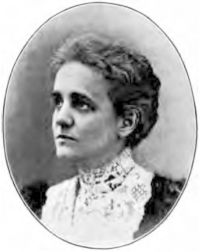
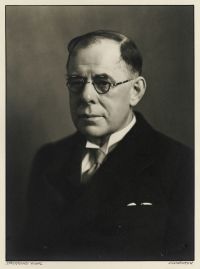
Gustave Flaubert,
Madame Bovary
(1856)
Gustave Flaubert,
Madame Bovary
(1856)
“ Self-possession depends on its environment. ”
Self-possession, the ability to maintain calmness and independence in thought and action, has been examined across literature as both a personal virtue and a societal necessity. Gustave Flaubert highlights its dependence on environment, while William Hazlitt depicts it as an attractive, ingrained resistance to outside influences. Philosophers such as Josiah Royce view it as an existential ideal, equating self-possession with inner wholeness and tranquility.
Laurence Housman connects it to ethical mutual respect, arguing that honoring others’ independence strengthens one’s own. Whether through novelists or moral thinkers, these viewpoints together illustrate self-possession as a dynamic balance between inner discipline and outer interaction, grounded in dignity, restraint, and harmonious relationships.
Gustave Flaubert,
Madame Bovary
(1856)
“ Self-possession depends on its environment. ”
William Hazlitt, The collected works of William Hazlitt… (1902)
“ We sometimes see a certain fine self-possession, an habitual voluptuousness of character, which reposes on its own sensations, and derives pleasure from all around it, that is more irresistible than any other attraction. ”
 Josiah Royce,
The World and the Individual, First Series
(1899)
Josiah Royce,
The World and the Individual, First Series
(1899)
“ You want yourself, — the Self in its completeness, in its fulfilment, in its final expression. In brief, when you talk of reality, you talk of self-possession, of perfection, and of peace. And that is, therefore, all that you mean by the Being of the world or of any type of facts. Being therefore is nothing beyond yourself. You even now hold it within you, in your heart of hearts. Being therefore is just the purely immediate. To be means to quench thought in the presence of a final immediacy which completely satisfies all ideas. ”
Anonymous, That Mother-in-Law of Mine
“ If there is anything I pride myself on, it is self-possession and a willingness to face anybody and give as good as I get, but that magnificently imperious way of looking with those large eyes always disconcerted me. ”
“ And it was not merely the dignity of self-possession, which early familiarity with society and early habits of command may give even to an ordinary man, but that elevation of manner which springs from an habitual elevation of thought, bearing witness to the purity of its source, as a clear eye and ruddy cheek bear witness to the purity of the air you daily breathe. ”
Henry Ware, Hints on extemporaneous preaching
“ It is true, that no man can attain the power of self-possession so as to feel at all times equally and entirely at ease. But he may guard against the sorest ills which attend its loss, by always making sure of a train of thought,—being secure that he has ideas, and that they lie in such order as to be found and brought forward in some sort of apparel, even when he has in some measure lost the mastery of himself. ”
 Laurence Housman,
Ploughshare and Pruning-Hook: Ten Lectures on Social Subjects
Laurence Housman,
Ploughshare and Pruning-Hook: Ten Lectures on Social Subjects
“ The two things go together—claim to possess others and you lose possession of yourself: Give to all with whom you come in contact their full right of self-possession and self-development, and you, from that social discipline and service, will in your own body and mind become self-possessed. ”
The Best Short Stories of 1921… (1922)
“ We got the sensation that you get when you see a really good play. You forget your bodily presence and you are only a bundle of nerves. You walk or sit or stand, but without any effort or knowledge that you are doing it. We had been talking, and the sight of that building, so unexpected, startled us into silence. It would any one. Believe me, your imperturbable man with perfect, cool, self-possession does not exist. ”
Margaret C. Conkling, The American Gentleman's Guide to Politeness and Fashion
“ When necessitated to go late to church, one should, as on all similar occasions, endeavor to disturb others as little as possible; but with equal studiousness avoid the vulgar exhibition of discomposure, of over-diffidence, or of any consciousness, indeed, of being observed, which so unmistakably savors of low-breeding. I cannot too frequently remind you that self-possession is one of the grand distinctive attributes of a gentleman, and that it is often best illustrated by a simple, quiet, successful manner of meeting the exigencies and peculiarities of circumstances. ”
 William Walker Atkinson,
Genuine Mediumship; or, The Invisible Powers
William Walker Atkinson,
Genuine Mediumship; or, The Invisible Powers
“ Another writer has well said: "If you are not robust enough, if you have not sufficient knowledge and self-mastery to use your will and maintain control over your psychic self; if you are unable to guard against the adverse emanations or the drawing power of others, you had better take lessons in concentration and psychic self-protection; and until you understand the art of self-possession, refrain from attempting to cultivate your sensitiveness. It will never do for you to be 'too sensitive'—be natural, sensible, and strong." ”
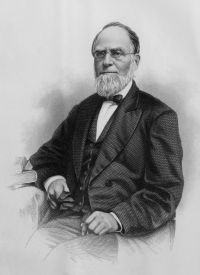 John S. C. Abbott,
Madame Roland, Makers of History
John S. C. Abbott,
Madame Roland, Makers of History
“ He was tall, slender, and well formed, with a little stoop in his gait, and manifested in his manners that self-possession which is the result of conscious worth and intellectual power, while, at the same time, he exhibited that slight and not displeasing awkwardness which one unavoidably acquires in hours devoted to silence and study. ”
William Hazlitt, The Collected Works of William Hazlitt…
“ We may in like manner trace the origin of dancing, music, and poetry, which is the march of words. Self-possession is 433the ideal in ordinary behaviour. A low or vulgar character seizes on every trifling or painful circumstance that occurs, from irritability and want of imagination to look beyond the moment; while a person of more refinement and capacity, or with a stronger predisposition of the mind to good, and a greater fund of good sense and pleasurable feeling to second it, despises these idle provocations, and preserves an unruffled composure and serenity of temper. ”
 Alexander Maclaren,
Expositions of Holy Scripture…
Alexander Maclaren,
Expositions of Holy Scripture…
“ All which things being kept in view, I may expand the great promise that lies in my text, as follows:—First, by such persevering persistence in the Christian path, we gain ourselves. Self-surrender is self-possession. We never own ourselves till we have given up owning ourselves, and yielded ourselves to that Lord who gives us back saints to ourselves. Self-control is self-possession. We do not own ourselves as long as it is possible for any weakness in flesh, sense, or spirit to gain dominion over us and hinder us from doing what we know to be right. ”
Christian D. Larson, The Pathway of Roses (1913)
“ When the mind enters the fear of loss and begins to feel that there is going to be loss, the first loss is the loss of self-possession. You lose your hold upon your own powers, and, in consequence, begin to weaken. Your faculties fail to do their best, your work becomes inferior, your personality does not attract as it did, and your power to inspire confidence in others, is on the wane. You suffer loss in all things, physical, mental and spiritual, and you are daily losing ground. ”
Frances Bowyer Vaux, Domestic Pleasures, or, the Happy Fire-side
“ B. Flushed with conquest, Horatius lost his self-possession. Often do we find heroes, who can subdue their enemies in the field, the weakest of the weak, when the combat is against their own evil passions. Self-knowledge, and self-possession, are most important acquirements. They are excellencies I must earnestly desire for each of you, my dear children. But we have not time for further conversation to-night: you have all exerted yourselves extremely to-day, and must feel fatigued.Louisa. Oh no, papa, I am not all all tired. ”
American lady, The Ladies' Vase; Or, Polite Manual for Young Ladies
“ Self-possession is the first requisite to good manners; and, where it is wanting, there is generally a reason for it, in some wrong feeling or appreciation of things. Vanity, a love of display, an overweening desire to be admired, are great obstacles to self-possession ”
Stephen S. Wise, Child Versus Parent: Some Chapters on the Irrepressible Conflict in the Home
“ To a rational adult the sense of possession by another is irksome, save in the case of youthful lovers whose irrationality may for a time take the form of pleasure in the fact of possession by another. But when sanity enters into the joy of the love-relation, then the sense of ecstasy in being possessed vanishes and with its passing comes a renewal of self-possession which alone is complete sanity. Self-possession brooks no invasion or possession of personality by another. ”
 Janet Erskine Stuart,
The Education of Catholic Girls
Janet Erskine Stuart,
The Education of Catholic Girls
“ It is very wearisome, but when it has been acquired through laborious years—there it is, like a special sense superadded to the ordinary endowments of nature, giving presence of mind and self-possession, arming the whole being against surprise or awkwardness or indiscretion, and controlling what has so long appeared to exercise control over it—the conditions of social intercourse. ”
 Georg Wilhelm Friedrich Hegel,
The Philosophy of Fine Art, volume 2…
Georg Wilhelm Friedrich Hegel,
The Philosophy of Fine Art, volume 2…
“ And, further, if the individual at last steps forth from this absolute sphere and actively engages in worldly affairs, the range of interests, objects, and emotions will be difficult to count on the score [Pg 293] in proportion as the spiritual self-possession is profound, agreeably to the principle in its fullest application; man is consequently distracted by an infinitely multiplied profusion of interior and exterior collisions, revolutions, and gradations of passion, and the most manifold degrees of satisfaction. ”
Burton Jesse Hendrick, The Life and Letters of Walter H. Page…
“ Hence our wants are few; they are generally most courteously supplied without our asking; [pg II-126] or, if we happen to be momentarily forgotten, we can quickly secure anything in the neighbourhood by a little judicious squalling. Why, then, should we whirl as bubbles or scurry as rabbits? Our conquering self-possession gives a masterful charm to life that the victims of perpetual locomotion never seem to attain. ”
Anonymous, Bashfulness Cured: Ease and Elegance of Manner Quickly Gained
“ But, diffident reader, do not be discouraged, for general good breeding is very easy of attainment. You must possess simply common sense, self-possession, and a habit of observation.The exercise of a good common sense will show you plainly enough what is right and wrong—what is proper and improper. Self-possession will prevent from doing awkward and bungling things ”
Georg Wilhelm Friedrich Hegel,
Hegel's Philosophy of Mind
“ The contents which are set free in this reversion to mere nature are the self-seeking affections of the heart, such as vanity, pride, and the rest of the passions—fancies and hopes—merely personal love and hatred. When the influence of self-possession and of general principles, moral and theoretical, is relaxed, and ceases to keep the natural temper under lock and key, the earthly elements are set free—that evil which is always latent in the heart, because the heart as immediate is natural and selfish. ”
 Wilkie Collins,
The Moonstone
(1868)
Wilkie Collins,
The Moonstone
(1868)
“ The little that he had said, thus far, had been sufficient to convince me that I was speaking to a gentleman. He had what I may venture to describe as the unsought self-possession, which is a sure sign of good breeding, not in England only, but everywhere else in the civilised world. ”
Karl Wilson Gehrkens, Essentials in Conducting (1919)
“ Such confidence in one's own ability as we have been describing usually results in the acquiring of what is called an easy manner,—self-possession,—in short, poise, and it is the possession of such a bearing that gives us confidence in the scholarship and ability of the leaders in any type of activity. ”
Various, The Harmonicon. Part the First
“ Nevertheless, a certain flutter of spirits which always accompanies royal interviews that are infrequent, even with those who are least awed by them, took from him that self-possession which, in new or uncommon cases, teaches us how to get through difficulties of form, by watching the manœuvres of our neighbours. ”
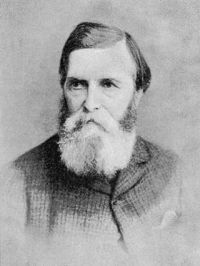 R. M. Ballantyne,
The Gorilla Hunters
R. M. Ballantyne,
The Gorilla Hunters
“ I firmly believe that boys were intended to encounter all kinds of risks, in order to prepare them to meet and grapple with the risks and dangers incident to man’s career with cool, cautious self-possession—a self-possession founded on experimental knowledge of the character and powers of their own spirits and muscles. ”
 Annie Payson Call,
Nerves and Common Sense
Annie Payson Call,
Nerves and Common Sense
“ Then all these expressions of self or of illness are to us positive, and our efforts against them only negative. In such cases, of course, the self possesses us as surely as the grip possesses us when we succumb entirely to all its horrors and make no positive effort to yield out of it. And the possession of the self is much worse, much deeper, much more subtle. When possessed with selfishness, we are laying up in our subconsciousness any number of self-seeking motives which come to the surface disguised and compel us to make impulsive and often foolish efforts to gain our own ends. ”
 John Locke,
Some Thoughts Concerning Education…
John Locke,
Some Thoughts Concerning Education…
“ True fortitude, I take to be the quiet possession of a man's self, and an undisturb'd doing his duty, whatever evil besets, or danger lies in his way. ”
Various, The Journal of Abnormal Psychology…
“ The source of the additional motive power, which in the moral effort of volition is thrown upon the side of the weaker, more ideal impulse, is ultimately to be found in that instinct of self-display or self-assertion whose affective aspect is the emotion of positive self-feeling. ”
W. M. L. Jay, Holden with the Cords
“ Because we can never wholly get rid of self, in this lower life, does it therefore follow that we must concentrate our thoughts and aims upon it? Must we forever deny ourselves the ennobling, elevating, softening influence of a duty and a hope outside of ourselves; an object of affection, trust, and desire, higher than ourselves? ”
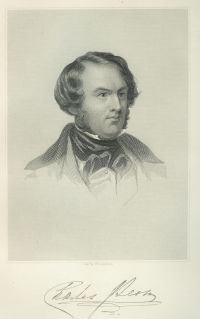 Charles James Lever,
One Of Them
Charles James Lever,
One Of Them
“ I have lived to learn the great lesson that every mishap of my life was of my own procuring, and that self-indulgence and a vindictive spirit are enough to counterbalance tenfold more than all the abilities I ever possessed. ”
 James Allen,
From Passion to Peace
(1910)
James Allen,
From Passion to Peace
(1910)
“ Personal interests are replaced by universal purposes, and all cares, troubles, and anxieties concerning the pleasure and fate of the personality are dispelled like the feverish dreams of a night. Passion is blind and ignorant; it sees and knows only its own gratification. Self recognizes no law ”
“ From this continual reaction of your mind on your heart, from this insatiable need of occupying your thoughts, is born the fatal habit of self-examination, that entices you to such horrid study of your own conduct, and the spirit of analysis that leads you to the discovery of such unworthy motives in others. ”
 Thomas à Kempis,
Moments with the consoling Christ
(1918)
Thomas à Kempis,
Moments with the consoling Christ
(1918)
“ BUT if I abase myself, and bring myself down to very nothingness, and divest myself of all self-esteem, and reduce myself, as I really am, to mere dust, Thy grace will be favorable to me, and Thy light will draw nigh to my heart; and all self-estimation, how small soever, will be sunk in the depth of my own nothingness, and there lose itself forever. ”
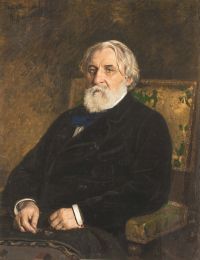 Ivan Sergeevich Turgenev,
The Diary of a Superfluous Man and Other Stories
Ivan Sergeevich Turgenev,
The Diary of a Superfluous Man and Other Stories
“ I alone am to blame and am deservedly punished. In my youth I was absorbed by one thing—my precious self; I took my simple-hearted self-love for modesty; I avoided society—and here I am now, a fearful bore to myself. What am I to do with myself? There is no one I love; all my relations with other people are somehow strained and false. ”
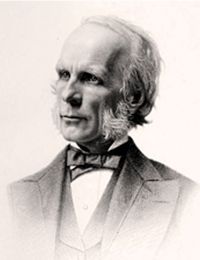 William G. T. Shedd,
Sermons to the Natural Man
William G. T. Shedd,
Sermons to the Natural Man
“ But, if we watch the influence upon the will itself, of its own wrong decisions, its own yielding to temptations, we shall discover that the voluntary faculty may be ruined from within; may be made impotent to good by its own action; may surrender itself with such an intensity and entireness to appetite, passion, and self-love, that it becomes unable to reverse itself, and overcome its own wrong disposition and direction. ”
Edith H. Allen, Home Missions in Action
“ So live that your after self—the man you ought to be—may in time be possible and actual. Far away in the twenties, the thirties of this century, he is awaiting his turn. His body, his brain, his soul are in your boyish hands. He cannot help himself. What will you leave for him? Will it be a brain unspoiled by lust or dissipation, a mind trained to think and act, a nervous system true as a dial in its response to the truth about you? ”
Elizabeth Ryder Wheaton, Prisons and Prayer; Or, a Labor of Love
“ Remember, while you are walking about to-day, feeling self-conscious of your own strength to resist any and everything in the line of temptation, the time may come when you will lose control of yourself; or, it may be, some one dear to you will fall. In such cases, how many excuses you can find for yourself or him. Can you find none for those now suffering for the same? I feel impelled by some power to speak of those very people in a few lines. ”
James Ward, 1911 Encyclopædia Britannica (1911)
“ As one hand washes the other, may not different members of the series of feelings be subject and object in turn? Compare, for example, the state of mind of a man succumbing to temptation (as he pictures himself enjoying the coveted good and impatiently repudiates scruples of conscience or dictates of prudence) with his state when, filled with remorse, he sides with conscience and condemns this “former self”—the “better self” having meanwhile become supreme. ”
 Edward B. Hall,
Memoir of Mary L. Ware, Wife of Henry Ware…
Edward B. Hall,
Memoir of Mary L. Ware, Wife of Henry Ware…
“ You will say, you have much to struggle with in your own character, and that nothing can satisfy you while you have to contend with self so continually. But your greatest temptation is to dwell too much upon your internal trials, leading you almost insensibly to that most insidious and deceptive form of self-love, a too constant thought of self even in regard to one's faults. ”