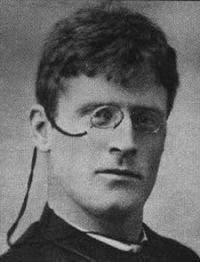
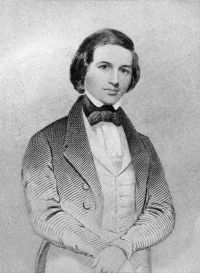
F. L. Wallace, The Music Master
“ He still wasn't interested, but it was best to pretend curiosity. Shoplifting is a crime punishable by law. What exactly was shoplifting? If it meant what it seemed to, there were giants in those days. ”
Shoplifting, defined as the unauthorized removal of goods from a retail establishment, has long been a subject of literary and social examination. From F. L. Wallace’s reflection on historical "giants" of the practice to Charles James Lever’s critique of societal stigma, authors have explored its ethical, legal, and cultural aspects. George W. M.
Reynolds observed the increasing occurrence of shoplifting among women of "education and refinement," while Arthur B. Reeve emphasized the tactical difficulties of identifying such offenses in crowded settings. These diverse viewpoints, drawn from fiction, journalism, and social analysis, illustrate shoplifting as a means of examining broader issues of class, law, and human conduct.
F. L. Wallace, The Music Master
“ He still wasn't interested, but it was best to pretend curiosity. Shoplifting is a crime punishable by law. What exactly was shoplifting? If it meant what it seemed to, there were giants in those days. ”
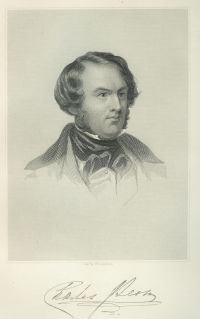 Charles James Lever,
Nuts and Nutcrackers
Charles James Lever,
Nuts and Nutcrackers
“ It is useless to explain that you have nowhere particular to go to, that you are an idler and a lounger. The confession is a fatal one; and however respectable your appearance, the idea of shoplifting is at once associated with your pursuits. Into what inconsistencies do we fall while multiplying our laws, for while we insist upon progression, we announce a penalty for vagrancy. ”
Eliot Gregory, Worldly Ways & Byways
“ It is a sad commentary on our boasted civilization that cases of shoplifting occur more and more frequently each year, in which the delinquents are women of education and refinement, or at least belong to families and occupy positions in which one would expect to find those qualities! ”
 Abbie Hoffman,
FUCK THE SYSTEM
(1967)
Abbie Hoffman,
FUCK THE SYSTEM
(1967)
“ This method is a lot safer than the customary shoplifting. In order to be prosecuted for shoplifting you have to leave the store with the goods. If you have eaten it there is no evidence to be used against you. ”
“ Note the following story of the arrest of two shop-girls and how skilfully the reporter avoids charging them with theft: CHARGE TWO WITH SHOPLIFTING Edna K. Whitter and Minnie Jensen, saleswomen in a New Haven store, are under arrest charged with shoplifting. The former is said to have confessed after goods valued at more than $1,000 were found in her room. She is said to have implicated Miss Jensen, who denies the charge. Desire to dress elaborately is alleged to have caused the young women to steal. Miss Jensen is the daughter of a farmer. ”
 George W. M. Reynolds,
The Mysteries of London, v. 1/4
George W. M. Reynolds,
The Mysteries of London, v. 1/4
“ The practice of shoplifting among ladies has increased lately to a fearful degree. But, after all, it is only a little eccentricity—indeed one might almost call it an amiable weakness. The fact is, that many ladies will go into a shop, purchase a hundred-guinea shawl, and secrete an eighteen-penny pair of gloves. Prudent husbands and fathers avert the tradesman, with whom their wives and daughters deal, beforehand ”
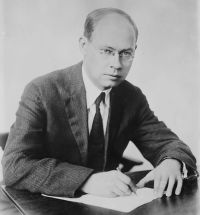 Arthur B. Reeve,
The Dream Doctor
(1914)
Arthur B. Reeve,
The Dream Doctor
(1914)
“ It is much easier for these light-fingered individuals to operate during the rush than at any other time. In the summer, for instance, there is almost no shoplifting at all. I thought that perhaps we could discover this particular shoplifter by ordinary means, that perhaps some of the clerks in the jewellery department might be able to identify her. We found one who said that he thought he might recognise one of the women if he saw her again. Perhaps you did not know that we have our own little rogues' gallery in most of the big department-stores. ”
Anonymous, The London Guide and Stranger's Safeguard (1819)
“ This would prevent a great proportion of those shop robberies, which the tradesman feels has been committed, without knowing upon whom to fix the crime, and half distracted at his own suspicions, he robs himself of peace and the people around him of their comfort: and, as prevention shall be better than cure (all to nothing) any time of the day, "such shopmen are guilty (the law ought to say) who are so far derelict in their duty as to hold out the lure to their master's customers—ohmucli confusion in his goods and negligence in shewing them." ”
 William F. Howe,
Danger! A True History of a Great City's Wiles and Temptations
William F. Howe,
Danger! A True History of a Great City's Wiles and Temptations
“ The professional thief will resort to tears, expostulations, explanations, excuses of all kinds, finally begging to be allowed to depart. The discovery of the bag or the muff, however, invariably settles the case and the offender is marched off to jail.In the case of a mistake, as stated, the store-keeper generally makes the explanations, excuses, and so forth, supplementing them afterwards by payment in a suit for damages.Men shop-lifters—or, more properly, store thieves—pursue an entirely different method, and confine their operations to a far different kind of store. ”
William Russell, Recollections of a Policeman
“ If an urchin picks your pocket, or a bungling “artist” steals your watch so that you find it out in an instant, it is easy enough for any private in any of the seventeen divisions of London Police to obey your panting demand to “Stop thief!” But the tricks and contrivances of those who wheedle money out of your pocket rather than steal it; who cheat you with your eyes open; who clear every vestige of plate out of your pantry while your servant is on the stairs; who set up imposing warehouses, and ease respectable firms of large parcels of goods ”
Reverend M. Holland, Once a Week (1863)
“ Shop-thieves are mostly women: they are well dressed, very civil in their manner, generally have a shawl on their arm and an umbrella in their hand, and go two together, or sometimes in threes. Their purloining spreads or divides itself into three leading branches—robbing the customer, stealing shop-goods, and cheating in money affairs. If a customer is looking at anything, the thief will ask to look at the same; this gives an opportunity for pressing against the lady and picking her pocket. Should they see a lady lay a parcel or a good parasol upon the counter the thief will take it up ”
“ My thoughts gave a jerk and dwelt upon the money. I grew afraid; deadly afraid of myself. The theft rushed in upon me in all its details. I saw the little shop, the counter, my lean hands as I seized the money, and I pictured to myself the line of action the police would adopt when they would come to arrest me. Irons on my hands and feet; no, only on my hands; perhaps only on one hand. The dock, the clerk taking down the evidence, the scratch of his pen--perhaps he might take a new one for the occasion--his look, his threatening look. ”
Arthur B. Reeve,
The Dream Doctor
“ Why, sir, she gets more plunder in a year than the burglar. She's costing the stores over two million dollars. And she is at her busiest just now with the season's shopping in full swing. It's the price the stores have to pay for displaying their goods, but we have to do it, and we are at the mercy of the thieves. I don't mean by that the occasional shoplifter who, when she gets caught, confesses, cries, pleads, and begs to return the stolen article. ”
“ Out from it go daily hundreds of men and women, boys and girls, on their business of beggary, theft and the enticement of the weak and unwary into crime. In it congregate human vultures and harpies who absorb most of the plunder that is gained outside, and render more brutal and desperate the wretches they rob in comparative safety. “Let me show you how this is done. A man or a woman thirsting for liquor will steal anything to get money for whisky. The article stolen may be a coat, a pair of boots or a dress—something worth from five to twenty dollars. ”
 George R. Sims,
The Mysteries of Modern London
George R. Sims,
The Mysteries of Modern London
“ Many a thief who has stolen from women for years with impunity has come to instant grief when, tempted by the apparent carelessness of the owner in a crowd, he has tried to take a watch from a man. The most difficult branch of the "profession" for the young thief to learn is "counter creeping." To enter a shop on your hands and knees, crawl round behind the counter, and secure the till unnoticed by the shopkeeper requires the most skilful use, not only of the hands, but of the knees. The slightest sound as you crawl along the floor might attract attention. ”
William F. Howe,
Danger! A True History of a Great City's Wiles and Temptations
“ It often happens that store-keepers make mistakes and wrongfully accuse respectable ladies of shop-lifting, and in such cases the over-zealous vender suffers greatly, both in loss of custom and, oftentimes, in heavy damages in a court of law. All stores are provided with what are called examination rooms. When a person is suspected of being a thief, some of the attaches of the store, or a detective, as the case may be, taps the person lightly upon the shoulder, and politely invites them into this examination room. ”
William Douglas Morrison, Crime and Its Causes
“ It has been pointed out in the preceding chapter that the offences people, in a state of destitution, are most likely to commit are beggary and theft. In the case of persons who are in a state of poverty, but not destitute, it may be said that the offence they are most likely to commit is theft in one or other of its forms. What then are the international statistics of theft, and what is the relative wealth of the several countries from which these statistics are drawn? An answer to these two questions will throw a flood of light upon the nature of the relations between poverty and crime. ”
Emmerson Wain Manning, Practical Instruction for Detectives…
“ A thief will not steal unless he knows that he can make some profitable disposition of his haul. It is comparatively easy to dispose of jewelry, but a thief must know positively where he can immediately dispose of bulky property that he cannot readily conceal. Usually such stuff is immediately sold to unscrupulous dealers who carry goods of the same kind in stock; for instance, a quantity of stolen cloth may be sold to a dishonest dry-goods merchant. In some cases, however, a store or flat is rented in advance of a burglary or theft and the loot stored in it. ”
William F. Howe,
Danger! A True History of a Great City's Wiles and Temptations
“ The frequency with which thefts by shop-lifters occur, and the amount of valuable goods stolen, has rendered store-keepers more suspicious and cautious, probably, than any other class of men in the world. Nearly all the large stores on Sixth avenue, Twenty-third street, Broadway, Fourteenth street, and others, where ladies do most of their shopping, and which are perfectly jammed with people nearly all day long, employ either male or female detectives (and in some instances both are used) , who are constantly on the alert for the detection of female shop-lifters. ”
Arthur Griffiths, Modern French Prisons
“ Of the minor crimes committed by the feminine offender, that of theft is the most common, abundant opportunities for practising it being afforded them, especially in the great shops of Paris. In many cases prevention is preferred to prosecution. A very close supervision is exercised by private police agents disguised as floor-walkers and salesmen, who watch the counters and promptly lay hands upon the light-fingered, who are haled at once to ransom, obliged to surrender the goods or pay for them and fined in proportion to the value of the article stolen. ”
Mrs. Sophie Van Elkan Lyons Burke, Why Crime Does Not Pay
“ What he wants is a temporary hiding place—a place where he can conceal it until whatever outcry the theft may have caused has had time to die down and he can safely dispose of his booty to one of the numerous "fences" who are to be found in every large city. Whenever possible, the prudent thief selects a temporary hiding place before he actually lays his hands on his plunder, and loses no time in getting it out of his [Pg 242] possession, so that, in case the police arrest him soon after the robbery, they will find nothing incriminating. ”
W. L. Melville Lee, A History of Police in England
“ After suggesting that steps should be taken to punish all keepers of ale-houses who harbour suspicious persons, and all constables and tything-men who suffer them to be at large, he goes on to explain how difficult it is to get the country people to prosecute in cases of theft, "for most commonly the most simple country man and woman, looking no further than to the loss of their own goods, are of opinion, that they would not procure any man's death for all the goods in the world." ”
Anonymous, Charles Peace, or The Adventures of a Notorious Burglar
“ The police—often conveniently blind—are nothing if not arithmetical. Armed with a note-book and a pencil, they penetrate into the most secret recesses of a guilty commerce, and, having tabulated the number of “fences” in England and Wales, complacently suffer wrong-doing to take its course.Either the crime of receiving stolen goods is on the increase, or the receivers are growing less fortunate; since the number of commitments for this specific offence was, according to the latest returns, four hundred and eighty in 1878, against four hundred and fifteen in 1877. ”
Lewis E. Theiss, The Young Wireless Operator—With the U. S. Secret Service
“ They steal the wool while it is being conveyed to the bonded warehouses, you know. And so the owner loses his property and Uncle Sam loses the revenue on the stolen wool. We were nosing around in South Street last night, when my assistant overheard a fellow say he had a jag of cotton to sell. We kept tabs on the fellow and he proved to belong on the Dixie.”“Aren’t those rather slender grounds on which to accuse a man of theft?” said Mr. Morgan, a frown wrinkling his forehead. “I have no doubt this fellow may have been stealing. We are losing property in transit all the time. ”
S. A. Reilly, Our Legal Heritage, King AEthelbert… (2012)
“ Three-fourths of all assize indictments and many quarter-sessions indictments were for various types of theft, including petty larceny, grand larceny, housebreaking, burglary, sheep stealing, and robbery. These offenses were mostly opportunistic rather than planned, except for London's underworld of professional thieves and the cutpurses of country markets and highway robbers on lonely roads. There were substantial peaks in theft in periods of harvest failure and industrial depression, especially by vagrants. But most of the poor never stole. ”
 Allan Pinkerton,
The Spy of the Rebellion
Allan Pinkerton,
The Spy of the Rebellion
“ I was engaged in a detective operation which required my presence in the city, and had been in consultation with some of the express company's officials, for whom I was attempting to discover the perpetrators of a robbery of one of their safes. Turning a corner I came upon a scene that stirred my feelings to the utmost.It was the market square, and the merchandise disposed of were human beings. There was the auction-block and the slave-pen. Men, women and children were being knocked down to the highest bidder. Wives were sold away from their husbands, and children from their parents. ”
Emmerson Wain Manning, Practical Instruction for Detectives…
“ The shoplifter rarely will bother with cheap merchandise, but will confine her thefts to valuable laces, silks, furs, jewelry, etc., which she secretes in the pockets of her skirt or coat. During the summer season when it would be out of place to wear a coat, the shoplifter takes advantage of the rainy days and enters stores with her umbrella, in which she secretes [68] and carries off such articles as she may find an opportunity to take from the counters unobserved by the clerks or floorwalkers. ”
James Dabney McCabe, Lights and Shadows of New York Life
“ The opportunities for theft are very great in the city stores. Hundreds of small articles, many of them of considerable value, lie within easy reach of the customers, and all the employés are obliged to exert the greatest watchfulness. Private detectives are employed by the principal houses, and as soon as a professional shoplifter enters, he or she is warned off the premises by the detective, whose experience enables him to recognize such persons at a glance. A refusal to profit by this warning is followed by a summary arrest.The salesmen are not allowed to receive the pay for their sales. ”
“ Who is this dressed in rusty black garments and closely veiled, who comes up from the restaurant, one of the convenient and unsuspected entrances to this robber's den?—for a “policy-shop” is simply a robbery shop, and is so regarded by the law, which sets a penalty upon the “writer” and the “backer” as upon other criminals. But who is this veiled woman in faded mourning garments who comes gliding as noiselessly as a ghost out from one of the rooms of the restaurant, and along the narrow entry leading to the stairway, now so thronged with visitors? ”
William F. Howe,
Danger! A True History of a Great City's Wiles and Temptations
“ At police headquarters, once, in examining the contents of one of these bags, it was found to actually hold a piece of satin, several cards of lace, a camel's-hair shawl, two large china ornaments, a number of spools of silk, several elegant fans, expensive ostrich plumes, and numberless smaller articles, feathers, artificial flowers and some minor trinkets. Shop-lifters are the terror of the shop-keepers, for the thefts embrace everything of convenient character lying about. With one dexterous sweep they will frequently put out of sight a dozen small articles. ”