“ The labor vote, therefore, first confined slavery to limits in which it could not live, and when the slave power sought to exceed these territorial limits, it was suddenly and unintentionally abolished. ”
Slave power
Definition and stakes
The concept of "Slave Power" refers to the perceived political influence of Southern slaveholders in pre-Civil War U.S. federal governance, portrayed as a danger to republicanism and free labor. Antislavery advocates such as Frederick Douglass and Charles Sumner criticized it as a structural force that entrenched slavery through legal and legislative strategies, while Lydia Maria Child emphasized its contradictory dependence on the subjugation of enslaved individuals.
The term inspired resistance, driving the emergence of the Republican Party and ultimately playing a role in the outbreak of the Civil War. The downfall of Slave Power, signaled by Southern secession, concluded nearly seven decades of slaveholder dominance, transforming America's political and ethical landscape.
Quotes about “slave power”
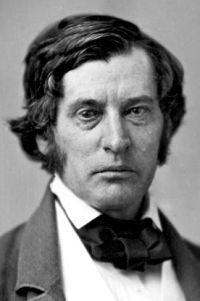 Charles Sumner,
Charles Sumner: his complete works…
“ To the overthrow of the Slave Power we are summoned by a double call, one political and the other philanthropic,—first, to remove an oppressive tyranny from the National Government, and, secondly, to open the gates of Emancipation in the Slave States. ”
Charles Sumner,
Charles Sumner: his complete works…
“ Usurpations and Aggressions of the Slave Power.—Look at the extent to which this malign influence has predominated. The Slave States are far inferior to the Free States in population, wealth, education, libraries, resources of all kinds, and yet they have taken to themselves the lion's share of honor and profit under the Constitution. ”
Various, The Atlantic Monthly, Volume 09…
“ If we desire any stronger evidence that slaveholders constitute a general Slave Power, that this Slave Power acts as a unit, the unity of a great interest impelled by powerful passions, and that the virtues of individual slaveholders have little effect in checking the vices of the system, we can find that evidence in the zeal and audacity with which this power engaged in extending its dominion. ”
 Henry Box Brown,
Narrative of Henry Box Brown
“ Does not every slaveholder assume exclusive control over all the actions of his unfortunate victims? Most assuredly he does, as this extract from the laws of a slaveholding State will show you. “A slave is one who is in the power of his master, to whom he belongs. A slave owes to his master and all his family, respect without bounds and absolute obedience.” ”
Charles Sumner,
FREEDOM NATIONAL; SLAVERY SECTIONAL: Mr…
(1852)
“ Full well I know that the institution of slavery in our country, which I now proceed to consider, is as sensitive as it is powerful - possessing a power to shake the whole land with a sensitiveness that shrinks and trembles at the touch. ”
 Lydia Maria Child,
An Appeal in Favor of that Class of Americans Called Africans
“ It is worthy of observation that this slave representation is [Pg 111] always used to protect and extend slave power; and in this way, the slaves themselves are made to vote for slavery: they are compelled to furnish halters to hang their posterity. ”
Charles Sumner,
The Crime against Kansas
(1856)
“ But the slave power dares anything, and it can be conquered only by the united masses of the People. From Congress to the people I appeal. ”
Lydia Maria Child,
An Appeal in Favor of that Class of Americans Called Africans
“ The slave may be punished at his master's discretion—without trial—without any means of legal redress,—whether his offence be real, or imaginary: and the master can transfer the same despotic power to any person, or persons, he may choose to appoint.7. The slave is not allowed to resist any free man under any circumstances: his only safety consists in the fact that his owner may bring suit, and recover, the price of his body, in case his life is taken, or his limbs rendered unfit for labor. ”
 Frederick Douglass,
The American Constitution and the Slave
(1860-03-26)
“ I, on the other hand, deny that the Constitution guarantees the right to hold property in men, and believe that the way, the true way, to abolish slavery in America is to vote such men into power as will exert their moral and political influence for the abolition of slavery. This is the issue plainly stated, and you shall judge between us. ”
Lydia Maria Child,
Anti-slavery catechism
(1839)
“ A. If you will examine Stroud’s Compendium of the Slave Laws, you will be convinced for yourself that what I say is true; and the effect is as you suppose. The poor slaves are completely in the power of their masters. The same men who accuse them are often their judges and executioners. ”
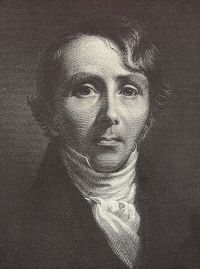 William Ellery Channing,
Slavery
“ The deliberate, solemn conviction of good men through the world, that slavery is a grievous wrong to human nature, will make itself felt. To increase this moral power is every man's duty. To embody and express this great truth is in every man's power; and thus every man can do something to break the chain of the slave. ”
 Harriet Beecher Stowe,
Uncle Tom's Cabin
(1852)
“ Is man ever a creature to be trusted with wholly irresponsible power? And does not the slave system, by denying the slave all legal right of testimony, make every individual owner an irresponsible despot? Can anybody fall to make the inference what the practical result will be? If there is, as we admit, a public sentiment among you, men of honor, justice and humanity, is there not also another kind of public sentiment among the ruffian, the brutal and debased? And cannot the ruffian, the brutal, the debased, by slave law, own just as many slaves as the best and purest? ”
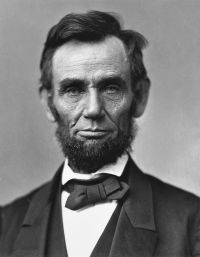 Abraham Lincoln,
Life and Works of Abraham Lincoln
(1907)
“ Free labor has the inspiration of hope; pure slavery has no hope. The power of hope upon human exertion and happiness is wonderful. The slave-master himself has a conception of it, and hence the system of tasks among slaves. The slave whom you cannot drive with the lash to break seventy-five pounds of hemp in a day, if you will task him to break a hundred, and promise him pay for all he does over, he will break you a hundred and fifty. You have substituted hope for the rod. ”
William O. Blake, The History of Slavery and the Slave Trade (1861)
“ We are about to establish a government for a new country. The government of which we form a part originated from, and is founded upon, the rights of man, and upon that ground we mean to uphold it. With what propriety, then, can a government emanate from us in which slavery is not only tolerated, but sanctioned by law? It has indeed been urged that, as this territory will be settled by emigrants from the southern states, they must be allowed to have slaves; as much as to say that the people of the south are fit for nothing but slave-drivers — that, if left to their own labor, they would starve! ”
W. W. Sleigh, Abolitionism Exposed!
“ Is not this, then, a case parallel with that of the slaves? And in both, I may as justly accuse you of oppression, of tyranny, of a hatred to liberty, because you will not emancipate lunatics, and all children, as you accuse me, for not advocating the immediate abolition of slavery.Slavery is derived from slave; as servant comes from service. In the English language the two are distinct from one another; the former term being applied to involuntary, the latter to voluntary, servitude. ”
George Washington Williams, History of the Negro Race in America from 1619 to 1880…
“ We cannot alter our course one hair's breadth, nor accept a compromise of our principles for the hearty adoption of our principles. I am for meddling with slavery everywhere—attacking it by night and by day, in season and out of season (no, it can never be out of season) —in order to effect its overthrow. (Loud applause.) Higher yet will be my cry. Upward and onward! No union with slave-holders! Down with this slave-holding government! ”
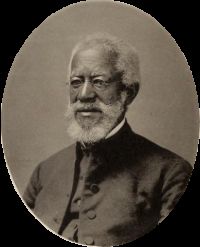 Alexander Crummell,
The Future of Africa — Chapter X.
(1862)
“ The institution of slavery, wielding a most potent and commanding authority, brought every thing, in politics, science, philosophy, and letters, to bear in support of the slave trade, in maintenance of the institution of slavery, and to uphold the dogma that the Negro was but an inferior animal. ”
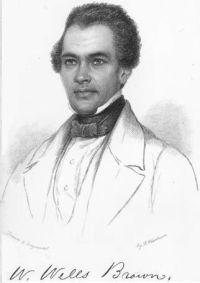 William Wells Brown,
The Negro in the American Rebellion…
“ Slavery is abolished. The cause of antagonism is removed; and you must see that it is altogether illogical—‘putting new wine into old bottles, mending new garments with old clothes’—to legislate from slave-holding and slave-driving premises for a people whom you have repeatedly declared your purpose to maintain in freedom. ”
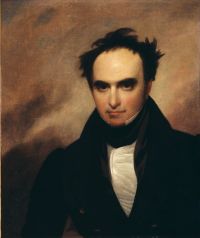 Daniel Webster,
The Great Speeches and Orations of Daniel Webster
“ When I say that I regard slavery in itself as a great moral, social, and political evil, I only use language which has been adopted by distinguished men, themselves citizens of slave-holding States. I shall do nothing, therefore, to favor or encourage its further extension. We have slavery already amongst us. The Constitution found it in the Union; it recognized it, and gave it solemn guaranties. ”
George Washington Williams, History of the Negro Race in America from 1619 to 1880…
“ The effects of Slavery on the bond and Colonization on the free. Of the first we shall say but little, but will here repeat the language of a high-minded Virginian in the Legislature of that State, on the recent discussion of the slave question before that honorable body, who declared, that man could not hold property in man, and that the master held no right to the slave, either by a law of nature or a patentee from God, but by the will of society; which we declare to be an unjust usurpation of the rights and privileges of men. ”
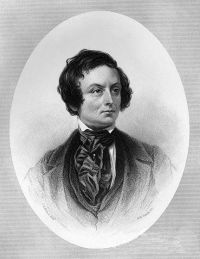 Epes Sargent,
Peculiar: A Tale of the Great Transition
(1863)
“ First, there are the five millions of mean, non-slaveholding whites. These the system has reduced to a condition below that of the slave himself, in many cases. Slavery becomes at once their curse and their infatuation. It fascinates while it crushes them ”
Frederick Douglass,
What to the Slave Is the Fourth of July…
(1852)
“ On what branch of the subject do the people of this country need light? Must I undertake to prove that the slave is a man? That point is conceded already. Nobody doubts it. The slaveholders themselves acknowledge it in the enactment of laws for their government. They acknowledge it when they punish disobedience on the part of the slave. ”
American Anti-Slavery Society, The Anti-Slavery Examiner, Omnibus
“ All that they ask, is that equal moderation be shown on the other side. Let the case of the slaves be considered, as it is in truth, a peculiar one. Let the compromising expedient of the Constitution be mutually adopted, which regards them as inhabitants, but as debased by servitude below the equal level of free inhabitants, which regards the slave as divested of two-fifths of the man. ”
Harriet Beecher Stowe,
Sunny Memories of Foreign Lands
(1854)
“ Our northern free states denouncing slavery as a crime, confessedly inconsistent with their civil and religious principles, yet, for commercial and pecuniary considerations, deliberately entering into a compact with slaveholders tolerating a twenty years' perpetuation of the African slave trade, the rendition of fugitives, the suppression of servile insurrections, and allowing to the slaveholders a virtual property basis of representation. ”
Unknown, The Trial of Reuben Crandall, M.D
“ Wherever slavery exists to any considerable extent, with the exception of some recently settled portions of the country, and which have not yet felt, in a great degree, the baneful and deteriorating influence of slave labor—we hear, at this moment, the cry of suffering. ”
A. A. Parker, Trip to the West and Texas
“ But the slaveholder believes, there are many things to be taken into consideration—self preservation, good order of society and the condition of the emancipated slave, are all to be regarded and weighed, before freedom is granted. ”
Frederick Douglass,
My Bondage and My Freedom
(1855)
“ If it be right to hold slaves at all, it is right to hold [321] them in the only way in which they can be held; and this can be done only by shutting out the light of education from their minds, and brutalizing their persons. The whip, the chain, the gag, the thumb-screw, the blood-hound, the stocks, and all the other bloody paraphernalia of the slave system, are indispensably necessary to the relation of master and slave. ”
William O. Blake, The History of Slavery and the Slave Trade (1861)
“ Resolved, That the institution of slavery is known and recognized in this territory; that we repel the doctrine that it is a moral and political evil, and we hurl back with scorn upon its slanderous authors the charge of inhumanity; and we warn all persons not to come to our peaceful firesides to slander us, and sow the seeds of discord between the master and the servant; for, as much as we deprecate the necessity to which we may be driven, we cannot be responsible for the consequences. ”
Harriet Beecher Stowe,
Sunny Memories of Foreign Lands
(1854)
“ The spirit of slavery, stimulated to madness by the indignation of the civilized world, in its frenzy bids defiance to God and man, and is determined to make itself respected by enlisting into its service the entire wealth, and power, and political influence of this great nation. Its encroachments are becoming so enormous, and its progress so rapid, that it is now a conflict for the freedom of the citizens rather than for the emancipation of the slaves. ”
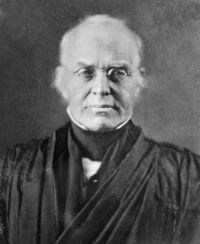 Joseph Story,
Commentaries on the Constitution of the United States
(1833)
“ But, in being protected in his life and limbs against the violence of others, even of the master of his labour and liberty; and in being punishable himself for all violence committed against others; the slave is no less evidently regarded by law, as a member of the society, and not as a part of the irrational creation; as a moral person, and not as a mere article of property. ”
William O. Blake, The History of Slavery and the Slave Trade (1861)
“ It was an arduous task, in this enlightened age, to prove the legality of slavery. Winn gentlemen attempt to justify this unnatural traffic, or to prove the lawfulness of slavery, they ought to advert to the genius of our government and to the principles of the revolution. ”
 Hinton Rowan Helper,
The Impending Crisis of the South…
“ Slaveholders and slave-breeders shall be convinced, confuted, convicted, and converted. They shall, in their hearts and consciences, if not with their tongues and pens, bear testimony to the triumphant achievements of free labor. ”
author:Victor Hugo, Letters on American Slavery — Victor Hugo on American Slavery (1860)
“ Slavery sanctioned by law among that illustrious people, who for seventy years have measured the progress of civilization by their march, demonstrated democracy by their power, and liberty by their prosperity! Slavery in the United States! ”
 Jack London,
Martin Eden
(1909)
“ They have purchased your slave judges, they have debauched your slave legislatures, and they have forced to worse horrors than chattel slavery your slave boys and girls. Two million of your children are toiling to-day in this trader-oligarchy of the United States. Ten millions of you slaves are not properly sheltered nor properly fed. ”
 Leslie Stephen,
Dictionary of National Biography…
(1896)
“ In this work he discussed the position of master and slave in ancient and modern times, argued that society and the owners themselves would benefit by free labour and that under existing conditions the slave could not be benefited morally or intellectually, and finally, meeting the various objections that had been made on the ground of the inferiority of the negro, concluded with suggestions which practically meant the abolition of slavery. ”
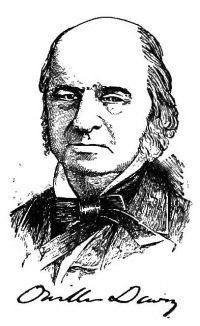 Orville Dewey,
Autobiography and Letters of Orville Dewey…
“ Why, that we shall say and vote that we so much approve of the slave-system, that we are willing, not merely that it should exist untouched by us,—that is not the question,—but that it should be taken to our bosom as a cherished national institution. ”
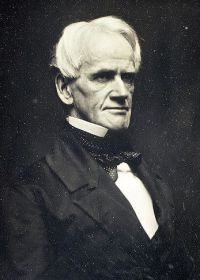 Horace Mann,
Slavery: letters and speeches
(1851)
“ In the first settlement of a country, when labor is scarce and dear, slavery may give a temporary impulse to improvement; but even this is not the case, except in warm climates, and where free men are scarce and either sickly or lazy; and when we have said this, we [Pg 74] have said all that experience in the United States warrants us to say, in favor of the policy of employing slave labor. ”
Lydia Maria Child,
An Appeal in Favor of that Class of Americans Called Africans
(1833)
“ The slave-holders insist that their humanity is so great, as to render all their ferocious laws perfectly harmless. Are the laws then made on purpose to urge tender-hearted masters to be so much worse than they really desire to be? ”
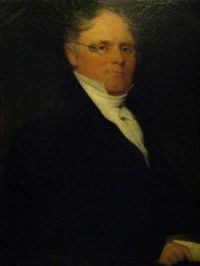 Nathaniel S. Prime,
The year of jubilee; but not to Africans
“ By these laws, a pious and benevolent master, who has inherited a hundred slaves, and who would gladly deliver them from bondage, or, at least, alleviate, by every means in his power, the miseries of their condition, is compelled, against every feeling of his heart, not only to hold them in servitude, but to keep them in absolute ignorance. ”
Nathaniel S. Prime,
The year of jubilee; but not to Africans
“ By it, all the horrours of the slave-trade, the whole root and stock and branch of which slavery is the bitter fruit, were firmly sanctioned for thirty tedious years. During this gloomy period, under the sanction of the charter of freemen, and of freemen too, who, in the days of their emancipation from the chains of despotism, appealed to heaven for the sincerity of their intentions, while they declared to the world “that all men are created equal, and endowed by their Creator with an unalienable right to life, liberty and the pursuit of happiness;” ”
William O. Blake, The History of Slavery and the Slave Trade (1861)
“ It remains only to remark that our own experience has proved the danger ous influence and tendency of slavery. All our apprehensions of dangers, present and future, begin and end with slavery. If slavery, limited as it yet is, now threatens to subvert the constitution, how can we, as wise and prudent statesmen, enlarge its boundaries and increase its influence, and thus increase already impending dangers? ”
Related terms
Authors who wrote about “slave power”
Frederick DouglassLydia Maria ChildAmerican Anti-Slavery SocietyHarriet Beecher StoweW. W. SleighAbraham LincolnWilliam Ellery Channing Solomon NorthupGeorge Washington WilliamsWilliam Wells BrownCharles Sumner
 W. E. B. Du BoisEpes SargentNathaniel S. PrimeHorace MannHenry Box BrownWilliam O. Blake
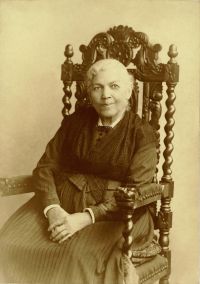 Harriet Ann Jacobs
 Carter Godwin WoodsonHinton Rowan Helper
