“ If we wish to be ourselves polite, just, kind, and sociable, or to induce others to become so, we must act habitually under the influence of the corresponding sentiments, in the domestic circle, in the school-room, and in every-day life, as well as in the company of strangers and on great occasions. It is the private and daily practice of individuals that gives ready activity to the sentiments and marks the real character. ”
Sociable
Definition and stakes
The theme of “sociable” has been addressed by authors such as Ira Mayhew, Richard Baxter and Arthur Schopenhauer. It is often associated with terms like social, society, life, individual and community.
Quotes about “sociable”
Richard Baxter, A Christian Directory, Part 3: Christian Ecclesiastics
“ The law of nature requireth, that man being a sociable creature, and conjunction working strongest affections, we should use our sociableness in the greatest matters, and by conjunction help the zeal of our prayers and praises of God. ”
 Arthur Schopenhauer,
The Essays of Arthur Schopenhauer…
Arthur Schopenhauer,
The Essays of Arthur Schopenhauer…
“ Ordinary society is, in this respect, very like the kind of music to be obtained from an orchestra composed of Russian horns. Each horn has only one note; and the music is produced by each note coming in just at the right moment. In the monotonous sound of a single horn, you have a precise illustration of the effect of most people's minds. How often there seems to be only one thought there! and no room for any other. It is easy to see why people are so bored; and also why they are sociable, why they like to go about in crowds—why mankind is so gregarious. ”
 Sarah Stickney Ellis,
The Daughters of England
(1842)
Sarah Stickney Ellis,
The Daughters of England
(1842)
“ How much is left undone, for the sake of society! But let us pause a moment, and ask what society is. Is it a community of tried and trusted friends, united together by the ties of perfect love? Listen to the remarks of those, even of your own family, who return from the evening party, or the morning call. Is it a community of beings with whom mind is all in all, and intellectual improvement the purpose for which they meet? Observe the preparations that are made—the dress, the furniture, the food, the expense that is lavished upon these. ”
John Thomas Codman, Brook Farm: Historic and Personal Memoirs
“ Practically, too, the institution manifests a threefold improvement over the world at large, corresponding to these three motives. In consequence of the first, the companionship, the personal intercourse, the social bearing, are of a marked and very superior character. There may possibly to some minds, long accustomed to other modes, appear a want of homeness and of the private fireside; but all observers must acknowledge a brotherly and softening condition, highly conducive to the permanent and pleasant growth of all the better human qualities. ”
Anonymous, Bashfulness Cured: Ease and Elegance of Manner Quickly Gained
“ Take every opportunity to attend balls, picnics, parties, sociables, etc., and always rank yourself as one of the most desirable and popular young men of the occasion, and you will undoubtedly be so. Remember the fact that others will estimate you as you estimate yourself. ”
W.H.R.Rivers, Kinship and social organisation (1914)
“ The terminology of relationship is only a specially favourable example by means of which to show the value of an attitude towards, and mode of treatment of, social facts which hold good, though less conspicuously, throughout the whole field of sociology. In social, as in all other kinds of human activity, psychological factors must have an essential part. I have myself in these lectures pointed to psychological considerations as elements in the problems with which the sociologist has to deal. ”
 Alexander Bain,
Popular Science Monthly
(1878)
Alexander Bain,
Popular Science Monthly
(1878)
“ The Social Motives.—This is perhaps the most extensive and the least involved of all the emotional influences at work in education. The pleasures of love, affection, mutual regard, sympathy, or sociability, make up the foremost satisfaction of human life; and as such are a standing object of desire, pursuit, and fruition. Sociability is a wholly distinct fact from the prime supports of existence and the pleasures of the five senses, and is not, in my opinion, resolvable into those, however deeply we may analyze it, or however far back we may trace the historical evolution of the mind. ”
 William Isaac Thomas,
The Unadjusted Girl, With Cases and Standpoint for Behavior Analysis
William Isaac Thomas,
The Unadjusted Girl, With Cases and Standpoint for Behavior Analysis
“ It is capable of presenting life as a connected whole and of showing the interplay of influences, the action of values on attitudes. It can reveal the predominant wishes in different temperaments, the incidents constituting turning points in life, the processes of sublimation or transfer of interest from one field to another, the effect of other personalities in defining situations and the influence of social organizations like the family, the school, the acquaintance group, in forming the different patterns of life-organization. ”
 Albion Woodbury Small,
The American Journal of Sociology
(1896)
Albion Woodbury Small,
The American Journal of Sociology
(1896)
“ The social problem—if for simplicity we may speak as though social tasks were one—is how to socialize ourselves to such degree that, without bankrupting all, each may have a secure lien upon a minimum share of nature's endowment for satisfying common human wants. ”
 Franklin Henry Giddings,
Popular Science Monthly
(1909)
Franklin Henry Giddings,
Popular Science Monthly
(1909)
“ Here a word must be said about the subjective aspect of society, which, in its objective aspect, as we have seen, is merely the struggle and process of adjustment. What is the relation of adjustment to sympathy and to understanding, to communication and to concerted purpose, to the evolution of a social constraint through which the community controls and shapes the individual, to cooperation and to social organization? ”
Various, The Arena, Volume 4, No. 24, November…
“ All that was pronounced “good,” in man, in “the beginning” is innate in human nature. Social life and social relations are the life school in which this “good”-ness can be educed, strengthened, matured, in the individual. ”
 Charles Dudley Warner,
Certain Diversities of American Life
Charles Dudley Warner,
Certain Diversities of American Life
“ The thing developed was a social life, in the favored class, which has an almost unique charm, a power of being agreeable, a sympathetic cordiality, an impulsive warmth, a frankness in the expression of emotion, and that delightful quality of manner which puts the world at ease and makes life pleasant. ”
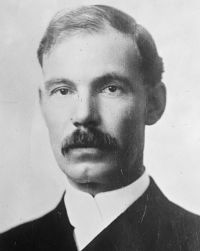 Edward Alsworth Ross,
The American Journal of Sociology
(1896)
Edward Alsworth Ross,
The American Journal of Sociology
(1896)
“ As a matter of fact, there is no stage of development where the feelings are net greatly modified. In view of the discovery that incipient social life often consists, not in working together or mutual help, but in play and festivity, we might well assert that the influence of group life on the likings, aversions and desires is more potent and pervasive than its influence on activities. ”
Sarah Stickney Ellis,
The Daughters of England
(1842)
“ Is it a community who even love to meet, and who really enjoy the social hours they spend together? Ask them in what mood or temper they enter upon the fatigues of the evening, or how often they wish that some event would occur to render their presence unnecessary. ”
Edward Alsworth Ross,
The American Journal of Sociology
(1896)
“ We observe two broadly contrasted types of human life—the isolated, admitting only of the family, and the associated. Between these types of life, and between the men and women who lead them, are certain great contrasts that must be due to the presence or absence of association. By the difference between the lone man and the social man, between the associated state and the life of single units or pairs, we can gauge the sociologic problem. The changes that attend association afford the best evidence that there exists a source of influence worthy of most zealous study. ”
Henry K. Rowe, Society: Its Origin and Development
“ Man and His Social Relations.—A study of society starts with the obvious fact that human beings live together. The hermit is abnormal. However far back we go in the process of human evolution we find the existence of social relations, and sociability seems a quality ingrained in human nature. Every individual has his own personality that belongs to him apart from every other individual, but the perpetuation and development of that personality is dependent on relations with other personalities and with the physical environment which limits his activity. ”
 Fanny Fern,
Folly as It Flies; Hit at by Fanny Fern
Fanny Fern,
Folly as It Flies; Hit at by Fanny Fern
“ To every young man entering the lists against the vices of a crowded city, at such fearful odds, we would say: cultivate an acquaintance, as soon as possible, with some family, or families, whose healthful influence may be your talisman against evil associations, whose good opinion may give an impetus to your self-respect, and whose cheerful fireside may outshine the ignis-fatuus lights which dazzle but to mislead. ”
 Ralph Waldo Emerson,
Society and Solitude — Society and Solitude
(1870)
Ralph Waldo Emerson,
Society and Solitude — Society and Solitude
(1870)
“ The remedy is, to reinforce each of these moods from the other. Conversation will not corrupt us, if we come to the assembly in our own garb and speech, and with the energy of health to select what is ours and reject what is not. Society we must have; but let it be society, and not exchanging news, or eating from the same dish. Is it society to sit in one of your chairs? I cannot go to the houses of my nearest relatives, because I do not wish to be alone. Society exists by chemical affinity, and not otherwise. ”
 Zona Gale,
Peace in Friendship Village
Zona Gale,
Peace in Friendship Village
“ I cut it out of the paper afterwards—this is it, word for word:"You who believe yourselves to be interested in social work, ask yourselves what it is that you are interested in really. I will tell you. Well, whether you know it or not, fundamentally what you care about is PEOPLE. Let us say it in a better way. It is FOLKS."I never took my eyes off her face after that. For "folks" is a word I know. Better than any other word in the language, I know that word "folks." ”
 William McDougall,
The Group Mind: A Sketch of the Principles of Collective Psychology
William McDougall,
The Group Mind: A Sketch of the Principles of Collective Psychology
“ Society like the kingdom of God is within us. Within us, within each of us, and yet greater than the thoughts and understandings of any of us. For the social thoughts and feelings and willings of each, the socialised mind of each, with the complex scheme of his relation to the social world, is no mere reproduction of the social thoughts and feelings and willings of the rest. ”
Edwin Seward Puller, Your boy and his training (1916)
“ Sociological consciousness, with its recognition of the duties and obligations of the individual toward the mass of individuals termed society, is still dormant. Its first awakening is seen in his recognition of duty [44] toward his family, and later toward his playmates and friends, and last of all toward society—which is reached in the reflective period. His mental horizon is bounded entirely by his own activities and interests in which he is the central figure. ”
Hector Denis, Social Comptabilism
“ Each individual would thus have the stereotype of his effective social life cast; each social being would have his effective life formulated, if one may so speak, by relation, always by relations, nothing but by relations—to that of all the rest, but in figures, and yet again, in nothing but figures. ”
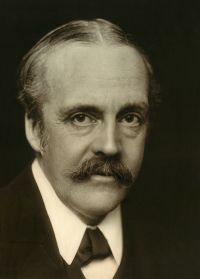 Arthur James Balfour,
Criticism and Beauty
(1910)
Arthur James Balfour,
Criticism and Beauty
(1910)
“ It may be easy enough for the sociologist to explain in general terms how necessary it is for the well-being of any community that there should be found among its members a widespread capacity for disinterested affection. ”
William Alexander Caruthers, The Cavaliers of Virginia, vol…
“ If we were in a little community by ourselves, I could indeed give my whole mind and soul to such enjoyments as the society of your family has already afforded to me, forgetting all the world besides, and never listening for a moment to ambitious hopes and aspiring thoughts. ”
 Ellen H. Richards,
The Cost of Shelter
Ellen H. Richards,
The Cost of Shelter
“ What is the value, of present-day knowledge if not to stimulate the conscious group, through the individual perhaps, but the group finally, to better use of its powers and opportunities toward a higher form of social life? ”
 Marie Stopes,
Married Love — Chapter 10: Society
(1918)
Marie Stopes,
Married Love — Chapter 10: Society
(1918)
“ When our relation to the community is fully realized, it will be seen that the health, the happiness, and the consequent powers of every individual, concern not only his own life, but also affect the whole community of which he is a member. ”
George Herbert Palmer, Altruism: Its Nature and Varieties
“ Society, the special field for the cultivation of manners, would soon be sterile soil were it not abandoned during lenten intervals and summers in the country. After meeting a multitude of people and being obliged to adjust ourselves to only such matters as all can understand, what a relief it is to be in the open fields, social conventions dropped, responsibilities forgotten, and no regard for others marking our words, acts, or dress! ”
Th. Ribot, The Psychology of the Emotions (1897)
“ The family group and the social group have each sprung from different tendencies, from distinct needs; each has its special, independent psychological origin, and there is no possible derivation from one to the other.III. Life in common, even under the gregarious form, requires certain ways of acting, and habits founded on sympathy and determined by the concerted aim pursued by all. In order that it may become stable and constitute a society, an element of fixity must be added—the more or less clear consciousness of an obligation, of a rule, of what has to be done or avoided. ”
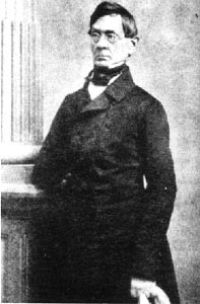 Anton Schindler,
Life of Beethoven
Anton Schindler,
Life of Beethoven
“ From recreation in the society of my fellow-creatures, from the pleasures of conversation, from the effusions of friendship, I am cut off. Almost alone in the world, I dare not venture into society more than absolute necessity requires. ”
 Woodrow Wilson,
The social center a means of common understanding
(1894)
Woodrow Wilson,
The social center a means of common understanding
(1894)
“ Here were people of all sorts talking about things that were interesting, that revealed to her things that she had never dreamed of before with regard to the vital common interests of persons whom she had always thought unlike herself, so that the community of the human heart was revealed to her, the singleness of human life. ”
E. W. Burgess, Introduction to the Science of Sociology
“ Everything now which is present in the individuals—the immediate concrete locations of all historical actuality—in the nature of impulse, interest, purpose, inclination, psychical adaptability, and movement of such sort that thereupon or therefrom occurs influence upon others, or the reception of influence from them—all this I designate as the content or the material of socialization. In and of themselves, these materials with which life is filled, these motivations which impel it, are not social in their nature. ”
 Hugh Miller,
Leading Articles on Various Subjects
Hugh Miller,
Leading Articles on Various Subjects
“ We felt a particular interest in the objects of the Society, and a deep sympathy with its members; for, as we listened to the various speakers, and our eyes glanced over the intelligent countenances that thronged the area of the apartment, we thought of past difficulties encountered in a cause similar to that which formed the uniting bond of the Society, and of not a few wrecks which we had witnessed of men who had set out in life from the humbler levels, with the determination of pressing their way upwards. ”
 Josiah Royce,
The World and the Individual, First Series
(1899)
Josiah Royce,
The World and the Individual, First Series
(1899)
“ But we also find it socially convenient to view the common objects of our human and social knowledge as independent both of my fellow and myself, even while we still view these objects as the same for both of us, and for all other actual and possible human observers. ”
Oskar Pfungst, Clever Hans (The Horse of Mr. Von Osten…
“ But the community of those elementary processes of mental life which we have mentioned above is in itself enough to connect the life of the lower forms with ours, and imposes upon us the duty of regarding them not as objects for exploitation and mistreatment, but as worthy of rational care and affection. ”
Henry K. Rowe, Society: Its Origin and Development
“ The Working of the Social Mind.—Conversation in the group develops a common purpose. The two men are conscious of common desires and interests, or through a conflict of ideas the will of one subordinates the will of the other, and under the control of the joint purpose, which is now the social mind, they move toward one goal. This goal soon appears to be the objective point of a larger social mind, for other men and boys are converging in the same direction. ”
Margaret Pease, Jean Jaurès, socialist and humanitarian (1917)
“ And he shows how the prodigious strength of the great common emotions that occasionally arise results from the fact that they have grown up out of the most commonplace ordinary acts of daily life, speaking, walking, talking, by which the life of each man in a group mingles with the common life of all. ”
 Miguel de Unamuno,
Essays and soliloquies
(1925)
Miguel de Unamuno,
Essays and soliloquies
(1925)
“ I have always felt an aversion from this so-called life of society, which has for its object the cultivation of social relationships. Is there anything more terrible than a “call”? It affords an occasion for the exchange of the most threadbare commonplaces. ”
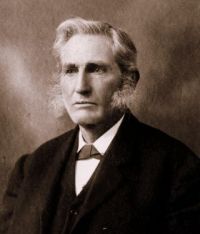 Lester Frank Ward,
The American Journal of Sociology
(1896)
Lester Frank Ward,
The American Journal of Sociology
(1896)
“ Thus far we have confined ourselves exclusively to the affective side of the mind, or subjective psychology. It is in this region that the motive power of social operations has been found to reside. However trivial the affections may seem to the metaphysician, they are of primary importance to the sociologist. But while they constitute the source of power in social events this is their entire function. They constitute the dynamic agent and nothing else. To render this power effective a directive agent is required. This is furnished by the intellect. ”
