Spring equinox

Definition and stakes

James Arthur,  Time and Its Measurement

“ Using popular language, the seasons are marked by four points,—Spring equinox—longest day—; Autumnal equinox—shortest day. This would be very simple if the equinoctial points would stay in the same places in the star sphere; but we find that they creep westward each year to the extent of 50 seconds of arc in the great celestial circle of the Zodiac. This is called the precession of the equinoxes. The year is measured from Spring equinox to Spring equinox again; but each year it comes 50 seconds of arc less than a full revolution of the earth around the sun. ”
Source: Gutenberg

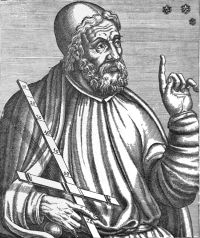
Portrait of Ptolemy Ptolemy,  Tetrabiblos

“ For when they are at the spring equinox they affect the new shoots of the arboreal crops, such as grapes and figs, and whatever matures with them; at the summer solstice, the gathering and storing of the crops, and in Egypt, peculiarly, the rising of the Nile; at the autumn solstice they concern the sowing, the hay crops, and such; and at the winter equinox the vegetables and the kinds of birds and fish most common at this season. Further, the equinoetial signs have significance for sacred rites and the worship of the gods; the solstitial signs, for changes in the air and in political customs ”
Source: Wikisource

Portrait of Ptolemy Ptolemy,  Tetrabiblos

“ In general terms, once more, the quadrant from the spring equinox to the summer solstice makes the subjects well-favoured in complexion, stature, robustness, and eyes., and exceeding in the moist and warm. The quadrant from the summer solstice to the autumn equinox produces individuals with moderately good complexion and moderate height, robust, with large eyes and thick and curly hair, exceeding in the warm and dry. The quadrant from the autumn equinox to the winter solstice makes them sallow, spare, slender, sickly, with moderately curling hair and good eyes, exceeding in the dry and cold. ”
Source: Wikisource

Get perspective with Kwize: daily news enlightened by great literature