Square-rigged ship

Definition and stakes

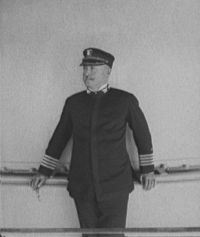
Portrait of Willis J. Abbot Willis J. Abbot,  American Merchant Ships and Sailors (1902)

“ The New England shipyards began building them, almost to the exclusion of other types. Before their advance brigs, barks, and even the magnificent full-rigged ship itself gave way, until now a square-rigged ship is an unusual spectacle on the ocean. The vitality of the schooner is such that it bids fair to survive both of the crushing blows dealt to old-fashioned marine architecture—the substitution of metal for wood, and of steam for sails. ”
Source: Gutenberg

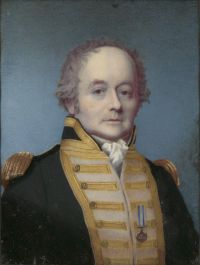
Portrait of Ernest Ingersoll Ernest Ingersoll,  The Book of the Ocean

“ Sometimes a square sail is placed on the foretopmast, which makes the vessel a topsail schooner. The first one was built by a Gloucester sea-captain about 1817, and proved so satisfactory that all the fishing-fleet were soon rigged in that way, whence the idea has spread to all parts of the world.
Until recently, however, vessels large enough to have three masts were always “square-rigged,” as barks, barkentines, or ships; for, although we have come to speak of any big vessel as a “ship,” yet in proper nautical language a ship is a vessel rigged in a particular way, and it is nothing else.
”
Source: Gutenberg

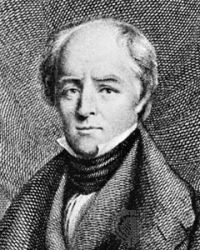
Portrait of E. Keble Chatterton E. Keble Chatterton,  Sailing ships (1909)

“ THE FORE-AND-AFT RIG AND ITS DEVELOPMENTS; COASTERS, FISHING BOATS, YACHTS, ETC. [116] So far we have, with the exception of the primitive lateen, dealt exclusively with the square-rigged sailing ship. We have seen that this was the earliest and has continued to be the most universal sail of the ship. The Egyptian and other early races possessed it, and likewise the Greeks, Romans and Vikings. In the most modern full-rigged ship it is to-day seen as conspicuous as ever. ”
Source: Gutenberg

Get perspective with Kwize: daily news enlightened by great literature