“ Later, when a hackney coach called out something derisive, he ventured to suggest a retort, and then the driver hinted plainly that he was not in the mood for conversation, that if he should change his views he would make intimation of the circumstance; in the meantime the young man had better talk quietly to himself, or address his remarks to one of the other passengers. The youth, giving up with regret the impression that all stagecoach drivers were communicative, cheery, and dispensers of merry anecdotes, turned to a fellow-traveller seated behind. ”
Stagecoach driver
Definition and stakes
The theme of “stagecoach driver” has been addressed by authors such as Thomas B. Searight, Lord William Pitt Lennox, George Athelstane Thrupp, Alice Morse Earle and Archer Butler Hulbert. It is often associated with terms like coachman, horse, coach, passenger and vehicle.
Quotes about “stagecoach driver”
Helen Cody Wetmore, Last of the Great Scouts: The Life Story of William F. Cody…
“ Travelers who step aboard the swiftly moving, luxurious cars of to-day give little thought to their predecessors; for the dangers the early voyagers encountered they have no sympathy. The traveler in the stagecoach was beset by perils without from the Indians and the outlaws; he faced the equally unpleasant companionship of fatigue and discomfort within. The jolting, swinging coach bounced and jounced the unhappy passengers as the reckless driver lashed the flying horses. ”
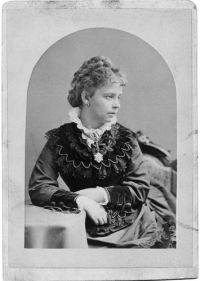 Alice Morse Earle,
Stage-coach and Tavern Days
“ It should be added, in truth, that accidents on stage-coaches were seldom with fatal results. Stage-coach travel was more disagreeable than deadly. A stage-coach driver who had driven three hundred days a year for thirty-five years, could boast that there had never been a serious accident while he was driving, and scarcely any injury had been received by any passenger. ”
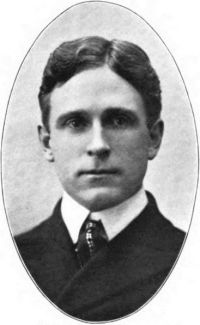 Archer Butler Hulbert,
The Paths of Inland Commerce; A Chronicle of Trail…
“ To give and take a black eye was not unusual nor derogatory in a gentleman: to drive a stage-coach the enjoyment, the emulation, of generous youth. Is there any young fellow of the present time, who aspires to take the place of a stoker? One sees occasionally in the country a dismal old drag with a lonely driver. ”
Thomas B. Searight, The Old Pike
“ My earliest recollections are intimately associated with coaches, teams and drivers, and like most boys raised in an old stage tavern, I longed to be a man when I could aspire to the greatness and dignity of a professional stage driver. In my boyish eyes no position in life had so many attractions as that of driving a stage team. ”
Various, The Mirror of Literature, Amusement…
“ The coach company now consisted of nine passengers inside, one on the top, (which, from its convex form, is a very precarious situation,) and three on the box, besides the coachman, who sat on the knees of the unfortunate middle man,—an uneasy burden, considering the intense heat of the weather.It matters little to the American driver where he sits; he is indeed, in all respects, a far different personage from his great-coated prototype in England. He is in general extremely dexterous in the art of driving, though his costume is of a most grotesque description. ”
Alice Morse Earle,
Stage-coach and Tavern Days
“ All attempts of the horses to start the coach were in vain. The driver finally climbed down from his seat, opened the coach door and told the passengers the condition of things, and politely asked them to get out and thereby lighten the load. This they all positively refused to do; they had paid their fares and did not think it their duty to get out into the mud. The driver said, “Very well,” quietly closed the door, and seated himself by the roadside. In a few minutes the passengers asked, “What are you doing there?” [Pg 369] The driver calmly replied: “The horses cannot draw the load. ”
Alice Morse Earle,
Stage-coach and Tavern Days
“ In it he described the coach between Philadelphia and New York with some distinctness:—“The vehicle, the American stage-coach, which is of like construction throughout the country, is calculated to hold twelve persons, who sit on benches placed across with their faces toward the horses. The front seat holds three, one of whom is the driver. As there are no doors at the sides, the passengers get in over the front wheels. The first get seats behind the rest, the most esteemed seat because you can rest your shaken frame against the back part of the wagon. Women are generally indulged with it ”
Alice Morse Earle,
Stage-coach and Tavern Days
“ Folk were easily amused in coaching days. One of the old stage-drivers tells the following incident of stage travel. He was driving from Dover, New Hampshire, to Haverhill, Massachusetts. During the spring months the roads were often in a bad condition, and six horses and sometimes ten were needed to draw the coach. In Epping, New Hampshire, was a particularly hard place, locally known as the “Soap mine.” Through this mine of mud the driver hoped to guide his coach and six. ”
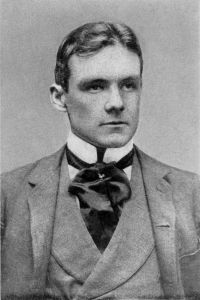 Richard Harding Davis,
The West from a car window
(1892)
“ The stage-coach of the Indian Territory lacks the romance of those that Dick Turpin stopped, or of the Deadwood coach, or of those that Yuba Bill drives for Bret Harte with four horses, with gamblers on top and road-agents at the horses’ heads. They are only low four-wheeled wagons with canvas sides and top, and each revolution of the wheels seems to loosen every stick and nail, and throws you sometimes on top of the driver, and sometimes the driver on top of you. ”
 Alfred Henry Lewis,
Wolfville Days
(January, 2003 [Etext #3667])
“ No, the stage driver ain't in no peril of bein' plugged. Thar's rooles about stage robbin', same as thar is to faro-bank an' poker. It's onderstood by all who's interested, from the manager of the stage company to the gent in the mask who's holdin' the Winchester on the outfit, that the driver don't fight. He's thar to drive, not shoot; an' so when he hears the su'gestion, 'Hands up!' that a-way, he stops the team, sets the brake, hooks his fingers together over his head, an' nacherally lets them road agents an' passengers an' gyards, settle events in their own onfettered way. ”
Lord William Pitt Lennox, Coaching, with Anecdotes of the Road
“ His Lordship laid it down distinctly, as a proposition not to be disputed, that it was unlawful for the driver 132 to put his horses into a gallop, and that he was answerable for all the consequences of an infringement of this law. The driver of a stage-coach was bound to protect even the intoxicated, the blind, the aged, and the helpless against their own want of caution or imprudence. ”
John Jervis, The traveller's oracle; or, maxims for locomotion… (1827)
“ If your Coachman drives leisurely, you will escape many Dangers, and your Carriage last much longer;—by such gentle use (excepting as to the Wheels) it is worn almost as little as if it remained in the Coach-house.In Crowded Streets, never permit any person to ride on the Coach Box:—Conversation diverts the attention of the Driver from his Business, and accidents frequently ensue. ”
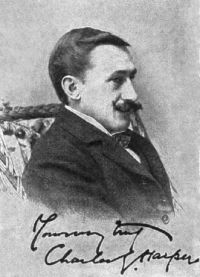 Charles G. Harper,
Stage-coach and Mail in Days of Yore…
“ The placing of springs under the driving-box was due to the suggestion of John Warde, earliest of the coaching amateurs, who had been taught the art of driving a stage-coach by Jack Bailey, a famed coachman on the old “Prince of Wales,” between London and Birmingham. He had found the jolting received directly from the axle an intolerable infliction on a long drive, and urged coach-proprietors to provide springs. ”
George Athelstane Thrupp, The History of Coaches
“ The reason given why drag-coaches are made with the front wheel so far back is, that it was necessary in order to bring the horses close to their work, to use a phrase that has been much misapplied, and also to bring them under the driver’s hands, who prefers the reins short, but it would be quite possible to build a coach in which the driver might be over the horses, and yet have the advantage of higher front wheels, and properly placed for carrying the load. ”
Anonymous, The story of Ida Pfeiffer and her travels in many lands
“ A place behind is provided for the coachman, in case the occupant of the carriol is disinclined to drive; but as it is unpleasant to have the reins shaken about one’s head, and the whip constantly flourishing in one’s ears, the services of a driver are seldom in requisition. ”
Alice Morse Earle,
Stage-coach and Tavern Days
“ Not only were stage-drivers respected by all persons in every community, but they had a high idea of their own dignity and of the importance of their calling. Little Jack Mendum, who drove the Salem [Pg 332] mail-coach, did not deem it an exaggeration of his position when he roared out angrily in answer to a hungry passenger who kept urging him to drive faster, “When I drive this coach I am the whole United States of America.”One coachman who drove from Boston to Hartford was deeply tanned by summer suns and winter winds, and his mates spoke to each other of him as Black Ben. ”
John Jervis, The traveller's oracle; or, maxims for locomotion… (1827)
“ A cautious Coachman is ever unremittingly upon the look out, keeping both his Eyes open; employing One to guide his own Horses, and the Other to watch how those who are coming guide theirs; or, as a Wag might say, an Accomplis’d Coachman ought to Squint! He depends entirely upon his own Attention to keep so completely out of their way, that it may be next to impossible for them to run against him.The most Crowded places are not always the most Dangerous: Accidents most frequently happen from empty One Horse Carts, in which the Driver rides, instead of walking by the side of the Horse. ”
Charles G. Harper,
Stage-coach and Mail in Days of Yore…
“ There was not too much physical exertion, endurance, or skill required on the road to Brighton, which was only fifty-two miles in length, and already possessed a better surface than most roads out of London; and, moreover, it was a road peopled from beginning to end with fashionables, before whom the gentleman-coachman could display his prowess. It was then pretty generally recognised that coach-driving was a poor sport if the ease and grace of the performer could not be displayed before a large and fashionable audience. ”
Edward Bennett, The Post Office and Its Story
“ Yet notwithstanding the moral improvement of the drivers, the improved state of the high roads throughout the kingdom, stage-coach travelling is more dangerous than it was before owing to the unmerciful speed of the swift coaches and the unmerciful loads which are piled upon the others like Pelion upon Ossa, or suspended from them, wherever they can be hung on. ”
Edward L. Anderson, Riding and Driving
“ A coachman is one who, through knowledge, and experience, and natural ability, keeps his horses, passengers, and himself comfortable and safe while doing the best attainable work with least effort to all concerned. The driver is a mere steerer of horses by artificial shortening and lengthening of reins that he has been taught. ”
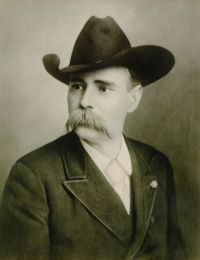 Prentiss Ingraham,
Beadle's Boy's Library of Sport…
“ But he went on with an empty coach, for the Englishmen preferred to wait over for another driver, and one of them was heard to remark that he would rather go in a hearse than in a stage with such a madman holding the reins. But far and wide Billy's mad ride was laughed at, and he received no reprimand from the company, though he richly deserved it. CHAPTER XXI. WINNING A REWARD. Driving over the trail through the Rocky Mountains, the drivers were constantly annoyed by road-agents, whose daring robberies made it most dangerous for a coach to pass over the line. ”
Archer Butler Hulbert,
Pioneer Roads and Experiences of Travelers…
(1902-05)
“ If the pack-horse man's side of the question was not advocated with equally marvelous arguments in America we can be sure there was no lack of debate on the question whether the stagecoach was a sign of advancement or of deterioration. For instance, the mails could not be carried so rapidly by coach as by a horseman ”
George Athelstane Thrupp, The History of Coaches
“ In the stage coach we see a conspicuous example of this great error, and some of the drags more recently built are the worst. If the roads round London were not so good as they are, or if the roofs of drags were loaded with luggage, we should hear of more accidents to the summer amateur coaches than we do at present. Most of the weight of the stage coach or drag is upon the front wheel, which is much the lowest, and it is so far back under the body that if the horses gallop the coach begins to swing, and a very small obstruction is sufficient to upset the whole. ”
Alice Morse Earle,
Stage-coach and Tavern Days
“ The wagon has no doors, but the passengers scramble in the best way they can over the seat of the driver. The wagons are used universally for stage-coaches.”A vehicle often mentioned by Judge Sewall and contemporary writers is a calash. It was a clumsy thing, an open seat set on a low and heavy pair of wheels. A curricle had two horses, a chaise one; both had what were called whip springs behind and [Pg 258] elbow springs in front. A whisky was a light body fixed in shafts which were connected with long horizontal springs by scroll irons. ”
Charles G. Harper,
Stage-coach and Mail in Days of Yore…
“ A great sheep- or cattle-fair is a beautiful sight; but in a stage-coach you see more of what man is capable of performing. The vehicle itself; the harness, all so complete and so neatly arranged, so strong, and clean, and good; the beautiful horses, impatient to be off; the inside full, and the outside covered, in every part, with men, women, and children, boxes, bags, bundles; the coachman, taking his reins in one hand and his whip in the other, gives a signal with his foot, and away they go, at the rate of seven miles an hour—the population and the property of a hamlet. ”
Alice Morse Earle,
Stage-coach and Tavern Days
“ On these boxes and within the coach swarmed the boys, pea-shooters in hand. A favorite target was the pike-keeper at the toll-gate, and those who left the coach first fared worst. Our boys have but a feeble imitation of these good times when they riot into a railway car together for a few hours of hurried travel to their city homes.The stage-drivers were universally kind and careful of all children placed under their charge; even young children, boys and girls, were intrusted to their care. ”
George Athelstane Thrupp, The History of Coaches
“ It is as easy to make a stage coach as safe and nearly as light in running as an omnibus, by making it with much higher front wheels, and carrying them more forward. If it is considered essential to be able to turn in a narrow road, it would be easy to cut a small arch in the boot, which would allow the wheel to turn as far as the perch, instead of only half way to the perch as at present. ”
Various, Encyclopaedia Britannica, 11th Edition…
“ In Great Britain, however, the coach-and-four is the more popular. It is more showy than tandem; it keeps alive the romantic associations of the days when the stagecoach was the ordinary means of locomotion ”
Charles G. Harper,
Stage-coach and Mail in Days of Yore…
“ The precursor of all public vehicles was the carrier’s waggon, a conveyance of hoary antiquity, intended in the first instance for the carriage of heavy goods, but finding room for those wayfarers who were too poor to own or hire a horse, or possibly too infirm to sit one even if their means sufficed. At least a hundred and fifty years before the earliest stage-coach was put on the road, the waggon, the poor man’s coach, was creaking and groaning on its tedious way at a pace of little more than two miles an hour. ”
Wells Hastings, The Professor's Mystery
“ Why is a train less romantic than a stage-coach? Because it runs on time and on a track; it can't do anything but be late. But the stage-coach dallies along through the countryside, with inns and highwaymen, and pretty girls driving geese to market, and all the chances of the open road. ”
Alice Morse Earle,
Stage-coach and Tavern Days
“ Miner and others who remember the great days of stage-coach travel, I learn that our American drivers were a dignified and interesting class of men. Imposing in bearskin caps, in vast greatcoats, and with their teams covered with ivory rings, with fine horses and clean coaches, they and their surroundings were pleasant to the eyes. ”
Charles G. Harper,
Stage-coach and Mail in Days of Yore…
“ Rowlandson’s picture of a stage-coach in 1780 shows the same preference. Only one passenger is seen in the wickerwork appendage, while the roof, innocent of safeguards or seats, is covered with sprawling passengers who are content to take their chance of an involuntary flight, so that they escape the certain inconveniences of the “conveniency.”“I observe,” says Moritz, “that they have here a curious way of riding, not in, but upon, a stage-coach. Persons to whom it is not convenient to pay a full price, instead of the inside, sit on the top of the coach, without any seats or even a rail. ”
Related terms
Authors who wrote about “stagecoach driver”
Thomas B. SearightLord William Pitt LennoxGeorge Athelstane ThruppAlice Morse EarleArcher Butler HulbertVariousJohn Jervis F. Scott FitzgeraldHelen Cody WetmoreW. Pett RidgeAlfred Henry LewisAnonymousRichard Harding DavisEdward L. AndersonPrentiss Ingraham
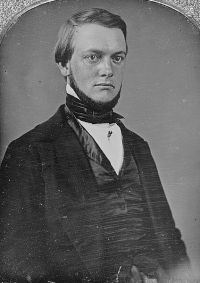 Benjamin Perley Poore
 Mark Twain
 Charles Dickens
 Jerome K. Jerome
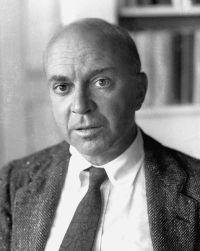 John Dos Passos
Alice Morse EarleArcher Butler HulbertVariousJohn JervisF. Scott FitzgeraldHelen Cody WetmoreW. Pett RidgeAlfred Henry LewisAnonymousRichard Harding DavisEdward L. AndersonPrentiss IngrahamBenjamin Perley PooreMark TwainCharles DickensJerome K. JeromeJohn Dos Passos