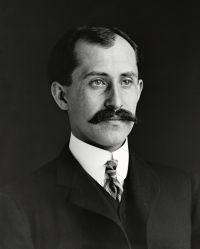
“ I may say at the outset that I am not inclined to agree with Vardon at all in this matter of the master stroke in golf. If there is one stroke which stands out above and beyond all others in its demand for accuracy, and a perfect knowledge of the method of applying spin, also a supreme ability perfectly to apply that knowledge, it is the stroke which is commonly called a "wind-cheater"; that is to say a long low ball which flies very close to the earth for the greater portion of its journey, and rises towards the end of its flight to its greatest height. ”
Stroke (golf)
Definition and stakes
Quotes about “stroke (golf)”
“ Now so far as regards the complicated system of mental telegraphy which is claimed for golf in the production of the stroke, absolutely the same thing happens in practically every game, with the exception that in most other games the player is, so far as regards the production of his stroke, at a greater disadvantage than he is in golf, for he has nearly always a moving ball to play at and much less time wherein to decide how to play his stroke. ”
“ As a matter of fact the golf stroke is in some respects a complicated stroke. Certain changes of position in the body and arms take place with extreme rapidity during the execution of the stroke. It is an utter impossibility for any man to think out and execute in proper order the component parts of a well-executed drive during his stroke. When a man addresses his ball he should have in his mind but the one idea—he has to hit that ball in such a manner as to get it to the place at which he wants it to arrive ”
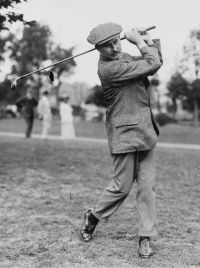
“ By doing this the involuntary checking of the swing is rendered impossible; but if arms and shoulders were to be held tightly under control and as rigid as steel, the stroke would be finished as soon as the head of the club had been brought into contact with the ball. Every stroke in golf must be played freely, every muscle of the body must be allowed to do its full share of the necessary work. ”
“ In golf a man is treated with tragic solemnity while he is making his stroke. A caddie may not sigh, and if a cricket chirped he would be considered a bounder. How would our golfer feel if he had to play his drive with another fellow waving his club at him twenty or thirty feet away, and standing ready to spoil his shot?—yet that is what the lawn-tennis player has to put up with. ”
“ It must be obvious to anyone who knows but little either of golf or mechanics that nothing which the body or the club does after contact between the ball and the club has ceased can have any influence whatever upon the flight of the ball, either as to distance or direction. Practically everything which takes place after the ball has left the club is the natural result of what has been done before impact. This cannot be too forcibly impressed upon golfers, for it is not at all uncommon to find men deliberately stating that the follow-through exerts a tremendous influence on the stroke. ”
“ Any idea more abhorrent to the true golfer than the notion of producing his finest cleek shots and approach shots by banging the ball on to the earth can hardly be imagined, nor anything more incorrect.The wind-cheater is an invaluable stroke, but there can be no doubt that it is a stroke calling for a very considerable degree of skill in order to play it perfectly, or indeed very well, and in connection with this matter there was a very peculiar but entirely mistaken idea that for the production of this stroke it was necessary at the moment of impact to turn over both wrists. ”
“ If you try a method of putting which was once attempted by some players, but was severely and properly discountenanced by the authorities, of lying down on the green and putting with the end of the club, billiard fashion, you will find that then the eye is on the hole when the stroke is made. In golf, the player's eye being wanted for the ball, a last look is given at the hole, and the picture of it is kept on the mind when the stroke is being made, and it influences the application of strength more than the player often realises. ”
Harry Vardon,
The Complete Golfer
“ Which is the master stroke in golf? That is an engaging question. Is it the perfect drive, with every limb, muscle, and organ of the body working in splendid harmony with the result of despatching the ball well beyond two hundred yards in a straight line from the tee? No, it is not that, for there are some thousands of players who can drive what is to all intents and purposes a perfect ball without any unusual effort. ”
“ In golf the player has plenty of time to spare in making his stroke, and he occupies too much of it in thinking about other things than the stroke. The essence of success at golf is concentration upon the stroke. The analysis has no right whatever to intrude itself on a man's mind until the stroke has been played. ”
“ Attention includes the habit of keeping the eye on the ball and the head still until the stroke has been played. The best way of inculcating the vices of lifting the head and the eye during the stroke is to teach the player the drive first. It stands to reason that if a player is started, say, with a six-inch put, that he has at the moment of making his stroke both the ball and the hole well within the focus of his eyes, so that it is absolutely unnecessary for him to lift his eye in order to follow the ball. ”
William Broadfoot, Billiards (1896)
“ Some men habitually aim with the cue-tip pointing over the top of their ball, others again with the tip almost touching the cloth, no matter whether the stroke they intend to play be a follow or a screw, a centre stroke or a stroke with side. Those who are familiar with golf are well aware that in those places where grounding the club behind the ball is not allowed it is exceedingly difficult to hit the ball cleanly and truly, because there is nothing to guide the aim. ”
“ Hitting with the heel of the club meeting the ground after the ball is struck will cause the ball to rise more, and, joined to the spin imparted by drawing in the arms and turning the wrists upward, will produce a very dead ball with hardly any run. The science of the stroke consists in hitting very sharply, and turning the wrists upward immediately after the ball is struck. ”
“ The fact that the ball is in the way of the face of the club as it crosses the intended line of run to the hole may be said to be merely an incident in the passage of the club head. Any attempt whatever to interfere with the natural swing of the club or to juggle with the ball during impact, or, more futile still, after impact, must result in irretrievably ruining the stroke. ”
“ A player may be removed from the game through illness or some other reason for a time, and during that period he works some of the problems of golf out in his mind, and constantly pictures a new and [Pg 244] particular way of playing a stroke that has troubled him. When he returns to the links he plays the stroke like that without any effort to do so, or perhaps without even thinking of it. ”
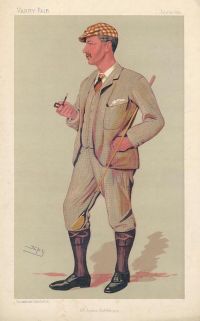
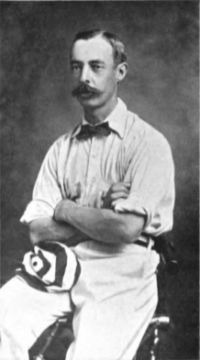
Robert Henry Lyttelton, Out-door Games: Cricket and Golf (1901)
“ Golf is the most nervous game yet invented, because most of the success of the game is a question of strength; it is an interesting question to ask. Why is it more of a trial to nerves than billiards, which is wholly a question of strength with a reasonable amount of accuracy? In a long hole of over four hundred yards, the golfer need not bother his head about strength for the first two strokes; he has to hit both these as hard as he can—there is no nice calculation of less or more. In billiards every stroke requires thought of the question of strength ”
“ And it is amazing to find anyone attempting to analyse such a stroke as the golf stroke and at the same time making the statement that "you rarely, if ever, take your eye off your ball in billiards"; and he proceeds to give reasons why one rarely takes one's eye off one's ball in billiards, whereas the game of billiards is an outstanding illustration of the fact that one does take one's eye off the ball. ”
Frederick Upham Adams, John Henry Smith: A humorous romance of outdoor life
“ A man will go on making a certain shot with almost perfect accuracy for months, and all at once lose the knack of it, and not be able to recover it for months, and perhaps never. In order to hit a golf ball accurately there are scores of muscles which must act in perfect accord, and the several parts of the body must maintain certain positions during the various parts of the stroke. If the shoulder drops the quarter of an inch, if the heel rises too soon by the minutest fraction of a second, if either hand grasping the club turns in any degree the stroke is ruined. ”
“ The cut on a golf ball in such a stroke as I am now describing resembles almost exactly the off-break spin in cricket. This means that the ball has a strong side-spin, so that the moment it hits the earth it endeavours to roll sideways, but the force of propulsion fights this tendency, and the resulting compromise is a curve which enables the ball to get round the intervening obstacle, and, if the stroke is well executed, to find the hole. ”
Robert Henry Lyttelton, Out-door Games: Cricket and Golf (1901)
“ The golfer has a habit of pulling his arms in when playing quarter shots with the iron; the billiard player feels happy when he has to play almost any stroke; but no matter how much practice he gives himself, he never feels confident or at ease when a stroke requiring half a screw presents itself. ”
“ At page 89 he confirms one's impression, if confirmation were required, that his idea of the fundamental principle of the golf swing is as ill-formed as are his notions of anatomy, for he says: "The left knee must be loose at the beginning and firm at the finish." At no time during a stroke in golf, of any description [128] whatever, should there be any looseness of the body. During the production of the golf stroke the body is practically full of tension and attention. ”
“ It will be clearly seen that, starting now from the edge of the green with his chip shot, he is much more certain of striking the ball and getting it away than he would be were he put on to the more uncertain stroke in the drive; so by a gradual process of education the player would come in time to the drive, and by the time he arrives at the most complicated stroke in the game—the stroke wherein is the smallest margin of error—he has cultivated the habit of attention, which includes keeping one's head still. ”
Harry Vardon,
The Complete Golfer
“ The case is so desperate that a stroke that will carry the ball for perhaps 100 or 120 yards is called for. Such a necessity does not affect my rule as to making certain of getting out, for in practical golf one cannot take any serious account of emergencies of this kind. But there are times when every player must either attempt the shot that most frequently baffles his superiors, or forthwith give up the hole, and it is not in human nature to cave in while the faintest spark of hope remains. ”
“ It is laid down clearly and distinctly by nearly all golf writers and teachers that the golfing swing must be rhythmical, that there must be no jerking, no interruption of the even nature of the swing—in fact, we have seen that according to many of them the stroke is a sweep and not a hit, yet we are told distinctly that at the moment of impact a snap of the wrists is introduced. ”
“ A great deal more depends upon the maintenance of speed after the ball is struck than is commonly supposed. This part of the stroke is known as the follow-through, and plays a very important part in the length of the drive as in straightness. ”
Horace G. Hutchinson,
Fifty Years of Golf
“ It is a shot that I have seen played in any perfection only by three players, and all young ones—Johnny Ball, Hugh Kirkaldy and Jamie Allan. Only the first is still alive, and he does not, probably cannot, play the stroke now. I believe it is a stroke that was easier with the gutta-percha balls than with the modern rubber-hearted things. At all events no one plays the stroke now. ”
“ The drive in golf is played with such extreme rapidity that the duration of impact does not last more than one ten-thousandth of a second, yet we are asked to believe that the first portion of the stroke is a swing, but in, say, the five-thousandth of a second it is to be changed to a hit. ”
Robert Henry Lyttelton, Out-door Games: Cricket and Golf (1901)
“ It is the same with the golfing genius. He has a way of rising to the occasion. He may find his ball anywhere except right under a wall or a railing, and in any of these circumstances you never can be sure that he will not, despite his position, bring off a fine stroke. It may be necessary for him to stuff in a few more yards carry to enable a dangerous bunker or hazard to be "carried." Our golf hero nevertheless brings off the stroke: his adversary is tempted to try and do the same, and the result is disaster. ”
Henry James Moncreiff, Once a Week (1863)
“ He has missed his stroke, and takes five strokes after all to get into the hole. It can’t be helped; but do take care. How fiercely he is scowling at you. Please don’t laugh, or I shall have to take you home again. I dare say you are not aware of the fact, but golf is one of the most nervous and fidgety games imaginable. Some men cannot hit a ball if any one near them is speaking or moving. And a story is on record regarding an enthusiastic lover of the game, who positively refused to play with a man who had the misfortune to have on a pair of light nankeen inexpressibles. ”
Robert Henry Lyttelton, Out-door Games: Cricket and Golf (1901)
“ If you dislike long losing hazards, you must and can try and play the cannon and potting game at the top of the table; if you hate those strokes, because you cannot do them, play an open game and go in for losing hazards from baulk. You can do this far more easily at billiards than you can at golf. It is possible to do it to a small extent only at golf. I have seen a player who was bad at lofting a ball over a bunker forty yards from the hole, play the previous stroke short in order, instead of having to play a forty-yards shot, to make one that took eighty yards to get over the bunker. ”