“ When the engineer stood them off with a revolver, telling them there was plenty of water in the water-train, they broke away and aimlessly scattered, while a fresh throng took their places. Around the twelve immense tank-cars, a fighting mass of men and animals struggled for a place at the little faucets ceaselessly pouring. ”
Tank car
Definition and stakes
The theme of “tank car” has been addressed by authors such as Amabel Williams-Ellis, J. F. C. Fuller, William Henry Lowe Watson, Richard Haigh and Mary Lee Stubbs and Stanley Russell Connor. It is often associated with terms like gun, machine, railway, battle and infantry.
Quotes about “tank car”
Amabel Williams-Ellis, The Tank Corps
“ The engine was not powerful enough. The steam Tank had not in the least answered the riddle. The horse-power could, it is true, be almost indefinitely increased, but, like a kind of Old Man of the Sea, the engine weight would have increased proportionately and the “free” power have been no more.Indeed till the invention of the petrol engine the Tank was doomed to be unpractical. Its three essentials—armour-plating, guns, and ability to surmount obstacles and traverse open country—demanded a large amount of this “free” power. ”
Amabel Williams-Ellis, The Tank Corps
“ More than once in the course of the chequered career of the Tanks it was this consideration which saved the Corps from extinction.But it is not, of course, enough that the Tank offers protection to those who fight in it. A trench or a hole in the ground will do the same. But the Tank is essentially a mobile weapon of offence. It is the weapon for the nation which does not fight willingly, but when it fights, fights to win, and to win quickly with as little bloodshed as possible. ”
Georges Lafond, Covered With Mud and Glory: A Machine Gun Company in Action…
“ To the right, to the left, in front, and behind, the shots fall like a hailstorm.Cries, groans, oaths, and commands impossible to execute! It is Hell.In an excess of generosity, doubtless to aid us in getting out of our difficulty, a well-aimed shell falls on a truck, sets fire to the gasoline tank, and the whole thing saturated with paint and covered with impervious canvas bursts into flames. ”
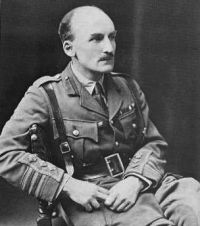 J. F. C. Fuller,
Tanks in the Great War, 1914-1918
“ Tanks must, therefore, be employed to do this in order to clear the way for the infantry advance. Consequently, if sufficient tanks are forthcoming, in order to guarantee a decisive success, it is no longer a question of the tank as a spare wheel to the car, in case of an unforeseen puncture in our operations, but as the motive force of the car itself, the infantry being merely its armed occupants; without which the car is valueless. ”
Various, Scientific American, Vol. XXXIX.…
“ The tank cars used for carrying petroleum have an average capacity—and they are almost always run full—of 30,000 lbs. The Standard Oil Company, which has some 3,000 of such cars, carried on four-wheeled trucks with the Master Car Builders' standard axle, has run them with such loads for years, and only recently had its first case of a broken axle, manifestly due to a defect in the iron. ”
Amabel Williams-Ellis, The Tank Corps
“ In the Canadian sector, the armoured cars were working in close conjunction with Tank Corps aeroplanes. At one moment a number of cars were going along a road, when four machines were hit by shells from hidden batteries. Their accompanying aeroplanes, however, immediately attacked the German guns so vigorously that the crews of the disabled cars, though completely surrounded by the enemy, were able to escape capture. ”
Amabel Williams-Ellis, The Tank Corps
“ Tank ‘Caithness’ came under sniper and machine-gun fire near Beck House. No bullets penetrated armour-plating. Proceeded in company with Tank ‘Carstairs,’ which silenced enemy M.G. fire. Cameron Highlanders then advanced, and Tank followed, bellied near Zonnebeke Stream. Mud was up to floor level and door of sponson was pushed off its hinges. Enemy aeroplane circled overhead, and fired on them whilst attempting to unditch. Eventually Tank ‘Carstairs’ came to the rescue, and Tank was got clear.“... Tank ‘Culloden’ had her unditching gear carried away by barbed wire near Hill Cottage. ”
Amabel Williams-Ellis, The Tank Corps
“ Positions where Anti-Tank guns are expected must be pointed out to them on a map, and other information of this type may be given. This will add to the keenness and interest of the men.“Drivers must be reminded that the goodness or badness of the shooting will probably depend upon their driving.“The Gunnery Officer must see that the targets are sited properly; he should always go over the Course in a Tank previous to the practice to satisfy himself on these points. ”
Amabel Williams-Ellis, The Tank Corps
“ A Tank uses petrol instead of muscle, and it extracts the highest possible fighting or killing value out of the men inside it; they can give their blows without being exposed to injury in return, and, above all things, they can fight while moving—a thing outside the powers of the infantry or guns of the land forces. ”
Amabel Williams-Ellis, The Tank Corps
“ We shall soon regard the heroic tale of how men once exposed their defenceless bodies to machine-gun fire and shells, and depended for the élan of their assault upon the weight of human limbs and the endurance of human muscles as almost legendary.“Most people think of a Tank as a rather ludicrous but effective engine of war. They look upon it as a409 mechanical novelty, and are content to assume that the Tank of to-day is not much of an improvement upon the earliest Tanks of the Somme battle, and that it is a war implement of indifferent importance. ”
Amabel Williams-Ellis, The Tank Corps
“ They are the most dangerous foe to hostile machine-guns. They can approach machine-gun nests and destroy them at close range. The great danger of the Tank is obvious when one considers that the defence of the front battle zone chiefly relies on the defensive value of the machine-guns, and that the armour of the Tank renders it invulnerable to rifle fire, and that only seldom and in exceptional cases is machine-gun fire effective. The infantry is therefore opposed to an enemy to whom it can do little or no harm. ”
“ One does not know what is happening outside his little steel prison. One often cannot see where the machine is going. The noise inside is deafening; the heat terrific. Bombs shatter on the roof and on all sides. Bullets spatter savagely against the walls. There is an awful lack of knowledge; a feeling of blind helplessness at being cooped up. One is entirely at the mercy of the big shells. If a shell hits a tank near the petrol tank, the men may perish by fire, as did Gould, without a chance of escape. Going down with your ship seems pleasant compared to burning up with your tank. ”
Amabel Williams-Ellis, The Tank Corps
“ For the forward dumps splendid work was done by the 3rd Army’s light railways, who handled astonishing masses of stores; for example, 165,000 gallons of petrol, 541,000 rounds of 6-pounder ammunition, and 5,000,000 rounds of S.A.A.Beyond the light railways the Tank fills were transported by supply Tanks.All these preparations had to be carried out as secretly as possible. Moves were made after dark.No new wheel tracks must be made. There must be no reference to the battle over the telephone. There must be no extra horse or mechanical transport seen about in daylight. ”
Amabel Williams-Ellis, The Tank Corps
“ No sooner had he discovered how effective was his “K” bullet against the Mark I. Tank, than we confronted him with the Mark IV., against which it was powerless.The Germans always had rather hazy ideas as to the capabilities and habits of our current Tank. They had had ample opportunity of examining two Tanks which lay derelict in their lines on the Somme, yet until the Battle of Arras they believed that Tanks were largely dependent on the use of roads, and that therefore pits and other obstacles in roads must form a useful anti-Tank defence. ”
Amabel Williams-Ellis, The Tank Corps
“ They paid the new arm the compliment of an intricate system of defence and counter-offence which included concealed Tank traps made on the model of elephant-pits, formidable double-traversed trenches, a branch of special anti-Tank artillery, heavily reinforced concrete stockades, and an elaborate system of land mines.With so many obstacles to avoid or to negotiate, with their fate often hanging upon a prompt and accurate use of their guns, the crew inside the Tank were doomed by the conditions under which they fought to an almost incredibly limited view of the surrounding world. ”
Victor Appleton, Tom Swift and His War Tank; Or…
“ And it is this ponderosity, with its slow but resistless movement, that gives the tank its power. The tank, by means of the endless belts of steel plates, can travel over the roughest country. It can butt into a tree, a stone wall, or a house, knock over the obstruction, mount it, crawl over it, and slide down into a hole on the other side and crawl out again, on the level, or at an angle. Even if overturned, the tanks can sometimes right themselves and keep on. At the rear are trailer wheels, partly used in steering and partly for reaching over gaps or getting out of holes. ”
William Henry Lowe Watson, A Company of Tanks
“ Half an hour after "zero" my tank engineer and I set out in my car to catch up with the battle,241 giving a lift on the way to a pleasant young subaltern in the R.H.A. returning from leave, who was desperately eager to find his battery. We left the car stupidly at Fouilloy,—we might have taken it farther forward,—and tramping up the Villers-Brettoneux road, cut across country, among invisible guns, through the mist, which did not clear until we reached what had been the German trenches. ”
“ All this time the German guns had not been silent. McKnutt's tank crunched across the ground amid a furious storm of flying earth and splinters. The strain was beginning to be felt. Although one is protected from machine-gun fire in a tank, the sense of confinement is, at times, terrible. ”
William Henry Lowe Watson, A Company of Tanks
“ If a tank company is ordered to attack with the infantry on the first day of a battle, no reconnaissance can be too detailed and patient, for on the night before the attack a tank can do untold mischief. There are wires, light railways, emplacements, communication trenches, dug-outs to be avoided, and a specific spot to be reached at a given time. Tanks unfortunately are not allowed to roam wildly over the battlefield either before or during a battle. ”
William Henry Lowe Watson, A Company of Tanks
“ Tanks travel on flat trucks, such as are employed to carry rails. They are driven on and off the train under their own power, but this performance requires care, skill, and experience. A Mk. I. or38 a Mk. IV. tank is not too easy to steer, while the space between the track and the edge of the truck is alarmingly small. With two exceptions, my officers had neither experience nor skill.It was an anxious time—not only for the company commander. The office of the R.T.O., at the edge of the ramp, was narrowly missed on two occasions. ”
Amabel Williams-Ellis, The Tank Corps
“ Visual training or revolver drill? There was no time for everything. There were, however, obviously three or four essentials. Most of the officers and men were already first-rate engineers or mechanics, but they must be trained exactly in the strange machine they were to use. They must understand the peculiarities of Tanks, and, if possible, of their individual Tank, the monster which they had to render animate.They must be thoroughly at home with their Vickers guns, be accurate shots with them, be able to remedy all stoppages, and to strip their weapons with speed and accuracy. ”
Federal Highway Administration, America's Highways 1776–1976: A History of the Federal-Aid Program (1977)
“ If the surface provided sufficient traction, grades up to 6 or 8 percent posed no serious problem for skilled operators who had mastered the art of down-shifting to a lower gear. One feature of vehicular design that was the cause of considerable consternation to many drivers ascending hills was the location of the gas tank with respect to the carburetor. Many vehicles, including the most popular make of the era, relied upon gravity flow of fuel from a tank beneath the driver’s seat to the engine’s carburetor located only 2 or 3 inches lower than the bottom of the tank. ”
Amabel Williams-Ellis, The Tank Corps
“ A subaltern who had seen any fighting with the Tanks would suddenly find himself regarded as the greatest living expert on some obscure technical point, and the newly joined who had never seen a Tank “looked with awe upon these battle-tried warriors.”Men and officers were allowed to volunteer for the Tank Corps from other units either in France or at home. The notion of fighting in a Tank was popular, for on many of the men of the old arms—especially the infantry—the ordinary battle routine had—to put it conservatively—begun to pall. ”
J. F. C. Fuller,
Tanks in the Great War, 1914-1918
“ The use made by the Germans of machine-guns and wire entanglements—a combination which has such power to check the advance of infantry—has in reply brought about the evolution of the ‘caterpillar bullet-proof climbing motor, or tank,’ a machine designed for the express purpose of assisting attacking infantry by crossing the defences, breaking through the obstacles, and of disposing of the machine-guns. ”
William Henry Lowe Watson, A Company of Tanks
“ Out on the Poelcapelle Road, in the darkness and the rain, seven tanks were crawling very slowly. In front of each tank the officer was plunging through the shell-holes and the mud, trying hard not to think of the shells. The first driver, cursing the darkness, peered ahead or put his ear to the slit, so that he could hear the instructions of his commander above the roar of the engine. The corporal "on the brakes" sat stiffly beside the driver. One man crouched in each sponson, grasping the lever of his secondary gear, and listening for the signals of the driver, tapped on the engine-cover. ”
William Henry Lowe Watson, A Company of Tanks
“ When a dangerously wide trench was reached, the driver pulled a rope, the fascine gently rolled off the tank into the trench, and the tank crossed at its ease. It was a simple device that produced an astonishing amount of bad language. Entraining was hideously complicated. Dropping the fascine on to the truck in front of the tank requires care and precision, while obviously if a fascine refuses to be picked up again, tanks are prevented from coming off the train.... ”
Amabel Williams-Ellis, The Tank Corps
“ The hostile infantry follows Tanks only half-heartedly. Experience shows that hostile attacks are soon checked by aimed machine-gun and artillery fire. Co-operation between the Tanks and their infantry detachments must be hindered as much as possible. The arms should be separated and destroyed in detail. All projectiles which do not hit the armour-plating at right angles ricochet off instead of penetrating. Artillery, light trench mortar and anti-Tank rifle fire is effective against all portions of the Tank, especially against the broadside and the cab (framed in red in the illustrations) . ”
Amabel Williams-Ellis, The Tank Corps
“ In one railway cutting near Brancourt, which was a mass of machine-guns, I counted nearly fifty mangled Boches who had been caught in enfilade with case shot as the Tanks crossed the line. The infantry casualties were very low, and all agreed on the masterly way the American Tank gunners had dealt with M.G. opposition. ”
Amabel Williams-Ellis, The Tank Corps
“ Like the other early inventors, they33 imagined a machine that was to “arise” out of a cross between an armoured car and an agricultural tractor. It was to be slower, more formidable and far heavier than any armoured car that had yet been seen, a kind of “Land Cruiser” capable of plodding on its caterpillar feet across country right up to the enemy’s gun positions. Like the other early “mobile machine-gun destroyers,” it was to be strongly armed with guns and machine-guns, and so heavily steel-plated as to be impervious to shrapnel, H.-E. fragments and rifle bullets. ”
Victor Appleton, Tom Swift and His War Tank; Or…
“ Inside there is nothing much but machinery of the gasolene type, and the machine guns. The tank is closed except for small openings out of which the guns project, and slots through which the men inside look out to guide themselves or direct their fire. Such, in brief, is a British tank, one of the most powerful and effective weapons yet loosed against the Germans. They are useful in tearing down the barbed-wire entanglements on the Boche side of No Man's Land, and they can clear the way up to and past the trenches, which they can straddle and wriggle across like some giant worm. ”


