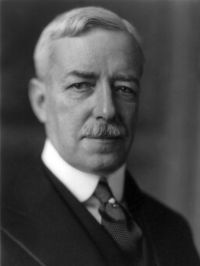
Territorial integrity, a fundamental principle of international law, prevents states from employing force to change borders, as established in the UN Charter and customary international norms. It seeks to balance state sovereignty with the right to self-determination, as illustrated by Haile Selassie’s condemnation of aggression masked as self-determination, the UN General Assembly’s reiteration of territorial unity in Resolution 2625, and China’s focus on preserving national unity.
Although Woodrow Wilson envisioned a League of Nations to uphold this principle, contemporary challenges—such as debates over humanitarian intervention—highlight the tensions between fixed borders and shifting geopolitical dynamics. The concept continues to serve as a crucial, yet disputed, foundation of the global order.
 Haile Selassie,
Addresses The Belgrade Conference
(1961)
Haile Selassie,
Addresses The Belgrade Conference
(1961)