Territorial jurisdiction

Definition and stakes

L. Oppenheim,  International Law. A Treatise. Volume 1…

“ Restrictions upon Territorial Jurisdiction.
§ 144. As all persons and things within the territory of a State fall under its territorial supremacy, every State has jurisdiction over them. The Law of Nations, however, gives a right to every State to claim so-called exterritoriality and therefore exemption from local jurisdiction chiefly for its head, [231] its diplomatic envoys, [232] its men-of-war, [233] and its armed forces [234] abroad.
”
Source: Gutenberg

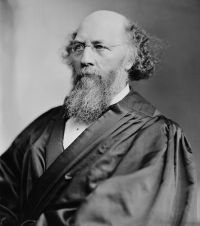
Portrait of Francis Newton Thorpe Francis Newton Thorpe,  The Essentials of American Constitutional Law

“ Congress has power “to make all needful rules and regulations respecting the territory and other property belonging to the United States.”342 This means the power to govern, a power necessary to sovereignty, and the “inevitable consequence of the right to acquire territory; or, as the jurisdiction over a Territory does not belong to any State in the Union, its government lies by implication (if not by necessity) with the United States.”343
In creating a territorial jurisdiction, Congress exercises, but does not part with its powers. The power to govern Territories is not conditioned.
”
Source: Gutenberg

Get perspective with Kwize: daily news enlightened by great literature