“ So far as sacrifice or skill goes, there was no reason why the worker should get more, as, on the whole, it required less skill and attention to turn out the six gross than it did to turn out the one. Thus it is, I believe, over all the textile manufactures, with the exception, perhaps, of weaving. ”
Textile worker
Definition and stakes
The theme of “textile worker” has been addressed by authors such as Jay Fox, A. A. Brooke, Dorothy Josephine Collier, Henry A. Atkinson and Meta Stern Lilienthal. It is often associated with terms like wool, factory, industry, fabric and clothing.
Quotes about “textile worker”
William H. Dooley, Textiles, for Commercial, Industrial…
“ It is in the manufacture of textiles—including all materials used in the manufacturing of clothing—that human ingenuity is best illustrated.The magnitude of the textile industry in the United States is evident when we consider that it gives employment to a round million of people, paying them nearly five hundred million dollars annually in wages and salaries, producing nearly one and three-quarters billion dollars in gross value each year, and giving a livelihood to at least three millions of our population.Wool, cotton, flax, and silk have been used since early times. ”
William M. Davis, David Hannay and Otis T. Mason, 1911 Encyclopædia Britannica (1911)
“ The uses to which the textiles were put were for clothing, furniture for the house, utensils for a thousand industries, fine arts, social functions and worship. In order to comprehend the more intricate processes of the higher peoples it is necessary to examine the textile industry in all of the culture areas. It is essentially woman’s work, though among the Pueblos, strangely enough, men are weavers. ”
Henry A. Atkinson, Men and Things
“ As the shuttles fly the finished fabric is rolled up ready for inspection, and, when passed, goes to the market, and later is made into garments.It is a huge task to clothe the modern world. No one realizes how much it means until he looks into the work of the textile-mills which have grown up in our own and in other countries. ”
William H. Dooley, Textiles, for Commercial, Industrial…
“ As wealth increased the home loom and spinning-wheel were slowly supplanted by the mill and factory. The different textile manufacturers at length found that competition was so keen that it was necessary to adulterate, particularly any fabric that was popular. The classes of goods that are most adulterated are the expensive fabrics, those of wool and silk. There are such changes of fashion in dress at the present day that garments composed of materials formerly considered good enough are often thrown aside as old-fashioned when only half worn. ”
Alice Clark, Working Life of Women in the Seventeenth Century (1919)
“ If the general position of women in the whole field of industry is reviewed, it will be seen that, beyond question, all the textile fabrics used at this time, with the exception of a few luxuries, were made from the thread which was spun by women and children, the export trade in cloth also depending entirely on their labour for spinning and to some extent for the other processes. ”
Jonathan Thayer Lincoln, The factory (1912)
“ In the beginning of the eighteenth century the textile manufacturing of England was carried on by craftsmen dwelling in the rural districts, the master clothiers living in the greater towns, sending out wool to be spun into yarn which, returned to them prepared for the loom, was re-distributed among other hand workers in other cottages. ”
 Charlotte Perkins Gilman,
Moving the Mountain
“ As a man I could appreciate little of the improved quality of fabrics, save as I noticed their beauty, and that my own clothes wore longer, and both looked and felt more agreeable. But women told me how satisfying it was to know that silk was silk, and wool, wool. This improvement in textile values, with the outgrowing of that long obsession called fashion, reduced the labor of clothes-making materially. ”
 Jay Fox,
Amalgamation
(1923)
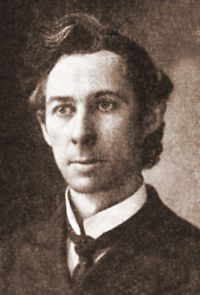
“ The Textile Industry The textile industry is one of the oldest in America. For 133 years it has been ruthlessly exploiting men, women, and children. A low degree of organization prevails. Of the 1,000,000 workers in the industry, not over 100,000 are organized. These are split up into fully a score of unions, squabbling amongst themselves, and constructed according to every known type. The employers, on the other hand, are well organized and trustified. ”
Kate Heintz Watson, Textiles and Clothing
“ To possess mechanical skill alone is not sufficient. A successful garment depends not only upon the dexterity with which the worker manipulates the actual tools of her craft, but upon all her faculties and her power of applying them. She must have a comprehension of the laws of beauty in dress, construction, ornament, color, selection, economy. The artisan knows the technical part only, and looks upon each dress—each piece of lace and velvet—as so much material to be snipped and cut and sewed, copying from the fashion plate, making gown after gown alike. ”
Academy of Political Science in the City of New York, The economic position of women (1910)
“ Women’s suits, for instance, are now largely made by men tailors, and men dressmakers and milliners are not uncommon. Men bake our bread and brew our ale and wash our clothes in [Pg 14] the steam laundry. At present men even clean our houses by the vacuum process.One result has been that thousands of women who, under the old régime, would have sat calmly like Priscilla by the window spinning, have been forced to seek other occupations. When the industrial revolution transformed the textile industries they naturally turned to the only other employment for which they were trained, sewing. ”
Various, Chambers's Journal of Popular Literature…
“ The textile branches of industry make a large demand for classification, in regard to raw materials, yarns, thread, and piece-goods: three for cotton, three for flax and hemp, one for jute, three for silk, three for wool and worsted, and one for carpeting and rugs. Saddlery and harness require one class to themselves, so does made-up clothing, so do india-rubber and gutta-percha goods. ”
Mary Schenck Woolman, The Making of a Trade School
“ Shirtwaists, children's dresses (cloth and cotton) , boys' waists, infants' wear, children's clothing, women's underwear, fancy petticoats, kimonos and dressing sacques.2. Special Machines— (seasonal to year round work, depending on kind and demand, wages good) : Lace stitch, hemstitching, buttonhole, embroidery (hand and Bonnaz) , and scalloping.3. Dressmaking Operating— (year round, wages good) : Lingerie, fancy waists and suits.4. Straw Sewing— (excellent wages for a short season, but the worker can then return to good wages in general operating) : Women's and men's hats. ”
Alice Clark, Working Life of Women in the Seventeenth Century (1919)
“ These poor women worked in the spinning sheds of their masters, and thus the factory system prevailed already in this branch of the textile industry; the costliness of the fabrics produced forbade any great expansion of the trade, and therefore the Masters were not obliged to seek for labour outside the pauper class. ”
 Charles A. Beard,
History of the United States
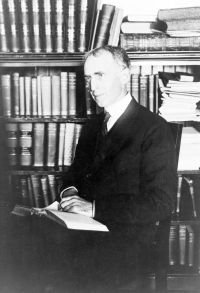
“ Textile Manufacture as a Domestic Industry.—Colonial women, in addition to sharing every hardship of pioneering, often the heavy labor of the open field, developed in the course of time a national industry which was almost exclusively their own. Wool and flax were raised in abundance in the North and South. "Every farm house," says Coman, the economic historian, "was a workshop where the women spun and wove the serges, kerseys, and linsey-woolseys which served for the common wear." ”
Kate Heintz Watson, Textiles and Clothing
“ For the woman of limited income it is wiser to select plain material of good texture and weave. Such material is never conspicuous, can be made over, and is always restful and may be interesting. Any good textile must impress itself upon the mind by its suggestiveness and beauty of color. ”
1911 Encyclopædia Britannica (1911)
“ The weaving establishments produce woollen and mixed woollen and cotton fabrics together with silk and satin drapery, swanskins, jerseys and other fancy goods. The making of velvet pile carpets and upholstering materials is a speciality of the town. To these industries must be added those of dyeing, the manufacture of hosiery, of the machinery and other apparatus used in the textile factories and of soap. ”
Meta Stern Lilienthal, From Fireside to Factory (1916)
“ While in colonial days every woman had sewed all the clothes for the members of her family, the rise of industry and commerce led to the establishment of the ready-made clothing business, and it was this particular line of development that made women wage-workers in this particular industry. When a young girl who was skillful with the needle could earn more by sewing shirts for a merchant than she could possibly save by making all the clothes for her father and brothers, she naturally ceased to be an individual producer for her family and became a social producer, a wage-worker. ”
Meta Stern Lilienthal, From Fireside to Factory (1916)
“ From the beginning the garment trades were centered in the large cities, and from the beginning they were among the most poorly paid of all occupations resorted to by women. We have seen that in the textile trades the early conditions were favorable and the wages comparatively high because the demand for operatives exceeded the supply. No such favorable conditions ever existed in the sewing trades. Every woman knew how to ply a needle, and the coarser kinds of sewing required practically no skill and experience. ”
“ As trade grew up, she brought these fine silken textiles to our markets, and articles of dress were made of silk for men’s as well as women’s wear among the wealthy. At what period the raw material came to be imported here, not so much for embroidery as to be wrought in the loom, we do not exactly know; but from several sides we learn that our countrywomen of all degrees busied themselves in weaving. ”
Various, Encyclopaedia Britannica, 11th Edition…
“ Factories are, again, subdivided into textile and non-textile: they are textile if the machinery is employed in preparing, manufacturing or finishing cotton, wool, hair, silk, flax, hemp, jute, tow, China grass, cocoanut fibre or other like material either separately or mixed together, or mixed with any other material, or any fabric made thereof; all other factories are non-textile. ”
Alice Clark, Working Life of Women in the Seventeenth Century (1919)
“ Textile industries fall into three groups: Woollen, Linen, and Miscellaneous, comprising silk, etc. Cotton is seldom mentioned although imported at this time in small quantities for mixture with linen.The predominance of women’s labour in the textile trades makes their history specially significant in tracing the evolution of women’s industrial position under the influences of capitalism; for the woollen trade was one of the first fields in which capitalistic organization achieved conspicuous success. ”
William Henry Doolittle, Inventions in the Century
“ The wonderful reduction in the cost of all kinds of textile fabrics due to the perfection of spinning and loom mechanisms, and its power to meet the resulting enormous increase in demand, has enabled the poor of to-day to be clad better and with a far greater variety of apparel than it was possible for the rich a hundred years ago; and the increased consumption and demand have brought into these fields of labour, and into other fields of labour created by these, great armies of men and women, notwithstanding the labour-saving devices. ”
J. A. Hobson, The Evolution of Modern Capitalism…
“ In the more highly-developed branches of the textile and metal trades the division of processes appears at first sight more sharply marked than to-day. The carder, spinner, weaver, fuller in the cloth trade worked in the several processes of converting raw wool into finished cloth, related to one another only by a series of middlemen who supplied them with the material required for their work and received it back with the impress of their labour attached, to hand it out once more to undergo the next process. ”
William H. Dooley, Textiles, for Commercial, Industrial…
“ Large purchasers of textile fabrics and various administrative bodies, such as army clothing departments, railway companies, etc., have adopted definite specifications to ensure having good material and workmanship. ”
 Eliza Davis Aria,
Costume: Fanciful, Historical, and Theatrical…
(1906)
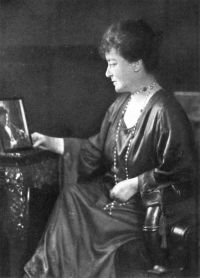
“ OF MATERIALS, THE CORSET, AND THE CRINOLINE The material question seems to have been answered in every country save England, where the initiative in manufacture is conspicuous by its absence, though we have through the centuries so successfully begged, borrowed, stolen, or acquired an expert knowledge of the various textile arts, that every manufactured fabric is now grist which may come from our mill. ”
Meta Stern Lilienthal, From Fireside to Factory (1916)
“ These comprise the making of men's and women's suits and dresses, coats, hats, shirts, underwear, collars and cuffs, gloves, etc. As we have seen, the making of wearing apparel has always been woman's work. During the domestic period of industry the same hands that spun the thread and wove the cloth also sewed the garments. When spinning and weaving had been taken out of the home and made specialized factory occupations, the making of clothes still remained a domestic occupation because no machinery had as yet been applied to this branch of manufacture. ”
Caroline Louisa Hunt, Home Problems from a New Standpoint
“ We know the relation of clothing to health and to the development of taste, and yet we multiply many fold the amount of labor necessary to clothe ourselves by making textile fabrics which fade, shrink, and wear out prematurely. We need strong, skillful, intelligent workers in every line of activity, and we know that these can be produced only by careful training and education ”
“ There are several departments of the textile trades, such as the silk industry, crape manufacturing, and carpet making, in which women are also largely employed; but it is in the great cotton mills of Rochdale, Oldham, Burnley, and Blackburn, the woollen mills of Huddersfield and Dewsbury, and the worsted mills of Bradford, that the great majority of women are to be found. ”
 Peter Kropotkin,
Fields, Factories and Workshops…
“ In the textile trades, weaving is often done either by the family or by a master who employs one boy only, or several weavers, and after having received the yarn from a big employer, pays a skilled workman to put the yarn in the loom, invents what is necessary for weaving a given, sometimes very complicated pattern, and after having woven the cloth or the ribbons in his own loom or in a loom which he hires himself, he is paid for the piece of cloth according to a very complicated scale of wages agreed to between masters and workers. ”
James P. Boyd, Triumphs and Wonders of the 19th Century…
“ In 1870 the number of textile establishments in the United States was 3035, giving occupation to 146,897 employees, and consuming annually 359,420,829 pounds of textile fibres, while in 1890 the number of establishments had increased to 4114, employing 511,897 hands, and consuming the enormous amount of 1,572,548,933 pounds of fibres; representing progress and growth in the textile arts not excelled by any other manufacturing industry.Food and clothing constitute the primary wants of man. ”
Louisiana Purchase Exposition Commission, Final Report of the Louisiana Purchase Exposition Commission
“ Textiles; Equipment and processes used in the manufacture of textile fabrics; Equipment and processes used in bleaching, dyeing, printing, and finishing textiles in their various stages; Equipment and processes used in sewing and making wearing apparel; Threads and fabrics of cotton; Threads and fabrics of flax, hemp, etc.; Cordage; Yarns and fabrics of wool; Silk and fabrics of silk; Laces, embroidery, and trimmings; Industries producing wearing apparel for men, women, and children; Leather, boots and shoes, furs and skins, fur clothing; Various industries connected with clothing. ”
Industrial Workers of the World, One Big Union of All the Workers… (1919)
“ All those engaged in the making of garments and other goods of silk, artificial silk, linen, cotton and woolen fabrics, such as clothing workers, workers in collar and shirt factories, including all salesmen, clerks, stenographers in distribution places (dry goods stores) . All workers employed in establishments where wearing apparel is made of fur, felt, straw, etc., as furriers, glove makers, hatmakers, straw hat makers, millinery workers. ”
 Henry Ford,
The International Jew/Volume 3…
(1920)
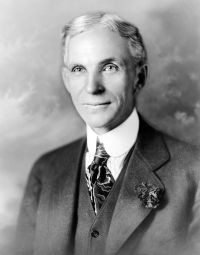
“ In the garment industry, the organizations include every operation in the process of making clothes. There are separate unions for buttonhole makers, vest makers, pants makers, coat cutters, coat operators, coat pressers, coat tailors, coat basters, lapel makers, knee pants makers, clothing turners, overall workers, palm beach workers, shirt makers, vest pressers, and even a washable sailor suit union. These together comprise the Amalgamated Clothing Workers of America. ”
Related terms
Authors who wrote about “textile worker”
Jay FoxA. A. BrookeDorothy Josephine CollierHenry A. AtkinsonMeta Stern LilienthalJ. A. Hobson Alice HenryAcademy of Political Science in the City of New YorkPeter KropotkinWilliam SmartMary Schenck WoolmanKate Heintz WatsonWilliam M. Davis, David Hannay and Otis T. MasonAlice ClarkVariousWilliam H. DooleyJames P. BoydCharlotte Perkins GilmanJonathan Thayer LincolnWilliam Henry Doolittle
