Tidal force

Definition and stakes

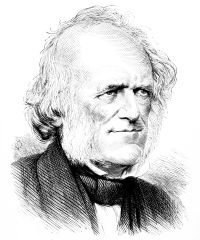
Portrait of Richard A. Proctor Richard A. Proctor,  Light Science for Leisure Hours

“ That this wave ‘does work,’ no one can doubt who has watched its effects. The mere rise and fall in open ocean may not be strikingly indicative of ‘work done;’ but when we see the behaviour of the tidal wave in narrow channels, when we see heavily-laden ships swept steadily up our tidal rivers, we cannot but recognise the expenditure of force. Now, where does this force come from? Motion being the great ‘force-measurer,’ what motion suffers that the tides may work? We may securely reply, that the only motion which can supply the requisite force is the earth’s motion of rotation. ”
Source: Gutenberg

Various,  Popular Science Monthly (1908)

“ Again, when the tidal swelling is increased in height by the convergence of the shores between which it moves, it is no longer a mere oscillation or pulsation of the great ocean, but the water acquires a true motion of translation, and rushes past headlands and through narrow channels with tremendous force and speed—a phenomenon well known along the west coasts of Scotland and Scandinavia. In some cases the advancing tide on entering a narrow inlet or estuary gathers itself into one or more large waves, and rushes up between the converging shores. ”
Source: Wikisource

by Arthur Train and Robert Williams Wood,  The Man Who Rocked the Earth — IV (1915)

“ That the tidal phenomena were not more marked and more destructive is a matter of great surprise, and has been considered as evidence that the retarding force was not applied at a single spot on the earth's surface, but was a distributed force, which acted on the water as well as on the land, though to a less extent. It is difficult, however, to conceive of a force capable of acting in such a way ”
Source: Wikisource

Get perspective with Kwize: daily news enlightened by great literature