“ The moment we see the Trusts in the hands of the strong men, the men who are unwilling to slump back into mere money-making, and who face daily with hardihood and with joy the feat of weaving into business several strands of value at once, making things and making money and making men together, the Trust will become a vast machine of human happiness, lifting up and pulling on the world for all of us day and night. ”
Trust (business)
Definition and stakes
Trust, in a business context, refers to the delegation of responsibility or confidence to an entity for managing assets, decisions, or operations. Authors like Gerald Stanley Lee depicted trusts as potential drivers of collective progress, highlighting their ability to align profit with social value, while Woodrow Wilson viewed them as anti-competitive structures, contrasting them with businesses that flourish through innovation.
Frederic Jesup Stimson emphasized the uncertainty surrounding the definition of trust obligations, pointing out the inherent complexities. These viewpoints collectively illustrate trust as both a mechanism for economic coordination and a topic of ethical and structural debate.
Quotes about “trust (business)”
 Woodrow Wilson,
The New Freedom
(1913)
“ That is the difference between a big business and a trust. A trust is an arrangement to get rid of competition, and a big business is a business that has survived competition by conquering in the field of intelligence and economy. ”
“ If he is running a trust—our most characteristic, recklessly difficult American invention for a man to show through, and if he tries to get his American temperament to show through in it, tries to make his trust like a vast portrait, like a kind of countenance on a country, of what a big American business is like, what will he do? ”
 Carl Schurz,
Speeches, correspondence and political papers of Carl Schurz
(1913)
“ What will you think of yourselves, what will the world think of your business judgment and your sense of honesty, if in something far greater than your shop or your bank, if in the Government of your country you promote the man who has done this, to the highest place of honor and trust? ”
Chester Arthur Phillips, Readings in Money and Banking
“ The trust company is in a position to render valuable, and often indispensable, aid to its corporate clients. Large amounts being involved, the great railroad and industrial corporations are willing to pay well for such services. Corporate trust business has, consequently, been a profitable field for the trust companies. ”
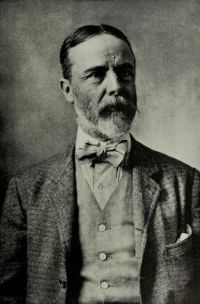 Frederic Jesup Stimson,
“Trusts”
(1887)
“ Now, generally, it will be impossible to define, with any degree of accuracy, what the objects of the trust are to be; and it is always impossible to define the duties of the trustees and the methods to be employed by them in managing their business. ”
William McKinley, A Supplement to A Compilation of the Messages and Papers of the Presidents…
“ The responsibilities of the high trust to which I have been called—always of grave importance—are augmented by the prevailing business conditions, entailing idleness upon willing labor and loss to useful enterprises. ”
 Robert W. Chambers,
In Search of the Unknown
“ Least of all did I approve of the 'business basis,' and I looked very much askance indeed at the 'Scientific and Religious Trust Company,' duly incorporated and generally known as the Pythagorean [252] Trust, which, consolidating with mind-curists, faith-curists, and other flourishing salvation syndicates, actually claimed a place among ordinary trusts, and at the same time pretended to a control over man's future life. ”
“ Having personally and directly proved that human nature in a monopoly could be trusted by being trusted himself, all he had to do was to capitalize his knowledge of human nature, use the enormous market value of the trust people had in him to gather people about him in the business who had a good practical business genius for being trusted too and for keeping trusted: everybody else was shut out. ”
Samuel Smiles, Self Help; with Illustrations of Conduct and Perseverance
“ The same trust and confidence reposed by men of business in each other, as implied by the system of Credit, which is mainly based upon the principle of honour, would be surprising if it were not so much a matter of ordinary practice in business transactions. ”
John J. McLaurin, Sketches in Crude-oil
“ The Standard Trust was a real object-lesson in economics, which illustrated in the fullest measure the benefits of an association in business that affected consumers and producers of a great staple alike favorably. ”
George Graham Rice, My Adventures with Your Money
“ A few days later the sobering sense which impelled me to resolve that I must absent myself from gaming tables evolved into a stern ambition to accomplish big things for the trust company. I went about my business like a man who sees dazzling before him a golden scepter and who is imbued with the idea that if he exerts the power he can grasp the prize. It had been agreed that the trust company would specialize in the promotion of mining companies, and I determined that the trust company should conduct its business as a trust company ought. ”
Jr. Thomas Dixon, The Root of Evil
“ Every man who holds a position of trust and puts his hands on money has his shadow. It's a question of business. The wholesaler must know the character of the retailer to whom he extends credit. A trust must know what its remaining independent rivals are doing, what business they are developing, what big orders they seek. ”
L. N. Godbole, Advaiti Management (2013)
“ Social transactions are not possible without this Trust. In Business and Industry this is a very important factor. Each one of us must ask oneself a simple question, whether your word or your promise is believed by the listener. ”
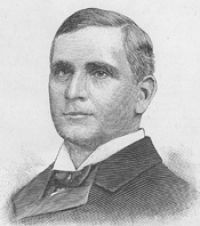 Charles N. Fowler,
Seventeen Talks on the Banking Question
“ Like our mutual savings banks, the original idea was that a Trust Company could only do a Trust business in the strict sense of that word. They could hold a railroad mortgage, and pay interest to the bondholders, perform similar functions for other corporations, and could act as a trustee in case of estates. Today you may assume that no kind of business will escape the scope of the charter of the so-called trust company, from the care of estates and the execution of corporate trusts to banking in all of its forms, and agencies of every conceivable kind. ”
Nella Braddy Henney, The Book of Business Etiquette
“ Do something, say something that will bring home to those who do business with us the fact that the Blank Trust Company is a very human institution—that it wants the good will of every man and woman in the country. ”
“ It is the kind of Trust whose officers hide their faces when they think of what it was that they thought that they thought that they wanted...."These men you see here, forty silent nations looking on, hundreds and thousands of self-respecting, self-supporting, public-serving, creative, successful business men, whom all the world envies looking on, do hereby beg to declare to all business men who know them and to the people, that they did not ever really want these things for themselves that their business says or seems to say they wanted. ”
American School of Correspondence, Cyclopedia of Commerce, Accountancy…
“ In a popular sense, the term, trust, is often used to designate combinations of capital or combinations among business men for the purpose of destroying competition, or for the purpose of regulating prices. ”
J. A. Hobson, The Evolution of Modern Capitalism…
“ A Trust may be regarded from an economic aspect, or from a legal aspect. Economically, the term Trust is applied to a class of syndicates which have established a partial or total monopoly in certain productive industries by securing the ownership of a sufficient proportion of the instruments of production to enable them to control prices. Legally, a Trust is a form of business association—"a trust of corporate stocks by means of which a body of men united in interest are enabled to carry on business through separate corporate agencies." ”
L. N. Godbole, Advaiti Management (2013)
“ Whatever is ordered, wherever is to be delivered, at agreed price, and regularly are the characteristics of business transactions that depend on trust. The ordinary person, unlettered person recognises instinctively whether a person is straight or crooked. ”
“ One of the things he had most wanted to say and prove in business was the economic value of being human, the enormous business saving that could be effected by being believed in.He preferred being believed in himself, in business, and he knew other people would prefer it; and he was sure that if, as people said, "being believed in did not pay," it must be because ways of inventing faith in people, the technique of trust, had not been invented. ”
Arthur Isaac Fonda, Honest Money
“ The greater concentration of capital in our modern industrial system, and the increasing values handled, necessitates the entrusting of greater responsibilities to individuals, in both public192 and private business, and it has not been found that the men selected for the higher positions of trust in public life were often recreant to the trust reposed in them, or inadequate to its responsibilities, even where much was left to their discretion. ”
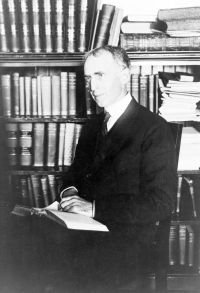 Charles A. Beard,
History of the United States
“ The Trust—an Instrument of Industrial Progress.—Business enterprise, under the direction of powerful men working single-handed, or of small groups of men pooling their capital for one or more undertakings, had not advanced far before there appeared upon the scene still mightier leaders of even greater imagination. New constructive genius now brought together and combined under one management hundreds of concerns or thousands of miles of railways, revealing the magic strength of coöperation on a national scale. ”
George Washington Williams, History of the Negro Race in America from 1619 to 1880…
“ It is my wish that this trust be administered in no partisan, sectional, or sectarian spirit, but in the interest of a generous patriotism and an enlightened Christian faith; and that the corporation about to be formed, may continue to be constituted of men distinguished either by honorable success in business, or by services to literature, education, religion, or the State. ”
E. R. Leland, Popular Science Monthly (1885)
“ More and more, as civilization advances, does the tendency of people to trust each other increase. Yearly the average of prudence and trustworthiness grows larger. If not because of a stronger sense of moral obligation, then because of a better appreciation of the necessity therefor in the conduct of business, men show a growing respect for each other's rights, and place a greater reliance upon the relations of contract. ”
 Jeremiah Whipple Jenks,
Twelve Studies on the Making of a Nation…
“ But is it not true almost invariably, if we look at social questions of every kind in a comprehensive way, that the survival of the fittest means the survival of the morally best? That the religion which endures is of the highest type? Business success in the long run, is so strongly based upon mutual confidence and trust, that, especially in these later days of credit organization, the dishonest man or even the tricky man cannot prosper long. A sales manager of a prominent institution said lately that the chief difficulty that he had with his men was to make them always tell the truth. ”
 Elinor Glyn,
Elizabeth Visits America
“ Last night there was a dinner party and some such clever men came. They were great financiers or business men or heads of Trusts. That means you have a splendid opportunity to speculate, only if anything goes wrong you have to chance all your other associates on the trust turning against you and saying it was all your fault, and then you generally have to commit suicide; but while you are head you can become frightfully rich and respected. ”
 Thorstein Veblen,
The Theory of Business Enterprise
(1904)
“ It might seem at first sight that by thIs inhibitory effect of the trust the entire advantage derivable from industrial improvements within the scope of the trust should inure to the gaIn of the business men in the combination, but such does not appear to be the practical outcome. The practical outcome appears more nearly to be that material advantage inures to no one from industrial improvements under the control of the trust, in so far as the trust successfully carries its point. This feature of trust management will be taken up again in a different connection. ”
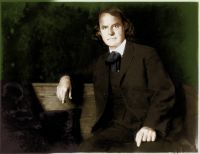 Elbert Hubbard,
Love, Life & Work
“ One is necessary to the other, and they often shift places. But forward and forward Civilization forever goes—ascertaining the best way of doing things.In commerce we have had the Individual Worker, the Partnership, the Corporation, and now we have the Trust.The Trust is simply Corporations forming a partnership. The thing is all an Evolution—a moving forward. It is all for man and it is all done by man. It is all done with the consent, aye, and approval of man.The Trusts were made by the People, and the People can and will unmake them, should they ever prove an engine of oppression. ”
 Arthur Latham Perry,
Principles of Political Economy
“ Despite all the instances of broken faith, and they are too many; despite the shocks and cautions that come every now and then to every man who trusts much in his fellow-men; experience itself justifies and rewards an ever-growing commercial trust. ”
Frederic Jesup Stimson,
“Trusts”
(1887)
“ If the individual is satisfied with the trustees, and sees nothing to object to in the proposed system of management, and if the prospect of increased profits is sufficiently great to make him willing to part with his inalienable right of doing what he will with his own, such a trust may justify itself to his judgment. ”
 Jack London,
The Iron Heel
(1908)
“ And the song would be, 'Blessed are the trusts.' And yet again, not only is your small combination not a trust, but you are aware yourself of its lack of strength. You are beginning to divine your own end. You feel yourself and your branch stores a pawn in the game. You see the powerful interests rising and growing more powerful day by day; you feel their mailed hands descending upon your profits and taking a pinch here and a pinch there—the railroad trust, the oil trust, the steel trust, the coal trust ”
Jack London,
The Iron Heel
(1917)
“ Yet you feel the pressure of other combinations on you, the trust combinations, and you cry out. It is because you are not a trust. If you were a grocery trust for the whole United States, you would be singing another song. ”
 Ambrose Bierce,
The Shadow On The Dial, and Other Essays
“ The number of actual and possible sources of profit and methods of distinction is infinite. Not all the trusts in the world combined in one trust of trusts could appreciably reduce it—could condemn to permanent failure one man with the talent and the will to succeed. ”
Charles Whiting Baker, Monopolies and the People
“ It is safe to assume that the reader is somewhat familiar with the general charges which have been brought against the trusts; but even if this side of the story has not been heard, it is not unfair to look at them first from the standpoint of the men who make and manage them. In order to do this, suppose we select some particular trust which will serve as a type, and imagine that some frank, candid manufacturer, who is a member of this trust, comes before us to give an account of its formation and operations. ”
Various, Popular Science Monthly (1899)
“ If the company has the right, in the just interests of its other clients, to ask these questions, as administering a large trust, has not the Church, which is also the administrator of a trust no less in the interest of other clients? ”
Thomas William Lawson, Frenzied Finance, Vol. 1: The Crime of Amalgamated
“ There is no term more common to-day than "trusts," and we are surrounded by "trusts," institutions whose workings during the past twenty years have awakened intense public curiosity to know what a "trust" is. Yet there is not extant a definition of a "trust" which conveys to the rank and file of the people any real idea of what a "trust" is. ”
Austin Lewis, Proletarian and Petit-Bourgeois (1912)
“ When a trust takes over the field of an industry it disposes of its opponents two ways. It buys them out and takes the best brains of the smaller industry into its own service, the rest it annihilates by sheer force of economic superiority. ”
 Harriet Martineau,
Society in America, Volume 2 (of 2…
“ The amount of good or harm which, in the present state of things, they are able to do, depends mainly on the discretion or indiscretion of their customers; who, in common prudence, must look well whom they trust. ”
by John Marshall Harlan, Connolly v. Union Sewer Pipe Company…
“ That a trust is a combination of capital, skill, or acts by two or more persons, firms, corporations, or associations of persons, or of two or more of them for either, any, or all of the following purposes: First, to create or carry out restrictions in trade. Second, to limit or reduce the production, or increase or reduce the price of merchandise or commodities. Third, to prevent competition in manufacture, making, transportation, sale, or purchase of merchandise, produce, or commodities. ”
Portal:Anonymous texts, The Urantia Book (1955)
“ Make full amends and thus cleanse your fortune of all dishonest riches. "9. The trusteeship of the wealth of one person for the benefit of others is a solemn and sacred responsibility. Do not hazard or jeopardize such a trust. Take for yourself of any trust only that which all honest men would allow. "10. That part of your fortune which represents the earnings of your own mental and physical efforts—if your work has been done in fairness and equity—is truly your own. ”
Related terms
Authors who wrote about “trust (business)”
Gerald Stanley Lee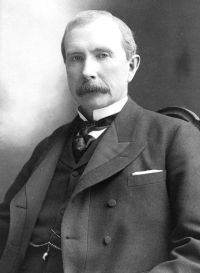 John D. RockefellerFrederic Jesup Stimson
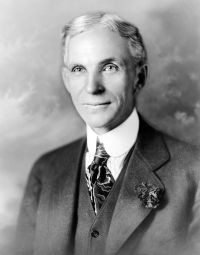 Henry Ford
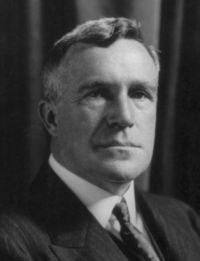 George Horace Lorimer
 Edmund Burke
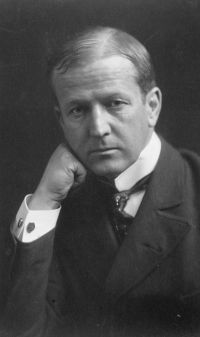 Arthur BrisbaneChester Arthur PhillipsCharles Whiting BakerThomas William LawsonJ. A. HobsonJack LondonSamuel Smiles
 Charles Dickens
 Ralph Waldo EmersonSamuel VakninWilliam McKinleyL. N. GodboleAmbrose BierceVarious
John D. RockefellerFrederic Jesup StimsonHenry FordGeorge Horace LorimerEdmund BurkeArthur BrisbaneChester Arthur PhillipsCharles Whiting BakerThomas William LawsonJ. A. HobsonJack LondonSamuel SmilesCharles DickensRalph Waldo EmersonSamuel VakninWilliam McKinleyL. N. GodboleAmbrose BierceVarious