Universality (philosophy)

Definition and stakes

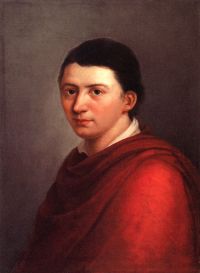
Portrait of Georg Wilhelm Friedrich Hegel Georg Wilhelm Friedrich Hegel,  The Philosophy of Fine Art, volume 1…

“ The individuality, however, which is truly free, and nothing short of this will satisfy the Ideal, has not merely to declare itself as universality, but at the same time, to assert its nature as concrete singularity, as the mediating bond which unites and transpierces both sides thus related, which in their self-related actuality subsist as unity. ”
Source: Gutenberg

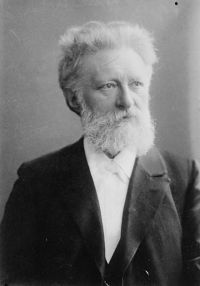
Portrait of Rudolf Eucken Rudolf Eucken,  Life's Basis and Life's Ideal: The Fundamentals of a New Philosophy of Life

“ We saw that it is characteristic of the spiritual life that it is lived from the whole; the elements are fashioned by a comprehensive unity; the different complexes and tendencies which arise in this life strive ultimately towards a single aim. We saw also that it was absolutely impossible that the tendency to universality should be originated by man, whose chief movement is towards differentiation and division; and, further, that it should be realised by him in face of the opposition of nature, which extends to the immeasurable in matters great and small. ”
Source: Gutenberg

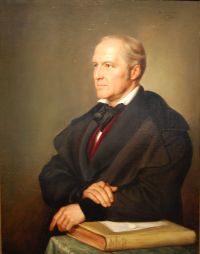
Portrait of Georg Wilhelm Friedrich Hegel Georg Wilhelm Friedrich Hegel,  The Philosophy of Fine Art, volume 1…

“ For if thought is, in one aspect of it, subjective, in another it possesses universality as the product of its inherent activity, and encloses both universality and subjectivity in unfettered unity. The universal of thought is, however, not that of art, whose object is the beautiful. And, indeed, apart from this distinction, particular individuality as confronted by thought in its natural envisagement, or form, no less than in its active effects and complete realization, stands in no necessary correspondence with the universality of thought. ”
Source: Gutenberg

Get perspective with Kwize: daily news enlightened by great literature