“ The water which is taken up by the atmosphere from the surface of the sea and of the land by evaporation, falls again, under certain circumstances, in showers of rain, the frequency and copiousness of which vary very much in different portions of the earth. As a general principle, rains are much more frequent and abundant near the equator than in temperate climes, and they grow less and less so as we approach the poles. ”
Uvula
Definition and stakes
The uvula, a fleshy appendage hanging from the soft palate, is a distinctive human anatomical feature composed of connective tissue, glands, and muscles. It performs functions in swallowing, speech, and saliva production, while its variations, such as the bifid uvula, are associated with medical conditions.
Though not explicitly discussed in the cited authors’ works, the uvula’s roles—such as its contribution to airway closure or speech—overlap with broader themes examined by writers like Richard Jefferies, who described atmospheric interactions, or Matthew Fontaine Maury, who studied water cycles. These authors, while concentrating on natural processes, indirectly highlight the uvula’s link to bodily and environmental dynamics, emphasizing its quiet but essential presence in both anatomy and the natural world.
Quotes about “uvula”
 George E. Waring,
Draining for Profit, and Draining for Health
George E. Waring,
Draining for Profit, and Draining for Health
“ Instead of carrying the heat of the air, and of the surface of the ground, to the subsoil, the rain only adds so much to the amount of water to be evaporated, and increases, by so much, the chilling effect of evaporation. ”
 Richard Jefferies,
Nature Near London
Richard Jefferies,
Nature Near London
“ The tide of the wind, like the tide of the sea, swirls about, and its cold push at the first causes a lifting feeling in the chest—a gulp and pant—as if it were too keen and strong to be borne. Then the blood meets it, and every fibre and nerve is filled with new vigour. ”
John George Francis, Beach Rambles in Search of Seaside Pebbles and Crystals
“ For here the wind not only has free scope, but it also finds another element, fluid but incompressible, to obey its impulse and follow in the course which it takes. If the WIND be like a wild spirit, the WATER is a mighty, irresistible body, endowed with motion by the other, and capable of any work, from the drowning of a sea-gull to the wrecking of a stately ship. ”
 Matthew Fontaine Maury,
Physical Geography of the Sea and its Meteorology
(1864)
Matthew Fontaine Maury,
Physical Geography of the Sea and its Meteorology
(1864)
“ Now when we come to recollect that evaporation is lifting up, that the winds are transporting, and that the clouds are letting down every day actually such a body of water, we are reminded that it is done by little and little at a place, and by hairs' breadths at a time, not by parallelopipedons one mile thick, and that the evaporation is most rapid and the rains most copious, not always at the same place, but now here, now there. ”
Arabella B. Buckley, The Fairy-Land of Science
“ Wherever the sun-waves touch the rivers, ponds, lakes, seas, or fields of ice and snow upon our earth, they carry off invisible water-vapour. They dart down through the top layers of the water, and shake the water-particles forcibly apart; and in this case the drops fly asunder more easily and before they are so hot, because they are not kept down by a great weight of water above, as in the kettle, but find plenty of room to spread themselves out in the gaps between the air-atoms of the atmosphere. ”
T. Lucretius Carus, Of The Nature of Things — Book VI (1916)
“ Moisture into the clouds. And when therein The seeds of water so many in many ways Have come together, augmented from all sides, The close-jammed clouds then struggle to discharge Their rain-storms for a two-fold reason: lo, The wind's force crowds them, and the very excess Of storm-clouds (massed in a vaster throng) Giveth an urge and pressure from above And makes the rains out-pour. ”
Arabella B. Buckley, The Fairy-Land of Science
“ Can you imagine these water-particles, just above any pond or lake, rising up and getting entangled among the air-atoms? They are very light, much lighter than the atmosphere; and so, when a great many of them are spread about in the air which lies just over the pond, they make it much lighter than the layer of air above, and so help it to rise, while the heavier layer of air comes down ready to take up more vapour. ”
Charles Tomlinson, The Rain Cloud
“ Water, in the state of rain, hail, snow, or dew, is generally the only substance which falls from the atmosphere upon the earth. There are, however, many well authenticated instances of various substances being showered down upon the land, to the great alarm of persons who were ignorant that the powerful action of the wind was, perhaps, the chief cause of the strange visitations to which we allude.We read of showers of sand, mud, sulphur, blood, fishes, frogs, insects, and stones ”
 Plato,
Apology, Crito, and Phaedo of Socrates
Plato,
Apology, Crito, and Phaedo of Socrates
“ And as in respiration the flowing breath is continually breathed out and drawn in, so there the wind oscillating with the liquid causes certain vehement and irresistible winds both as it enters and goes out. When, therefore, the water rushing in descends to the place which we call the lower region, it flows through the earth into the streams there, and fills them, just as men pump up water. ”
Caroline Pridham, Twilight and Dawn; Or, Simple Talks on the Six Days of Creation
“ When we were talking about the clouds we learnt that from every wet place, as well as from the seas, lakes, and rivers, water is constantly being drawn up, so that we can see it again in the fleecy clouds which float across the sky, and again when it comes down in the showers which water the earth—the tiny heat-waves are the messengers which perform this work of evaporation. ”
“ Smacksmen tell you that if it begins to rain at high water it will continue for the whole of the ebb. They will say to one another, ‘I doubt that’ll rain the ebb daown,’ or ‘We’re a goin’ to have an ebb’s rain.’ If it begins to rain at low water they say that they will have a ‘coarse flood.’ Again, on a calm summer morning, if it is high water at seven or eight, and the wind then springs up easterly, there will be an easterly wind all day. But if the tide is a midday one there will be no wind till high water. ”
 John Henry Pepper,
The Boy's Playbook of Science
John Henry Pepper,
The Boy's Playbook of Science
“ When the wind blows, it mixes all parts of the air together, and prevents that difference of temperature which causes the deposit of dew. Hence the evening mist will be more generally observed in the bosom of a valley surrounded by hills and screened from the winds that may blow from either quarter. The continual presence of moisture in the air is well shown by the condensation of water on the outside of a glass of cold spring water, or especially on the outside of a jug containing iced water. ”
 Alfred Russel Wallace,
Tropical nature, and other essays
(1878)
Alfred Russel Wallace,
Tropical nature, and other essays
(1878)
“ Again, the most copious condensation both of dew and rain is greatly influenced by vegetation and especially by forests, and also by the presence of hills and mountains, and is therefore greater on land than on the ocean; while evaporation is much greater on the ocean, both on account of the less amount of cloudy weather and because the air is more constantly in motion. ”
Elisha Noyce, Outlines of Creation
“ Another cause of local winds, is the condensation of vapours into water; when the air over a large region is saturated with moisture it is greatly expanded by it, and when the vapour is condensed and falls as rain, the air from the surrounding parts forces itself in to fill the space occupied by the rain while in a state of vapour, which is nearly one hundred thousand times greater than it occupies when in the form of water. ”
John Porter, History of the Fylde of Lancashire
“ A gentle evaporation is daily taking place from the surface of the sea, by which the air becomes loaded with moisture, remaining suspended until the coolness of evening sets in, when it is deposited on the ground as dew. ”
Tadashi Nakashima, Down with the Cities!
“ Rain falls, the water soaks into the earth, and becomes a spring. Spring water flows into mountain streams, then makes its way to rivers, and then into the ocean, where it evaporates. Rising into the sky it forms clouds, and falls once again on the Land, starting the cycle anew. ”
Emilie Van Beil Jacobs, Where We Live
“ This is because there is no water to wet the earth.We all know that clouds bring the rain; but how do the clouds get the water? Whenever there is water on the earth, as in the rivers, the air is continually drawing up the moisture in tiny invisible [p61] drops. This moisture rises in the air and forms clouds. When the clouds get very heavy, down comes the water which we call rain. In cold weather it is changed into snow. ”
Richard Jefferies,
The Pageant of Summer
“ As the wind, wandering over the sea, takes from each wave an invisible portion, and brings to those on shore the ethereal essence of ocean, so the air lingering among the wood and hedges—green waves and billows—became full of fine atoms of summer. ”
 William Whewell,
Astronomy and General Physics Considered with Reference to Natural Theology
William Whewell,
Astronomy and General Physics Considered with Reference to Natural Theology
“ The thirteen inches of water are of course supplied by evaporation from the sea, and are carried back to the land through the atmosphere. Vapour is perpetually rising from the ocean, and is condensed in the hills and high lands, and through their pores and crevices descends, till it is deflected, collected, and conducted out to the bay, by some stratum or channel which is watertight. The condensation which takes place in the higher parts of the country, may easily be recognised in the mists and rains which are the frequent occupants of such regions. ”
 Aaron David Bernstein,
Popular Books on Natural Science
Aaron David Bernstein,
Popular Books on Natural Science
“ The moist air fares like the wet clothes we spoke of; the warm dry air absorbs its particles of water. But if a colder stratum of air approaches the stratum containing clouds, then the water-particles of the latter are condensed; the cloud becomes small drops of water; these drops are too heavy to be supported in the air, and they fall down as rain. ”
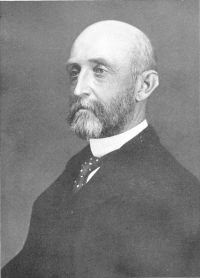 A. T. Mahan,
From Sail to Steam, Recollections of Naval Life
A. T. Mahan,
From Sail to Steam, Recollections of Naval Life
“ But, though surcharged with moisture, rain does not fall to any great extent in the open sea, nor until the atmospheric current impinges on land, when it seems to be squeezed, like a sponge by the hand, with resultant precipitation. ”
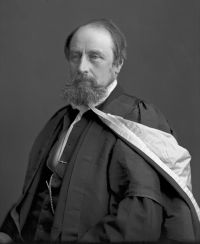 Sir John William Dawson,
The Origin of the World According to Revelation and Science
Sir John William Dawson,
The Origin of the World According to Revelation and Science
“ But so soon as condensation markedly exceeds evaporation, rain falls, and the atmosphere discharges its vast load of water—how vast we may gather from the fact [Pg 160] that the waters of all the rivers are but a part of the overflowings of the great atmospheric reservoir. "God binds up the waters in his thick cloud, and the cloud is not rent under them." ”
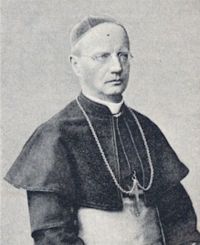 Friedrich Justus Knecht,
A Practical Commentary on Holy Scripture
(1910)
Friedrich Justus Knecht,
A Practical Commentary on Holy Scripture
(1910)
“ These springs feed the streams and rivers which carry the water back again to the sea. It is owing to this continuous circulation of water that the sea does not overflow, or the rivers dry up. Moreover, those damp exhalations supply the air with that moisture which is necessary to the life of men and beasts, and to the growth of plants. One thing more. You know that water turns foul when it remains for some time without being stirred. How is it that though it is shut in one place, the water of the sea never turns foul? ”
George E. Waring,
Draining for Profit, and Draining for Health
“ Every considerable addition to its water wells up, and soaks its very surface; and that which is added after it is already brim full, must flow off over the surface, or lie in puddles upon it. Evaporation is a slow process, and it becomes more and more slow as the level of the water recedes from the surface, and is sheltered, by the overlying earth, from the action of sun and wind. ”
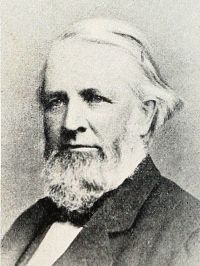 Henry F. French,
Farm drainage
Henry F. French,
Farm drainage
“ The warmer the atmosphere, the greater its capacity to hold moisture. The heated, thirsty air of the tropics drinks up the water of the ocean, and bears it away to the colder regions, where, through condensation by cold, it becomes visible as a cloud ”
 Philip Henry Gosse,
The Aquarium
(1854)
Philip Henry Gosse,
The Aquarium
(1854)
“ By the perpetual dashing of the waves against the shore, and especially against the ragged rocks, an immense quantity of air becomes entangled, in the form of minute bubbles, which by the various currents are diffused through the sea, and even carried to considerable depths, before they rise to the surface and become dissipated. ”
 Jean-Henri Fabre,
The Story-book of Science
Jean-Henri Fabre,
The Story-book of Science
“ RAIN “THE explanations of this morning account for the formation of clouds. A continual evaporation takes place on the surface of the damp earth as well as on the surface of the different sheets of water, lakes, ponds, marshes, streams, and above all the sea. The vapors formed rise into the air and remain invisible as long as the heat is sufficient. But since heat diminishes as the height increases, there comes a time when the vapors can no longer be kept in complete solution, and they condense into a mass of visible vapor, into a fog or cloud. ”
John George Flett Moodie Heddle, Orkney and Shetland
“ Our westerly and south-westerly winds, passing over sun-bathed seas, collect in their courses the vapour of warmer climates, and when this vapour, coming into contact with the cooler air of more northerly latitudes, is again condensed into water, a certain amount of the heat thus collected is set free, and raises the temperature of the air, of the rain itself, and of the land on which it falls. ”
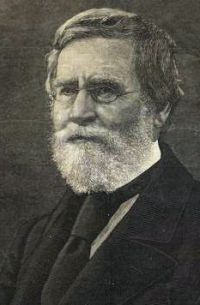 Jacob Abbott,
Rollo in Scotland
Jacob Abbott,
Rollo in Scotland
“ It usually rains more in mountainous countries than in those that are level, for the mountains, rising into the higher and colder regions of the atmosphere, chill and condense the vapors that are floating there, on the same principle by which a tumbler or a pitcher, made cold by iced water placed within it, condenses the moisture from the air, upon the outside of it, on a summer's day. ”
by William Gilbert, On the Magnet — Book II. Chap. 2… (1900)
“ So concreted humid things attract when a little resolved into air (the effluvia in the intermediate space tending to produce unity) ; for water has on wet bodies, or on bodies wet with abundant moisture on the top of water, the force of an effluvium. Clear air is a convenient medium for an electrical effluvium excited from concreted humour. Wet bodies projecting above the surface of water (if they are near) run together so that they may unite; for the surface of the water is raised around wet substances. But a dry thing is not impelled to a wet one, nor a wet to a dry, but seems to run away. ”
William Whewell,
Astronomy and General Physics Considered with Reference to Natural Theology
“ Clouds produce rain. In the formation of a cloud the precipitation of moisture probably forms a fine watery powder, which remains suspended in the air in consequence of the minuteness of its particles: but if from any cause the precipitation is collected in larger portions, and becomes drops, these descend by their weight and produce a shower.However rain is formed, it is one of the consequences of the capacity of evaporation and condensation which belongs to water, and its uses are the result of the laws of those processes. Its uses to plants are too obvious and too numerous to be described. ”
Matthew Fontaine Maury,
Physical Geography of the Sea and its Meteorology
(1864)
“ Currents without wind.—Such, keeping out of view the influence of the winds, which we may suppose would be the same whether the sea were salt or fresh, would be the system of oceanic circulation were the sea all of fresh water. But fresh water, in cooling, begins to expand near the temperature of 40°, [4] and expands more and more till it reaches the freezing-point, and ceases to be fluid. ”
 John Ruskin,
Frondes Agrestes: Readings in 'Modern Painters'
John Ruskin,
Frondes Agrestes: Readings in 'Modern Painters'
“ Add to this, that when the air has been exhausted of its moisture by long rain, the spray of the sea is caught by it as described above, and covers its surface not merely with the smoke of finely divided water, but with boiling mist: imagine also the low rain-clouds brought down to the very level of the sea, as I have often seen them, whirling and flying in rags and fragments from wave to wave ”
 Benjamin Franklin,
The Complete Works in Philosophy…
Benjamin Franklin,
The Complete Works in Philosophy…
“ When the wind is spent, which dilated the cloud, or the fermentation ceases, which generates the air and wind, the clouds may descend in a prodigious fall of water or rain. A remarkable intestine motion, like a violent fermentation, is very observable in the [55] cloud from whence the spout issues. No salt-water, I am persuaded, was ever observed to fall from the clouds, which must certainly have happened if sea-water had been raised by a spout. ”
Edward A. Martin, The Story of a Piece of Coal: What It Is…
“ The deeper the water in which it falls the greater the possibility of its drifting farther still, since in sinking, it would fall, not vertically, but rather as the drops of rain in a shower when being driven before a gale of wind. ”
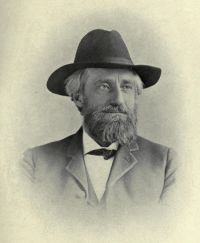 Nathaniel Southgate Shaler,
Outlines of the Earth's History…
Nathaniel Southgate Shaler,
Outlines of the Earth's History…
“ The precipitation of the water from the air is primarily due to the cooling to which it is subjected as it rises in the atmosphere. Over the sea the ascent is accomplished by the simple diffusion of the vapour or by the uprise through the aërial shaft, such as that near the equator or over the centres of the whirling storms. ”
Robert Kemp Philp, The Reason Why
“ Rain is the vapour of the clouds which, being condensed by a fall of temperature, forms drops of water that descend to the earth.It is the return to the earth in the form of water, of the moisture absorbed by the air in the form of vapour.417. Does rain ever occur without clouds?It sometimes, but rarely happens, that a sudden transition from [Pg 101] warmth to cold will precipitate the moisture of the air, without the formation of visible clouds. ”
