Wheat farming

Definition and stakes

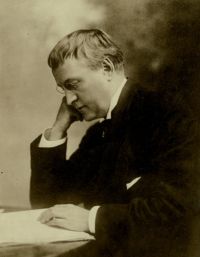
Portrait of Henry Ward Beecher Henry Ward Beecher,  Pleasant Talk About Fruits, Flowers and Farming

“ Wheat lands ought to be so farmed as to grow better from year to year; certainly, they ought to hold their own. Lands may be kept in heart by the adoption of a rotation suited to each particular soil; or, if frequent wheat crops are raised, by fallows or manuring. It is a fact that in this neighborhood farms in the hands of careful men are yielding better crops of wheat every year; while multitudes of farmers think themselves fortunate in twelve or fifteen bushels to the acre, there is another class who expect twenty-five or thirty bushels, and in good seasons get it. ”
Source: Gutenberg

T. B. Wood,  The Story of a Loaf of Bread

“ The only market for straw in quantity is a large town, and there is no considerable area of land suitable for wheat-growing near a sufficiently large town to provide a market for the large output of straw which would result from such a system of farming.
The ordinary practice of the British farmer is to grow his wheat in rotation with other crops. Various rotations are practised to suit the special circumstances of different districts, one might almost say of special farms. This short account of wheat-growing does not profess to give a complete account of even English farming practice.
”
Source: Gutenberg

Various,  Popular Science Monthly (1901)

“ Under these conditions the area of land devoted to the several grain crops diminishes in ratio to that given to other crops, varied farming taking the place of the all-wheat or all-corn system. But by the introduction of intensive farming there is a steady improvement and increase in the quantity and the quality of the crops derived from a given area of soil. The wheat needed for home use will keep even with population for many years without any increase in area. ”
Source: Wikisource

Get perspective with Kwize: daily news enlightened by great literature