Summary

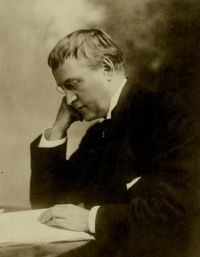
Portrait of Henry T. Finck Henry T. Finck Food and Flavor: A Gastronomic Guide to Health and Good Living

Even the dead are not forgotten in the great market, for in one section of the Halles, under its huge resounding roof, one may buy the bead wreaths which are made to adorn French graveyards. There is almost a western American atmosphere in this light touching upon death in this center of vivid life, and once more we realize the kinship between French and Americans—except in the matter of eating, in which alas, we are so far behind them.
Source: Gutenberg

Portrait of Henry T. Finck Henry T. Finck Food and Flavor: A Gastronomic Guide to Health and Good Living

A cook can be genuinely creative, inventing new sauces, new flavors, new combinations, new dishes, with appropriate names for them, thus acquiring universal fame, as did Carême and many others, among them Béchamel, whose name has become a household word the world over, not because he was a marquis but because he invented a new sauce.
From a moral point of view, cooking is one of the noblest of the arts. The old adage that the way to a man's heart is through his stomach is often sneered at as being materialistic if not coarse.
Source: Gutenberg

Portrait of Henry T. Finck Henry T. Finck Food and Flavor: A Gastronomic Guide to Health and Good Living

Some Americans have an inexplicable prejudice—which, however, is fast disappearing—against fresh pork and against sausages, but bacon and ham are relished universally, and it is therefore of national importance that they should be made appetizing. But they fare as badly as our bivalves and our fowls. Time was when a crisp slice of bacon would give zest to a whole breakfast, but the bacon served now in nineteen cases out of twenty has no more flavor than sawdust; it is eaten without pleasure, and therefore burdens the stomach for hours.
Source: Gutenberg

Get perspective with Kwize: daily news enlightened by great literature