Winemaking

Definition and stakes

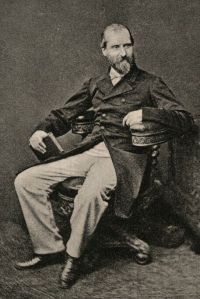
Portrait of Philip E. Muskett Philip E. Muskett,  The Art of Living in Australia

“ THE MAKING OF THE WINE—THE CELLAR. Up till this time our whole attention has been taken up with everything that has to do with the production of the grape. But with the gathering of the crop a complete change has taken place, for nature no longer exercises such a controlling influence. At this stage the art of winemaking really begins, and the climate, the soil, and all the other factors that have so much to do with the growth of the grape assist us no longer. ”
Source: Gutenberg

Canning, Freezing, Storing Garden Produce

“ They may be grown for winemaking where the pure European wine grapes will not succeed.
What wine is. Simply described, wine is the product of the fermentation of sound, ripe grapes. If a quantity of grapes is crushed into an open half-barrel or other suitable vessel, and covered, the phenomenon of fermentation will be noticeable within a day or two, depending on the ambient temperature. It is initiated by the yeasts naturally present on the grapes, which begin to multiply prodigiously once the grapes are crushed.
”
Source: Gutenberg

Emmet H. Rixford,  The Wine Press and the Cellar: A Manual for the Wine-Maker and the Cellar-Man

“ In the Case of Dry Wines, whose sugar has all been transformed, the same attentions are to be bestowed as in the case of new red wines, and the rules laid down are referred to. (See Red Wine.)
Mellow White Wines, that is, those which retain a portion of their sweetness after the tumultuous fermentation, particularly if they do not carry 15 per cent. of alcohol, require the greatest amount of care in order to preserve their mellowness in aging; for if left to themselves they will again enter into fermentation, and become dry.
”
Source: Gutenberg

Get perspective with Kwize: daily news enlightened by great literature