AI-generated from sources
Anaesthetizing the Scaffold, or What a Painless Execution Leaves Untouched
In Brief
- The horror of an execution has long been placed elsewhere than in physical pain: the historian Thomas Babington Macaulay judged the mere ending of life a small part of it, beside the condemned man's prolonged mental agony and the shame inherited by his descendants.
- Taking the pain out of execution is an old project, not a modern one: condemned men were drugged into stupor before beheading in Siam, graded tortures gave way to a single swift hanging, and a medical journal weighed a proposal to narcotise murderers to death.
- Some of the strongest objections to a gentle death came from the penalty's own defenders, who held that it deters others through dread, and feared that a painless end would dissolve that dread.
- Much of the condemned person's ordeal comes before the end: the long wait for execution has been judged often so degrading as to constitute psychological torture, a dread that no drug given at the last minute can reach.
Main authors

In the Siam described by N. A. McDonald, a condemned man was brought out in chains, a clamp of two bamboo poles fixed to his neck, and made to sit on the ground. Then came a precaution that sounds strangely modern. The criminal was usually drugged “so as to produce stupor,” often to the point of unconsciousness, and his ears were stopped with soft mud; only then did the executioner run out with his sword [1]. Everything in the scene aims at the body’s final seconds. The man should not feel the blow, nor even hear it coming. Yet the same account opens on a remark that no drug could touch: innocent people, McDonald notes, often confessed for fear of torture [1]. Fear did its work long before any blade.
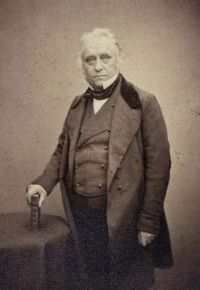
That gap, between the body’s last moment and everything that precedes it, is the whole question of the painless execution. Does a death without pain make the state’s killing more acceptable, or only easier to look at? Thomas Babington Macaulay gave an answer in his History of England, while explaining why a man hanged on false testimony is the victim of the most aggravated kind of murder. The mere extinction of life, he wrote, is a very small part of what makes an execution horrible; far worse are the prolonged mental agony of the sufferer, the shame of all connected with him, and a stain that lasts into the third and fourth generation [2]. A father of a large family, he thought, would rather lose all his children to accident or disease than one to the hangman [2]. If Macaulay is right, every humane reform of the scaffold has worked on the smallest part of its cruelty. The swift drop, the covered face, the drugged sleep each took something from the suffering of the body. The dread, the ignominy and the deliberate act of killing stayed where they were.
Michelet and the Wager Against Pain
The reforming imagination drew a clean line between dying and suffering. Jules Michelet put it most plainly in The Bird. Death, he wrote, had never been our serious objection, little more than a mask of life’s transformations; pain was “an objection, grave, cruel, terrible,” and would therefore disappear, little by little, from the earth [3]. As evidence he pointed to pain's agents, the fierce executioners of the life which they plucked out by torture: they were already very rare [3]. The wager is double. It assumes that what made death intolerable was the pain, and that pain could be subtracted while death remained. Death, on this view, becomes a neutral fact that may be administered, provided it is administered without torment.
Institutions moved along the same path, though not always for the sufferer’s sake. In 1995, the Constitutional Court of South Africa recalled how the British colonial administration installed at the time of the Napoleonic wars abolished torture, and replaced the multiple degrees of severity of capital punishment with a single, relatively swift hanging [4]. The judgment is precise about the motive. Torture and cruel modes of execution were regarded as barbaric in themselves and “degrading to the society which practised them” [4]. The reform protected the punishers as much as the punished. The same passage sets down the position the administration departed from: if executions are to deter, they should receive maximum publicity, and killers should undergo an agony equal to that of their victims [4]. The swift hanging was a choice made against deterrence by agony. What would deter in its place was left open.
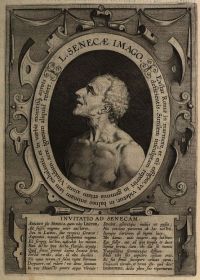
The reformers could claim an ancient ally, though he said something subtler than they did. Seneca observed that the more instruments of bodily pain the executioner shows, the more frightful he makes himself, and that many a man who would face death resolutely in any generous form is overcome by the manner of it [5]. In his sentence the instruments of bodily pain frighten as soon as they are shown, and it is the manner of the death, not death itself, that overcomes a resolute man. Read closely, the Roman moralist, centuries before any talk of anaesthetic deaths, places the terror of execution in the mind that waits for it as much as in the nerves that receive it.
Pushed to its end, the reforming logic arrived at the lethal chamber. The Hawke’s Bay Herald reported the Lancet discussing a proposal that murderers be narcotised to death, and asking whether it was advisable to grant murderers alone the privilege of absolute euthanasia [6]. The medical journal’s doubt is telling. A death without consciousness was a privilege the ordinary dying did not enjoy. An essay in Graham’s Magazine in 1852 described the true euthanasia as a death prompt and brief, met unconsciously, as in sleep or by lightning [7]. But it attached a condition: the prayer it cited asks deliverance from death uncontemplated and unprepared for, so that the kind death is the sudden one that finds a person ready [7]. The execution inverts this ideal. It offers unconsciousness at the close of the most contemplated death there is.
A Gentle Sleep for Murderers
The gentle death met some of its sharpest resistance from those who wished to keep the penalty, not abolish it. Their objection shows what they believed the penalty was for. The Hawke’s Bay Herald report on the lethal chamber asks why murderers, of all men, should go out of existence in a gentle sleep, “knowing no more of their death than of their birth” [8]. The reason it offers is the common theory of the penalty: the law deters others through the awful dread of the punishment [8]. Pain is absent from the argument. What the sleep threatens is the dread, and with it the stated reason for killing.
Ambrose Bierce turned the same fear into satire. Give the reformers their way, he wrote, and hanging might become so pleasant a social distinction that it “would deter nobody but the person hanged” [9]. He pictured execution by electricity, by asphyxia in rose-leaves, by slow poisoning with rich food, and a young man bent on suicide who kills someone else instead, to obtain from the public executioner a happier dispatch than his own hand could manage [9]. The joke has a serious edge. A death made desirable stops being a punishment. A punishment emptied of fear, for Bierce, would protect no one.
The complaint that a quick death is too kind is older than any narcotic. In Dumas’s The Count of Monte Cristo, a character asks whether society repairs anything when it interposes the knife of the guillotine and lets a man who caused years of moral suffering escape with a few moments of physical pain [10]. The swift blade that reformers praised appears here as an insult to the victim’s family. C. J. Wills, describing Persia in 1891, shows the same calculation from the side of the state. Ordinary executions were by throat-cutting before a few loafers, while blowing from a gun was used when the authorities wished to strike terror into the hearts of evil-doers [11]. The method was chosen as a message. Severity and leniency both addressed an audience, and the body of the condemned was the medium.
The defenders of dread, however, rested on a doubtful premise. As early as 1764, Cesare Beccaria argued that the terrors of death make so slight an impression that they cannot withstand the forgetfulness natural to mankind [12]. Violent impressions surprise, but their effect is momentary; in a free and quiet government, he held, punishments should be frequent rather than strong. An execution, in his account, is to the multitude a spectacle that in some excites compassion mixed with indignation [12]. If Beccaria is right, the dread the severe party wished to preserve barely touches the public. It falls almost entirely on one person, the one who waits to die.
Poor Dennis and the Death Row Phenomenon
An anonymous account of the execution of a man called Poor Dennis, printed in the 1840s, shows where that dread lodges. Dennis came out with a show of great fortitude. It deserted him when he looked at the man to be hanged with him and saw in him, “as in a mirror,” the reflection of his own funeral appearance [13]. He shrieked and fell senseless. The narrator’s explanation is exact: the reality of death had never struck him until it reached his imagination through his senses, and by the time the car arrived at the fatal spot he could scarcely be said to be alive [13]. Nothing had yet been done to his body. The cruelest moment of his execution came before it began, and no method applied at the end could have spared him it.
Modern courts gave this dread a legal description. In 1995 the Constitutional Court of South Africa held that the cruelty of capital punishment lies not only in the execution and its pain, but in the dehumanising effects of the long imprisonment that precedes it. Penologists and medical experts, the court noted, regard that process as often so degrading and brutalising to the human spirit as to constitute psychological torture [14]. The condemned faces a certainty shared only with the suicide and the terminally ill. “The state puts the question of death to the condemned person,” and he must grapple with it without the consolation of dying naturally [15]. In the same case, Arthur Chaskalson described the death row phenomenon, in which prisoners exhaust every avenue to put off the date in the natural hope of a reprieve, a dragging out that has been characterised as cruel and degrading [16]. The irony is structural. The procedures that guard against error are the very ones that lengthen the wait [14].
What the wait contains is not only fear but a verdict on the person. The same court called the death sentence a declaration that society deems the prisoner a nullity, less than human and unworthy to live, a negation that runs through the whole period between sentence and execution [15]. The preacher Joseph Cross, writing long before, drew a distinction of his own. To die as a public criminal at the hand of the executioner, he wrote, is very different from lying down to sleep into another world, and different even from falling in battle for one’s country [17]. The soldier’s death may well be the more painful. What separates the two is meaning. A sedative can change how the condemned dies; it cannot change what his death has been declared to be.
That declaration does not stop at the condemned. Macaulay counted the shame and misery of all connected with the hanged man among the true horrors of an execution [2]. One of Edward Berens’s Christmas Stories describes a family whom time will partly console, but who will probably never be free of the memory that a brother was executed as a murderer [18]. Ignominy reaches even the other end of the rope. In Greece, Philip Sanford Marden reports, the executioner was generally a convicted murderer who took the post to escape the penalty himself, at the price of virtual exile and the lasting aversion of all good people [19]. Disgrace travels along every line the sentence touches. No anaesthetic is given to the family, or to the hangman.
Behind the Hood, the Law Ashamed of Its Deed
Concealment is older than anaesthesia, and it began on the scaffold itself. Charles Dickens, asking whether a hanging could frighten the man who watches it, imagined him reasoning that the executioner does no more to the criminal than nature will do, in her own good time, to judge and jury [20]. As for the manner of the death, Dickens granted its horror. It is so horrible that the law, “afraid or ashamed of its own deed,” hides the face of the struggling wretch it slays [20]. The covered face was a first painless method, painless for the spectators. Dickens reads it as an avowal. A law that hides what it does already doubts that it can bear to be watched.
Hiding does not only diminish a deed; it can also exalt it. Writing of the Athenian stage, Edward Bulwer Lytton observed that removing the deed of death from the scene heightened its effect, turning a spectacle of physical horror into moral awe, until vindictive murder was idealized and hallowed into religious sacrifice [21]. He was speaking of tragedy, not of justice. But the mechanism he describes lies in wait for any hidden killing: the less the body is seen, the more easily the act takes on the solemnity of a rite. Alexander Smith, in Dreamthorp, reached a similar sublimity by the opposite road. When the law reserves death for the murderer, condemned only on the clearest evidence, the impending execution of one man throws its shadow over every heart in the city, and the public execution, he wrote, ceases to be vulgar and becomes sublime [22]. Shown or hidden, the killing is lifted out of physical horror into meaning. In neither case is it undone.
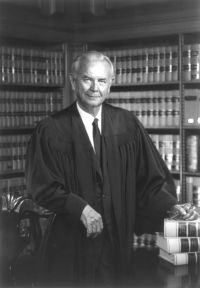
What survives every change of method is the deliberate act. Beccaria found it absurd that laws which detest and punish homicide should, in order to prevent murder, publicly commit murder themselves, and with formal pageantry besides [23]. Pageantry can be abolished; the act cannot. In a far later American opinion, William J. Brennan held that the deliberate extinguishment of human life by the State is uniquely degrading to human dignity [24]. His ground owes nothing to the rope, the blade or the drug. Yet Brennan stopped short of its consequence. He would have held death a cruel and unusual punishment on that ground alone, he wrote, were it not a punishment of longstanding usage and acceptance [24]. Arthur Chaskalson named what sets the act apart from every other sentence: it is final and irrevocable, and leaves nothing but the memory in others of what has been [25].
The logic of the painless death can overturn itself in the hands of its own artisans. A contributor to a New York World symposium in 1906 recalled having brought forward a mode of execution because it was the quickest and most certain of all [26]. He nonetheless called for its banishment, judging capital punishment to be only legalized murder and a perfectly dispassionate judgment a myth [26]. The man who refined the method ended by condemning what it served. Victor Hugo’s Under Sentence of Death gives the argument its sharpest form: branding, penal servitude and death belong to one class, and a society that has given up the hot iron has no reason to keep “the chain and the chopper” [27]. Each mitigation, on this view, admits that the cruelty left behind has no better title than the cruelty discarded.
The argument from humanity can also run the other way. In a story by Anton Chekhov, a banker who admits he has tried neither punishment maintains against his guests that the death penalty is more humane than life imprisonment, since the one kills at once and the other drags the life out of a man over many years [28]. It is a character’s provocation, not the author’s verdict, but it names a real difficulty. Eugène Sue predicted that solitary confinement would force the abolition of capital punishment, because many of those he called incorrigibles preferred the highest penalty of the law to imprisonment in a cell [29]. If cruelty lies in the duration of dread rather than in the instant of pain, the quick death is not obviously the crueler. The measure that condemns the scaffold weighs on the cell as well.
The long effort to make execution painless has followed one line: drugging the condemned man before the sword in Siam, replacing graded tortures with a single swift hanging, proposing a chamber in which murderers would be narcotised to death. Each step took something from the suffering of the body in its last moment. None reached what the most attentive witnesses placed at the heart of the punishment: the long dread of a person who knows the date of his death, the shame that spreads to his family and even to his executioner, and the deliberate decision of a state to kill. Those who objected to a gentle death in order to keep the penalty argued from deterrence: the law, they held, deterred others through dread, and they feared that sleep would dissolve it.
A painless method therefore answers the narrowest question one can ask about an execution. It relieves the spectators, and the authority that must be seen to act, more surely than the condemned, whose ordeal is largely spent by the time the drug takes hold. That settles nothing for or against the penalty; the same reasoning, pressed on duration rather than pain, can make a lifetime in a cell look no kinder. But it fixes the ground on which the argument has to be fought. The drug reaches the body at the last minute; the sentence reached the man long before.