AI-generated from sources
The Untranslatable Soul, Shakespeare Between Word and Spirit
In Brief
- Shakespeare's global appeal stems from characters embodying universal human nature, whose psychological depth transcends linguistic and national boundaries.
- The unique, often archaic nature of Early Modern English, referred to as 'Shakespeare-ese,' presents a formidable linguistic barrier to direct translation.
- Translators face an impossible choice between literal fidelity to Shakespeare's intricate language and adaptive recreation to convey his dramatic spirit and emotional impact.
- The enduring vitality of Shakespeare's works abroad lies in a perpetual, creative struggle to interpret and remake his vision, often finding new power in foreign tongues.
Main authors


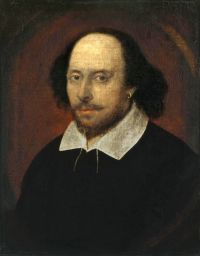
The enduring global presence of William Shakespeare rests on a profound paradox. For centuries, his works have been celebrated as the epitome of English literature, yet their power seems to radiate far beyond the confines of their native language [11, 12]. His characters—Hamlet, Lear, Macbeth—are treated as universal archetypes, figures of flesh and blood whose psychological depth resonates in countless cultures and tongues [9]. This suggests an art centered on an unchanging human nature, one that explores truths so fundamental they should be accessible to all humanity [7, 8]. The very notion that Shakespeare can be staged, read, and understood from Paris to Tokyo implies the existence of a dramatic core, a communicable spirit that transcends linguistic and national boundaries.
Yet, this universal appeal is constantly challenged by the singular nature of Shakespeare's language itself. The specific medium of his art is a highly stylized, often idiosyncratic form of Early Modern English, a
The Obstacle of Shakespeare-ese
The primary challenge confronting any attempt to carry Shakespeare's work into another language is the formidable nature of his style—a linguistic signature so distinct it functions almost as a dialect of its own. This
A Universal Language of the Heart
Despite the immense linguistic barriers, Shakespeare’s work demonstrates a remarkable capacity to connect with audiences across historical and cultural divides . This power stems from a core essence that appears to operate independently of his specific phrasing. Critics from different eras, including figures like Voltaire, have recognized that beneath the complex surface lies a profound engagement with truth and nature, speaking a language of its own without artifice . The characters and their actions are so fundamentally rooted in a recognizable humanity that they remain coherent and compelling even when their external manners and speech differ from our own . This suggests that the plays contain an intelligible dramatic spirit that is not entirely contingent on the original English verse.
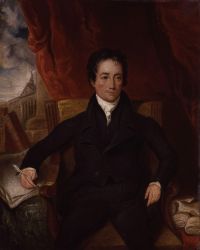
The depth of Shakespeare's characters provides the most potent evidence of this transcendent quality. Figures like Hamlet are perceived to possess an inner life so vast that it exceeds the confines of the play itself [10]. Victor Hugo argued that the character's mysterious and terrible essence would remain even if he were stripped of his specific context at Elsinore, a testament to the sheer quantity of humanity invested in him . This idea is echoed by Charles Lamb, who contended that the emotional arc of a prince like Hamlet—his melancholy, his wavering resolve, his encounters with the supernatural—could be effectively portrayed in the simplest, most servile prose, leaving ample room for an actor's passionate interpretation [6]. The implication is that the dramatic blueprint is so strong that its power persists even when the poetry is removed.
Ultimately, Shakespeare’s enduring relevance is attributed to his focus on mankind in its entirety, making his genius contemporary with every generation . His creations are treated not as literary constructs but as historical personalities whose names and defining phrases have become embedded in the speech of civilized humanity worldwide . This points to a universal understanding of human emotion and reason—a
The Translator's Impossible Choice
The act of translating Shakespeare forces a confrontation with the fundamental limits of linguistic transference. As languages possess different structures and expressive capacities, a perfect, one-to-one correspondence is an illusion [13, 17]. Each language maps the world of human thought differently, and what one can express with ease, another may struggle to articulate at all . Consequently, the unique individuality of a literary work—an inseparable fusion of its ideas, aesthetic form, and original language—can never be perfectly duplicated [16, 19]. Every translation is thus an approximation, an attempt to reproduce a tone, style, and sentiment whose original grace can never be fully recaptured [20].
This inherent gap leaves the translator suspended between two conflicting ideals: literal fidelity and adaptive recreation. A rigid, word-for-word approach, while seeming honorable, often produces a pale and distorted reflection of the original. Such strictness can yield a
The journey of Shakespeare's works across the globe is a testament to a central, unresolved tension in the art of translation. On one hand, the very fabric of his drama is woven from a language that is archaic, grammatically rebellious, and poetically dense—a style so specific that it seems to defy faithful replication [1, 2, 4]. This 'Shakespeare-ese' is not incidental but is the very instrument through which his dramatic vision is realized, leading to the reasonable view that to remove the work from its original linguistic vessel is to lose its soul [3, 5, 15]. And yet, the plays and their inhabitants continue to thrive in new cultural ecosystems, speaking to a universal human condition that evidently transcends the particularities of Early Modern English .
This paradox ensures that the translator of Shakespeare can never be a mere conduit but must act as an interpreter, a co-creator navigating the fraught space between the letter and the spirit [18, 21]. The choice to prioritize the original’s stylistic texture or its universal emotional impact shapes not just a single text but how a culture receives and remakes a global icon [14]. While something is inevitably lost in this process of transference, something may also be gained, as works can find unforeseen power and new life in foreign tongues [22]. Shakespeare's continued global vitality, therefore, lies not in a fixed, immutable text but in the perpetual, creative struggle to bridge the gap between his world and ours.