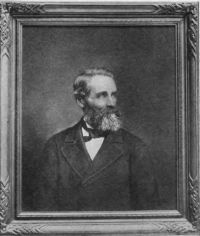
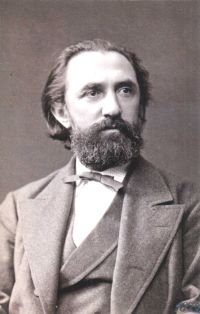
Alexander Sergeyevich Lappo-Danilevsky

Biographical details

Alexander Sergeyevich Lappo-Danilevsky Russian Realities and Problems… (1917)

Besides this knowledge and the will to acquire it, the Idea of Good is the principle to which our will tends and on which depend our aims and actions: our life can have a meaning and become worthy of our moral nature only when it is a "justification of Good"; it proceeds from a kind of moral unity, able to govern individual and social life. Our consciousness approves these two wills, directed to "True Good," and thus establishes the union of Truth and Good.
Source: Wikisource

Alexander Sergeyevich Lappo-Danilevsky Russian Realities and Problems… (1917)

The practical usefulness of science and learning was really one of the essential causes of their development, and the consciousness of this is conspicuous in the popular encyclopedias of the 17th century, known as azbukovniki. Every man of course needed some knowledge of grammar for correct reading and writing, of arithmetic for reckoning, of geometry for measuring, of geography for travel and foreign relations, of history for politics, and so on.
Source: Wikisource

Alexander Sergeyevich Lappo-Danilevsky Russian Realities and Problems… (1917)

Most Russian sociologists, however, conceived the idea of progress in a more positive way; many of them discussed evolution in regard to human personality. In his well-known paper on progress Mihailovsky formulated, for instance, such a conception; he arrived at the conclusion that progress is "a gradual approximation to the wholeness of individuals, to a possibly most complete and various division of labour between man's organs and most limited division of labour between men." From this unifying point of view Mihailovsky considered the progressive evolution of mankind.
Source: Wikisource

Get perspective with Kwize: daily news enlightened by great literature