Leonhard Euler

Definition and stakes

1911 Encyclopædia Britannica, Volume 9… (1911)

“ In 1727, on the invitation of Catherine I., Euler took up his residence in St Petersburg, and was made an associate of the Academy of Sciences. In 1730 he became professor of physics, and in 1733 he succeeded Daniel Bernoulli in the chair of mathematics. At the commencement of his new career he enriched the academical collection with many memoirs, which excited a noble emulation between him and the Bernoullis, though this did not in any way affect their friendship. ”
Source: Wikisource

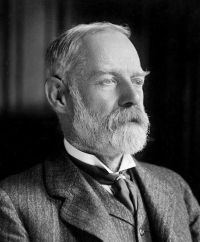
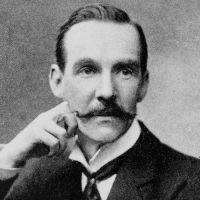
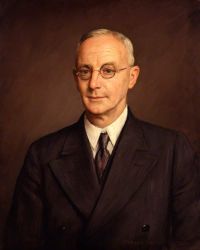
Portrait of Edmund Taylor Whittaker Edmund Taylor Whittaker,  A History of the Theories of Aether and Electricity (1910)

“ The natural philosophers of the eighteenth century for the most part, like Maupertuis, accepted the corpuscular hypothesis; but the wave-theory was not without defenders. Franklin [8] declared for it; and the celebrated mathematician Leonhard Euler (b, 1707, d. 1783) ranged himself on the saune side. In a work entitled Nova Theoria Laucis et Colorum, published [9] while he was living under the patronage of Frederic the Great at Berlin, he insisted strongly on the resemblance between light and sound; "light is in the aether the same thing as sound in air." ”
Source: Wikisource

1911 Encyclopædia Britannica, Volume 9… (1911)

“ Euler, assisted by his eldest son Johann Albert, was a competitor for these prizes, and obtained both. In the second memoir he reserved for further consideration several inequalities of the moon’s motion, which he could not determine in his first theory on account of the complicated calculations in which the method he then employed had engaged him. He afterwards reviewed his whole theory with the assistance of his son and W. L. Krafft and A. J. Lexell, and pursued his researches until he had constructed the new tables, which appeared in his Theoria motuum lunae (1772) . ”
Source: Wikisource

Get perspective with Kwize: daily news enlightened by great literature