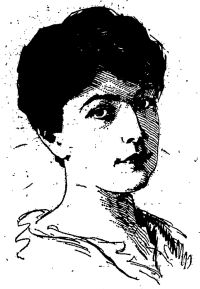
Frank Evers Beddard

Biographical details

Frank Evers Beddard,  Dictionary of National Biography (1901)

“ In fine it may be said that no one, except the absolute pioneers of investigation into the anatomy of whales, when everything was new, has increased our knowledge of the group more than Flower. He is fitly represented in the whale-room of the museum over which he presided by a splendid series of both skeletons and plaster casts illustrating the forms of these creatures, casts which he himself originated and carried out in detail. ”
Source: Wikisource

Frank Evers Beddard,  1911 Encyclopædia Britannica, Volume 5… (1911)

“ The anterior end of body always shows some “cephalization.” The internal organs are largely repeated metamerically, in correspondence with the external metamerism. Thus the body cavity is divided into a sequence of chambers by transverse septa; and even among the Hirudinea, where this condition is usually not to be observed, there is embryological evidence that the existing state of affairs is derived from this. Commonly the nephridia are strictly paired a single pair to each segment, while the branches of the blood vascular system are similarly metameric. ”
Source: Wikisource

Frank Evers Beddard,  1911 Encyclopædia Britannica, Volume 8… (1911)

“ So far as is known, the production of cocoons is universal among earthworms and the remaining Oligochaeta of aquatic habit. The young leave the cocoon as fully formed earthworms in which, however, the genitalia are not fully developed. There is no free living larval stage. Out of a single cocoon emerge a varying number of young worms, the numbers being apparently characteristic of the species. The work of earthworms in aiding in the production of the subsoil and in levelling the surface was first studied by C. Darwin, and has since been investigated by others. ”
Source: Wikisource

Get perspective with Kwize: daily news enlightened by great literature