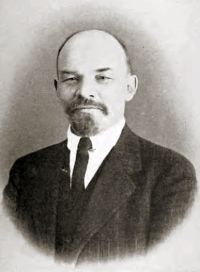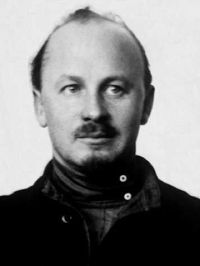
Nikolai Ivanovich Bukharin

Biographical details

Portrait of Nikolai Ivanovich Bukharin Nikolai Ivanovich Bukharin Programme of the World Revolution (1920)

Thousands of workers cultivate land that does not belong to them, land owned by landowning capitalists. Here everything is organised on the plan of a large factory: there are tens and hundreds of electric ploughs, reaping machines, reaping and sheaf-binding machines, at which hired slaves toil from dawn till night. And just as at the factory, they work not for themselves, but for a master. That is because land itself as well as the seeds and machines, in a word, everything, except the working hands, is the private property of the capitalist master.
Source: Wikisource

Portrait of Nikolai Ivanovich Bukharin Nikolai Ivanovich Bukharin Programme of the World Revolution (1920)

Dictatorship means a power of iron, a power that shows no mercy to its foes. The dictatorship of the working class means the governing power of the working class, which is to stifle the bourgeoisie and the landowners. Such a government of the workers can only arise out of a Socialist revolution of the working class, which destroys the bourgeois State and bourgeois power, and builds up a new State on its ruins—that of the proletariat itself and of the poorest elements supporting it.
Source: Wikisource

Portrait of Nikolai Ivanovich Bukharin Nikolai Ivanovich Bukharin Programme of the World Revolution (1920)

But once they join a union it is natural that they are compelled to form a joint board of management for the formerly separate enterprises and to keep a strict account of all the goods produced, to organise the distribution of orders, in a word, they are compelled to organise production. Not for the people, not for the sake of the buyer's advantage. Oh, no! Only for their own profits and gains, and for tho sake of over-charging the worker and fleecing the buyer: that is the real purpose for which capitalists form their unions.
Source: Wikisource

Get perspective with Kwize: daily news enlightened by great literature