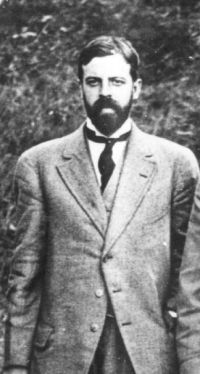
“ In general the reply is, Race. But race explains nothing; for it remains to discover what has produced the diversity of races. Race is not a cause; it is a consequence. The first and decisive cause of the diversity of peoples and of the diversity of races is the road that the peoples have followed. It is the road that creates the race, and that creates the social type." And he goes further: "If the history of humanity were to recommence, and the surface of the globe had not been transformed, this history would repeat itself in its main lines. ”
R. R. Marett
Biographical details
Robert Ranulph Marett (1866–1943) was a British ethnologist and a leading figure of the British Evolutionary School of cultural anthropology, founded by Edward Burnett Tylor. His work focused on the anthropology of religion, where he extended Tylor’s animistic theory by introducing the concept of mana to explain spiritual beliefs in early societies. A professor at Oxford University, Marett’s writings, particularly in Anthropology, examined how custom and imagination shape human culture, highlighting the interaction between tradition and rational advancement.
His meticulous comparative methods and emphasis on the evolutionary roots of religion influenced generations of scholars, while his interdisciplinary approach connected anthropology, philosophy, and the study of ancient civilizations. Marett’s legacy lies in his argument that cultural evolution is driven not by race, but by the paths societies collectively create.
Quotes by R. R. Marett
“ The religion of a savage is part of his custom; nay, rather, it is his whole custom so far as it appears sacred—so far as it coerces him by way of his imagination. Between him and the unknown stands nothing but his custom. It is his all-in-all, his stand-by, his faith and his hope. Being thus the sole source of his confidence, his custom, so far as his imagination plays about it, becomes his "luck." We may say that any and every custom, in so far as it is regarded as lucky, is a religious rite. ”
“ The environment is as it were the enemy. We are out to conquer and enslave it. Our inheritance, on the other hand, is the impelling force we obey in setting forth to fight; it tingles in our blood, and nerves the muscles of our arm. This force of heredity, however, abstractly considered, is blind. Yet, corporately and individually, we fight with eyes that see. This supervening faculty, then, of utilizing the light of experience represents a third element in the situation; and, from the standpoint of man's desire to know himself, the supreme element. ”
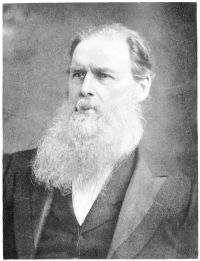
“ How to break through "the cake of custom," as Bagehot has called it, is the hardest lesson that humanity has ever had to learn. Customs have often been broken up by the clashing of different societies; but in that case they merely crystallize again into new shapes. But to break through custom by the sheer force of reflection, and so to make rational progress possible, was the intellectual feat of one people, the ancient Greeks; and it is at least highly doubtful if, without their leadership, a progressive civilization would have existed to-day. ”
“ Now constructive imagination is the queen of those mental functions which meet in what we loosely term "thought"; and imagination is ever most active where, on the outer fringe of the mind's routine work, our inarticulate questionings radiate into the unknown. When the genius has his vision, almost invariably, among the ruder peoples, it is accepted by himself and his society as something supernormal and sacred, whether its fruit be an act of leadership or an edict, a practical invention or a work of art, a story of the past or a prophecy, a cure or a devastating curse. ”
“ Moreover, I think that we may easily exaggerate the differences in culture and, more especially, in religious insight and understanding that exist between the ruder peoples and ourselves. In view of our common hope, and our common want of knowledge, I would rather identify religion with a general striving of humanity than with the exclusive pretension of any one people or sect. Who knows, for instance, the final truth about what happens to the soul at death? I am quite ready to admit, indeed, that some of us can see a little farther into a brick wall than, say, Neanderthal man. ”
“ If I were called upon to exhibit the chief determinants of human life as a single chain of causes and effects—a simplification of the historical problem, I may say at once, which I should never dream of putting forward except as a convenient fiction, a device for making research easier by providing it with a central line—I should do it thus. Working backwards, I should say that culture depends on social organization; social organization on numbers; numbers on food; and food on invention. ”
“ It is necessary to my argument to convey the impression that the essentials of religion are present in these apparently godless observances of the ruder peoples. They arise directly out of custom—in this case the hunting custom. Their immediate design is to provide these people with their daily bread. Yet their appeal to the imagination—which in religion, as in science, art, and philosophy, is the impulse that presides over all progress, all creative evolution—is such that the food-quest is charged with new and deeper meaning. ”
“ Hence the conservatism inherent in religion. "Nothing," says Robertson Smith, "appeals so strongly as religion to the conservative instincts." "The history of religion," once exclaimed Dr. Frazer, "is a long attempt to reconcile old custom with new reason, to find a sound theory for absurd practice." At first sight one is apt to see nothing but the absurdities in savage custom and religion. After all, these are what strike us most, being the curiosity-hunters that we all are. But savage custom and religion must be taken as a whole, the bad side with the good. ”
“ Is it driving at the universal equality and brotherhood of man? Or, on the contrary, does it hint at the need of a stern system of eugenics? I offer nothing in the way of a practical suggestion. I am merely trying to show that, considered anthropologically—that is to say, in terms of pure theory—race or breed remains something which we cannot at present isolate, though we believe it to be there. Practice, meanwhile, must wait on theory; mere prejudices, bad as they are, are hardly worse guides to action than premature exploitations of science. ”
“ Situation, race and culture—to reduce it to a problem of three terms only—which of the three, if any, in the long run controls the rest? Remember that the anthropologist is trying to be the historian of long perspective. History which counts by years, proto-history which counts by centuries, pre-history which counts by millenniums—he seeks to embrace them all. He sees the English in India, on the one hand, and in Australia on the other. Will the one invasion prove an incident, he asks, and the other an event, as judged by a history of long perspective? ”
“ Yet when I find facts that appear to prove that Neanderthal man buried his dead with ceremony, and to the best of his means equipped them for a future life, I openly confess that I would rather stretch out a hand across the ages and greet him as my brother and fellow-pilgrim than throw in my lot with the self-righteous folk who seem to imagine this world and the next to have been created for their exclusive benefit.Now the trouble with anthropologists is to find a working definition of religion on which they can agree. Christianity is religion, all would have to admit. ”
“ At the same time, being men, we all find it hard, nay impossible, to study mankind impartially. When we say that we are going to play the historian, or the anthropologist, and to put aside for the time being all consideration of the moral of the story we seek to unfold, we are merely undertaking to be as fair all round as we can. Willy nilly, however, we are sure to colour our history, to the extent, at any rate, of taking a hopeful or a gloomy view of man's past achievements, as bearing on his present condition and his future prospects. ”
“ In theory, the social rules of primitive society are like "the law of the Medes and Persians which altereth not."This absolute respect for custom has its good and its bad sides. On the one hand, it supplies the element of discipline; without which any society is bound soon to fall to pieces. We are apt to think of the savage as a freakish creature, all moods—at one moment a friend, at the next moment a fiend. ”
“ What is to be the test of mind? Indeed, mind and plasticity are almost the same thing. Race, therefore, as being the stiffening in the evolution of life, might seem by its very nature opposed to mind as a limiting or obstructing force. Are we, then, going to return to the old pre-scientific notion of soul as something alien to body, and thereby simply clogged, thwarted and dragged down? That would never do. Body and soul are, for the working purposes of science, to be conceived as in perfect accord, as co-helpers in the work of life, and as such subject to a common development. ”
“ Let the level-headed anthropologist beware, however, lest he put all his eggs into one basket. Let him seek to give each factor in the problem its due. Race must count for something, or why do not the other animals take a leaf out of our book and build up rival civilizations on suitable sites? Why do men herd cattle, instead of the cattle herding the men? We are rational beings, in other words, because we have it in us to be rational beings. Again, culture, with the intelligence and choice it involves, counts for something too. ”
“ Well, the doctored sort of history is not science, nor anthropology, I am ready to admit. But now let us listen to another and a more serious objection to the claim of history to be science. Science, it will be said by many earnest men of science, aims at discovering laws that are clean out of time. History, on the other hand, aims at no more than the generalized description of one or another phase of a time-process. To this it may be replied that physics, and physics only, answers to this altogether too narrow conception of science. ”
“ It is no easy task to keep legal and religious penalties or rewards out of the reckoning, when trying to frame an estimate of what the notions of right and wrong, prevalent in a given society, amount to in themselves; nevertheless, it is worth doing, and valuable collections of material exist to aid the work. The facts about education, which even amongst rude peoples is often carried on far into manhood, throw much light on this problem. So do the moralizings embodied the traditional lore of the folk—the proverbs, the beast-fables, the stories of heroes. ”
“ Let him, for instance, travel back in thought to the Europe of many thousands of years ago, shivering under the effects of the great ice-age, yet populous with human beings so far like ourselves that they were alive to the advantage of a good fire, made handy tools out of stone and wood and bone, painted animals on the walls of their caves, or engraved them on mammoth-ivory, far more skilfully than most of us could do now, and buried their dead in a ceremonial way that points to a belief in a future life. ”
“ They bring to bear on the need of the hour all the promise of that miraculous past, which not only cradled the race, but still yields it the stock of reincarnated soul-force that enables it to survive. If, then, these rites are part and parcel of mere magic, most, or all, of what the world knows as religion must be mere magic. But it is better for anthropology to call things by the names that they are known by in the world of men—that is, in the wider world, not in some corner or coterie of it. ”
“ Indeed, so little do we know about the conditions attending the discovery of the arts of life that gave humanity its all-important start—the making of fire, the taming of animals, the sowing of plants, and so on—that it is only too easy to misread our map. We know almost nothing of those movements of peoples, in the course of which a given art was brought from one part of the world to another. ”
“ Kinship has dethroned itself by its very success. Thanks to the organizing power of kinship, primitive society has grown, and by growing has stretched the birth-tie until it snaps. Some relationships become distant in a local and territorial sense, and thereupon they cease to count. My duty towards my kin passes into my duty towards my neighbour.Reasons of space make it impossible to survey the further developments to which social organization is subject under the sway of locality. ”
“ How do we anthropologists propose to combat this tendency? By working away at our subject, and persuading people to have a look at our results. Once people take up anthropology, they may be trusted not to drop it again. It is like learning to sleep with your window open. What could be more stupefying than to shut yourself up in a closet and swallow your own gas? But is it any less stupefying to shut yourself up within the last few thousand years of the history of your own corner of the world, and suck in the stale atmosphere of its own self-generated prejudices? ”
“ Every type of association, in a way, has its law, whereby its members are constrained to fulfil a certain set of obligations. Thus our student will pass on straight from the forms of society to the most essential of their functions. The fact that, amongst the less civilized peoples, the law is uncodified and merely customary, whilst the machinery for enforcing it is, though generally effective enough, yet often highly indefinite and occasional, makes the tracing of the growth of legal institutions from their rudiments no less vitally important, though it makes it none the easier. ”
“ The grading of ages is frequently most elaborate, and each batch mounts the social ladder step by step. Just as, at the university, each year has apportioned to it by public opinion the things it may do and the things it may not do, whilst, later on, the bachelor, the master, and the doctor stand each a degree higher in respect of academic rank; so in darkest Australia, from youth up to middle age at least, a man will normally undergo a progressive initiation into the secrets of life, accompanied by a steady widening in the sphere of his social duties and rights. ”
“ To say that religion works by suggestion is only to say that it works through the imagination. There is good make-believe as well as bad; and one must necessarily imagine and make-believe in order to will. ”
“ This same configuration, considered in connection with the flora and fauna that are favoured by the climate, goes far to explain that discontinuity of the political life which encouraged independence whilst it prevented self-sufficiency. The forest-belt, owing to the dry summer, lay towards the snow-line, and below it a scrub-belt, yielding poor hunting, drove men to grow their corn and olives and vines in the least swampy of the lowlands, scattered like mere oases amongst the hills and promontories. ”
“ But do use and disuse make any difference to the race? That is the theoretical question which, above all others, complicates and hampers our present-day attempts to understand heredity.In technical language, this is the problem of use-inheritance, otherwise known as the inheritance of acquired characters. It is apt to seem obvious to the plain man that the effects of use and disuse are transmitted to offspring. So, too, thought Lamarck, who half a century before Darwin propounded a theory of the origin of species that was equally evolutionary in its way. ”
“ Race, then, stands for the stiffening in the evolutionary process. Just up to what point it goes in any given case we probably can never quite tell. Yet, if we could think our way anywhere near to that point in regard to man, I doubt not that we should eventually succeed in forging a fresh instrument for controlling the destinies of our species, an instrument perhaps more powerful than education itself—I mean, eugenics, the art of improving the human breed. ”
“ If, again, every one habitually obeys the social rules, law ceases to exist, because it is unnecessary. Now, one reason why it is hard to find any law in primitive society is because, in a general way of speaking, no one dreams of breaking the social rules.Custom is king, nay tyrant, in primitive society. When Captain Cook asked the chiefs of Tahiti why they ate apart and alone, they simply replied, "Because it is right." And so it always is with the ruder peoples. "'Tis the custom, and there's an end on't" is their notion of a sufficient reason in politics and ethics alike. ”
“ Sheer want of skill, we may suspect, leads him to construct what is more like the symbol of something thought than the portrait of something seen. And so we wander farther and farther into the gloomy depths, adding ever new specimens to our pre-historic menagerie, including the rare find of a bird that looks uncommonly like the penguin. Mind, by the way, that you do not fall into that round hole in the floor. It is enormously deep; and more than forty cave-bears have left their skeletons at the bottom, amongst which your skeleton would be a little out of place. ”
“ The primitive man reads himself into these things, which, according to our science, are without life or personality. He thinks that they have a different kind of body, but the same kind of feelings and motives. But this is not necessarily to think that they are capable of giving off a phantasm, as a man does when his soul temporarily leaves him, or when after death his soul becomes a ghost. There need be nothing ghost-like about the sun, whether it is imagined as a shining orb, or as a shining being of human shape to whom the orb belongs. ”
“ Savage thought, then, is not able, because it does not try, to break up custom into separate pieces. Rather it plays round the edges of custom; religion especially, with its suggestion of the general sacredness of custom, helping it to do so. There is found in primitive society plenty of vague speculation that seeks to justify the existing. But to take the machine to bits in order to put it together differently is out of the reach of a type of intelligence which, though competent to grapple with details, takes its principles for granted. ”
“ As regards eugenics, there is no doubt that a vast and persistent elimination of lives goes on even in civilized countries. It has been calculated that, of every hundred English born alive, fifty do not survive to breed, and, of the remainder, half produce three-quarters of the next generation. But is the elimination selective? We can hardly doubt that it is to some extent. But what its results are—whether it mainly favours immunity from certain diseases, or the capacity for a sedentary life in a town atmosphere, or intelligence and capacity for social service—is largely matter of guesswork. ”