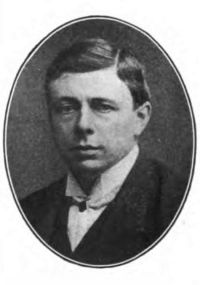
Thomas Humphry Ward

Biographical details

Thomas Humphry Ward Dictionary of National Biography (1901)

This is as much as to say that Burne-Jones, that rare modern product of Celtic romance in matters of feeling and of the Botticellian tradition in art, only appeals in all his strength and fulness to people of a certain type of mind and education; but to them he appeals as no other modern painter has done—to them his name is the symbol of all that is most beautiful and most permanent in poetry and art.
Source: Wikisource

Thomas Humphry Ward Dictionary of National Biography (1901)

No artist of the time has surpassed him as a master of intricate line, or has studied more curiously and successfully the inmost secrets of colour. Of the first, examples may be seen in all his stained-glass windows, in such works as the Virgil drawings, and in pictures like ‘Love among the Ruins;’ of the latter we have instances of extraordinary subtlety in the Pygmalion series, and of extraordinary richness and depth in the ‘Chant d’ Amour’ and ‘King Cophetua.’ It is surely safe to say that gifts like these of themselves entitle their possessor to be called a great painter.
Source: Wikisource

Thomas Humphry Ward Dictionary of National Biography… (1889)

But I never was more clear in my life as to the necessity of a duty.' The essence of the bill was the clause which enabled the Irish government to imprisonment without trial 'on reasonable suspicion' of crime, outrage, or conspiracy. In consequence of this clause within a short time some nine hundred men were imprisoned, most of them of the class whom Forster had described as 'village ruffians,' who were really well known to be guilty of crime or planning crime, but whom no jury of their neighbours dared to convict.
Source: Wikisource

Get perspective with Kwize: daily news enlightened by great literature