Summary

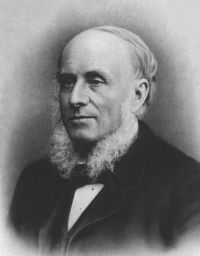
Portrait of Alexander Bain Alexander Bain The Conservation of Energy — Appendix II. (1874)

Walking in the country in spring, our mind is occupied with the foliage, the bloom, and the grassy meads, all purely objective things; we are suddenly and strongly arrested by the odor of the May-blossom; we give way for a moment to the sensation of sweetness: for that moment the objective regards cease; we think of nothing extended; we are in a state where extension has no footing; there is, to us, place no longer.
Source: Wikisource

Portrait of Alexander Bain Alexander Bain The Conservation of Energy — Appendix II. (1874)

A great mind may be great in many things, because the same kind of power may have numerous applications. The scientific mind of a high order, is also the practical mind; it is the essence of reason in every mode of its manifestation—the true philosopher in conduct as well as in knowledge. On such a mind also, a certain amount of artistic culture may be superinduced; its powers of acquisition may be extended so far. But the spontaneous, exuberant, imaginative flow, the artistic nature at the core, never was, cannot be, included in the same individual. Aristotle could not be also a tragic poet
Source: Wikisource

Portrait of Alexander Bain Alexander Bain The Conservation of Energy — Appendix II. (1874)

When, therefore, we talk of incorporating mind with brain, we must be held as speaking under an important reserve or qualification. Asserting the union in the strongest manner, we must yet deprive it of the almost invincible association of union in place. An extended organism is the condition of our passing into a state where there is no extension. A human being is an extended and material thing, attached to which is the power of becoming alive to feeling and thought, the extreme remove from all that is material
Source: Wikisource

Get perspective with Kwize: daily news enlightened by great literature