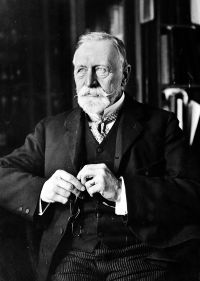
Thomas Clifford Allbutt

Thomas Clifford Allbutt

Summary

Portrait of Thomas Clifford Allbutt Thomas Clifford Allbutt Popular Science Monthly (1878)

Schubert died at the age of thirty-one, Mendelssohn at the age of thirty-six, Mozart at the age of thirty-six—these, like many other masters prodigiously, even wastefully, productive in the days of their spring, were worn out when their transcendent genius should have borne its harvest. Even in music we find the most lustrous and immortal works were the works not of youth, nor of early manhood, but of riper years; of masters who were endowed with inexhaustible well-springs of force in body and brain, or who had husbanded their stores in earlier days.
Source: Wikisource

Portrait of Thomas Clifford Allbutt Thomas Clifford Allbutt Popular Science Monthly (1878)

It is easy to forget how the child and the youth drink in knowledge and virtue imperceptibly as the green leaves spread themselves and feed upon the air. By an equable tide flowing in from every side—by the channels of the senses, by the universal surface of the skin—the inner chambers of the nervous system are expanded, and stored with riches for future profusion. The mischief done daily by calling upon the unripe brain for productive work, for original composition, [3] for competitive examinations, for teaching, and even for preaching, is calamitous, and the evil is increasing.
Source: Wikisource

Portrait of Thomas Clifford Allbutt Thomas Clifford Allbutt Popular Science Monthly (1878)

Men of high quality do not seem, even generally, to have sprung, like Pallas, from the brain of their fathers, but conceived in the dark womb of time to have lighted upon the world in companies. How then education, by taking thought unto itself, is to breed or make men of great initiative is a hard question. It seems clear, however, that it is not to be done simply by the wedding of brain to brain, but that for its generation may be needed some barbarous and even gross admixture, some strange coition between the sons of God and the daughters of men.
Source: Wikisource

Get perspective with Kwize: daily news enlightened by great literature