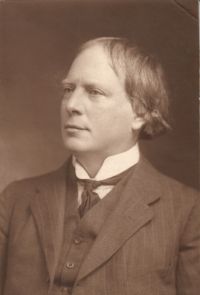
Arthur Machen

Arthur Machen

Summary

Portrait of Arthur Machen Arthur Machen The Angels of Mons (1915)

The English artillery was good, but there was not nearly enough of it; it was being steadily battered into scrap iron.
There comes a moment in a storm at sea when people say to one another, "It is at its worst; it can blow no harder," and then there is a blast ten times more fierce than any before it. So it was in these British trenches.
There were no stouter hearts in the whole world than the hearts of these men; but even they were appalled as this seven-times-heated hell of the German cannonade fell upon them and overwhelmed them and destroyed them.
Source: Wikisource

Portrait of Arthur Machen Arthur Machen The Angels of Mons (1915)

The tale as it stands is, I think, a far better piece of craft than "The Bowmen," but the tale that came to me as the blue incense floated above the Gospel Book on the desk between the tapers: that indeed was a noble story—like all the stories that never get written. I conceived the dead men coming up through the flames and in the flames, and being welcomed in the Eternal Tavern with songs and flowing cups and everlasting mirth. But every man is the child of his age, however much he may hate it; and our popular religion has long determined that jollity is wicked.
Source: Wikisource

Portrait of Arthur Machen Arthur Machen The Angels of Mons (1915)

The soldier's face worked and twitched and twisted itself into a sort of grin, and he sat grinding his teeth and staring at the man in the black robe. He was silent for a little. And then he found his voice, and the oaths rolled terrible, thundering from him, as he cursed that murderous wretch, and bade him go down and burn for ever in hell. And the tears were raining down his face, and they choked him at last.
"I beg your pardon, sir, I'm sure," he said, "especially you being a minister of some kind, I suppose; but I can't help it. He was such a dear little man."
Source: Wikisource

Get perspective with Kwize: daily news enlightened by great literature