Summary

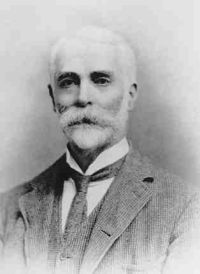
Portrait of Bernard Bosanquet Bernard Bosanquet The Distinction between Mind and Its Objects (1913)

When I am told that I must not confuse an idea as a mental act with an idea as a content of sense or an object of thought, I think I understand what is meant. When I am told that the content of sense or object of thought may therefore be something quite non-mental or even physical, I am, to speak plainly, inclined to feel myself the victim of sophistry. It seems obvious at first sight that a blue is as psychical as a pain or an inferential transition.
Source: Wikisource

Portrait of Bernard Bosanquet Bernard Bosanquet The Distinction between Mind and Its Objects (1913)

Or what gain for mentalism is there in treating knowledge as a part of your mind, when you must say in the same breath that it is only knowledge in virtue of the reality that appears in it? The double nature of knowledge, as the continuity of mind and reality, is the ultimate truth to insist on. The distinction between reality as it is and as we apprehend it is after all ineradicable, and either statement fully and equally insists on it.
Source: Wikisource

Portrait of Bernard Bosanquet Bernard Bosanquet The Distinction between Mind and Its Objects (1913)

There appears to be indeed a twentieth century realism which cuts down physical reality to the imperceptibles of science—something scarcely belonging even to the world of primary qualities; but this is a half-theory of the Lockeian type, though it pushes abstraction one stage further than his. Our realist's doctrine of the physical world gives us a far fuller picture of the reality which is in principle the same for all and accessible to all. And moreover, as I said, all the modern realists, I think, agree in recognising the reality—whether as existence or as subsistence—of universals.
Source: Wikisource

Get perspective with Kwize: daily news enlightened by great literature