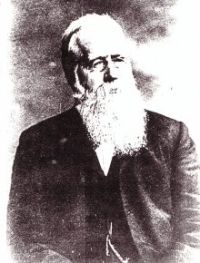
Andrew Seth Pringle-Pattison

Andrew Seth Pringle-Pattison

Summary

Portrait of Andrew Seth Pringle-Pattison Andrew Seth Pringle-Pattison The Philosophical Review (1892)

Though I press my hand against it, it is no more present in consciousness than is the friend on the other side of the globe whose image rises at the moment in my mind. There are in fact two worlds, and to that fundamental antithesis we return. To the one world belong, in Berkeley's language though not in Berkeley's sense, all the choir of heaven and furniture of the earth, to the other the thoughts and feelings of the individual who is consciously aware of this system of things in which he himself draws his breath and has his place.
Source: Wikisource

Portrait of Andrew Seth Pringle-Pattison Andrew Seth Pringle-Pattison The Philosophical Review (1892)

It is only for the psychologist, I say, that the investigation of this mechanism, as a mechanism, has an interest. To all the rest of mankind ideas or presentations are interesting only for the knowledge they give us of a reality beyond themselves. In point of fact, we never pause to consider them as what they are in themselves, — we treat them consistently as significant, as ideas of something, as representative or symbolic of a world of facts. Now it is from this latter point of view that epistemology considers ideas.
Source: Wikisource

Portrait of Andrew Seth Pringle-Pattison Andrew Seth Pringle-Pattison The Philosophical Review (1892)

Metaphysically, Idealism is opposed most ordinarily to Materialism; in the widest sense it is the opposite of what may be called the mechanical and atheistic view of the universe, whatever special form that may take. Is self-conscious thought with its ideal ends, — the True, the Beautiful, and the Good, — the self-realizing End that works in changes and makes it Evolution? or are these but the casual outcome of a mechanical system — a system in its ultimate essence indifferent to the results which in its gyrations it has unwittingly created and will as unwittingly destroy?
Source: Wikisource

Get perspective with Kwize: daily news enlightened by great literature