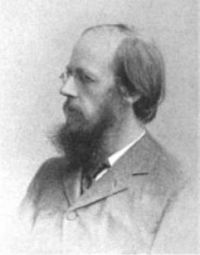
C. H. Herford

C. H. Herford

Summary

Portrait of C. H. Herford C. H. Herford Robert Browning

But it resembled more the joyous self-expansion of the Greek than the humility and self-abnegation of Christian love. Not the saintly ascetic nor the doer of good works, but the artist and the "lover," dominated his imagination when he wrote of Love; imbuing even God's love for the world with the joy of creation and the rapture of embrace. Aprile's infinite love for things impelled him to body them visibly forth. Deeper in Browning than his Christianity, and prior to it, lay his sense of immeasurable worth in all life, the poet's passion for being.
Source: Gutenberg

Portrait of C. H. Herford C. H. Herford Robert Browning

Abt Vogler and Rabbi ben Ezra are among the surest strongholds of his popular fame. Rabbi ben Ezra is a great song of life, bearing more fully perhaps than any other poem the burden of what he had to say to his generation, but lifted far above mere didacticism by the sustained glow in which ethical passion, and its imaginative splendour, indistinguishably blend. It is not for nothing that Browning put this loftiest utterance of all that was most strenuous in his own faith into the mouth of a member of the race which has beyond others known how to suffer and how to transfigure its suffering.
Source: Gutenberg

Portrait of C. H. Herford C. H. Herford Robert Browning

But they are full of an exuberant joy in life itself, as seen by a keen observer exempt from its harsher conditions, to whom all power and passion are a feast. He watches the angers, the malignities of men and women, as one might watch the quarrels of wild beasts, not cynically, but with the detached, as it were professional, interest of a born "fighter." The loftier hatred, which is a form of love,—the sublime hatred of a Dante, the tragic hatred of a Timon, even the unforgetting, self-consuming hatred of a Heathcliff,—did not now, or ever, engage his imagination.
Source: Gutenberg

Get perspective with Kwize: daily news enlightened by great literature