Summary

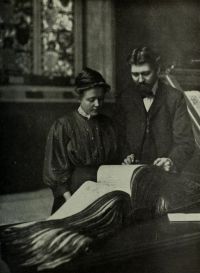
Portrait of Charles William Wallace Charles William Wallace Spider-webs in Verse: A Collection of Lyrics for Leisure Moments…

Nor is it different in man, Nature’s crown triumphant. In throes of pain or woe’s distress; in joys that iris happy tears; in sorrow’s mournful cadences; in laughter’s lilting melody; in peace and bounteous plenty, or in war and woeful famine; in love or hate, or life or death;—through all of man’s existence, there again is rhythm, Passion’s only melody, the music of the soul.
True, in the calms of life, although ’tis there, we little feel this rhythm,—this adjusting process by which man inevitably seeks to put the heart in tune while here for higher harmonies hereafter.
Source: Gutenberg

Portrait of Charles William Wallace Charles William Wallace Spider-webs in Verse: A Collection of Lyrics for Leisure Moments…

Poetry is indeed immortal and divine. It is the breath of heaven in the nostrils of man, the divinity of the human soul, the heart in full flower and bloom. To an honest, earnest, sincere soul, it is the wonder of the age, as it has ever been the wonder of all ages, that “men endowed with highest gifts, the vision and the faculty divine,” being divinely appointed as poet-priest of the Almighty, should pander to the prurient taste of a so-called practical public;—that they should sell the divinity within them for a strip of royal purple
Source: Gutenberg

Portrait of Charles William Wallace Charles William Wallace Spider-webs in Verse: A Collection of Lyrics for Leisure Moments…

We must plant the poem in the heart and give it time to grow, as we plant the flower-seeds in the soil. Finally, as the growing flower bursts into bloom, so must the poem blossom from the heart into its full perfection and beauty.
Fully to appreciate that flower’s beauty, it must not be dissected and analyzed by glass and scalpel. Did Burns go botanizing the daisy? Need we then go botanizing these flowers and blossoms of the soul of man? He who does it tries to force the intellect to do what the emotive nature, the beauty-loving part of man, alone can do.
Source: Gutenberg

Get perspective with Kwize: daily news enlightened by great literature