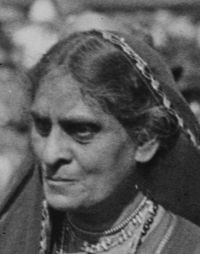
Cornelia Sorabji

Cornelia Sorabji

Summary

Portrait of Cornelia Sorabji Cornelia Sorabji Between the Twilights (1908)

It is unique, the attitude of a Hindu widow to her baby, unique in its beauty even among baby lovers. For the child represents more to these lonely ones than just a soft lovesome bit of flesh and laughter, of pretty pursed lips and rounded limbs, and great mop of soft black hair; more too than the gift of him they love. It is now in itself their passport to heaven, their token of the visit of Ged to the world: it is to be, presently, the saviour of those who have been closest to them in life—husband, father.
Source: Wikisource

Portrait of Cornelia Sorabji Cornelia Sorabji Between the Twilights (1908)

Hinduism, as we find it in India now, is but a tradition, of which the women keep the record. You may believe what you will, there are no articles of belief, there are idols for the ignorant, there is poetry, allegory, which you may interpret as you will; there are the beautiful songs of the Bhagavad Gita, there is the propitiation of evil spirits, there are the extortions of the ash-smeared; there is the ecstasy of the wife-worship of Life, of her husband, her child. There is the crown of self-sacrifice, and there is the demand of the stronger for the service of the weaker.
Source: Wikisource

Portrait of Cornelia Sorabji Cornelia Sorabji Between the Twilights (1908)

I sat with them, now on some spacious roof-tree, the sky for dome, now in some little box of a room, jealously guarded from light of day, or sight of man, or I went in and out with them to their Garden-houses, to their house of Gods, to the women’s courtyard, which respect for hornets’ lives had rendered dangerous to man! We were sitting in this same courtyard, my eye on the hornets’ nest in the pipal tree, when “the slave of Kali” told me the tale of Shoshti Devi, the protector of women and children.
Source: Wikisource

Get perspective with Kwize: daily news enlightened by great literature