Summary

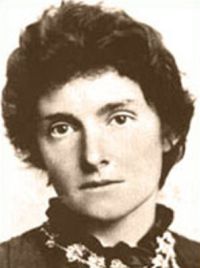
Portrait of E. Nesbit E. Nesbit Daphne in Fitzroy Street — XVI … (1909)

If Claud had not already been Daphne’s, that grateful smile of hers would have enslaved him.
So Doris was told that though no cats could be tailored from such a sky as that, life still held delights that rain could not spoil—and with a little rustle and fuss of preparation they went.
Daphne banged down the trap-door, threw herself on her bed, and thought. At least, she did not think— she surrendered herself to the physical memory of that moment when he had held her in his arm—the moment that went before she liked less. She would not look at it.
Source: Wikisource

Portrait of E. Nesbit E. Nesbit Daphne in Fitzroy Street — XVI … (1909)

To be cast out of one’s home by the plain speaking of one’s charwoman, to seek the refuge of a friend’s house only to be met by Russian plain speaking which is the plain speaking of children or angels—it was hard.
“I don’t know,” she found herself saying.
“No matter,” said Vorontzoff, eagerly, “if he does not love it is he who loses. For the love seek not to gain. The love seek to give. Give him all your heart, even though he know it never. It is giving, giving, giving that makes us near to God and all beautiful things.”
At that moment Daphne had an instant of clear perception.
Source: Wikisource

Portrait of E. Nesbit E. Nesbit Daphne in Fitzroy Street — XVI … (1909)

What is it that they shall understand?”
“Where it is that we have put our brothers,” said Daphne.
“Ah, that is well said.” The Russian came near to her. “Now you are one of us—you, too, are Socialist. You, too, understand that for us there can be no rest, no joy, no delight in life till we have overthrown the system that turns the light of all those lives to darkness.”
Source: Wikisource

Get perspective with Kwize: daily news enlightened by great literature