Summary

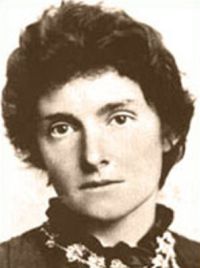
Portrait of E. Nesbit E. Nesbit Salome and the Head — 13. The Head (1909)

She had danced the Salome because the Management and Uncle Moses told her that she must dance it—and she had said that the wax head was “gruesome,” and “horrid,” and “creepy”; but she had felt these things only with the surface of her soul. Now in its very depths she felt that she was dancing to express the horrible desire of a woman for a dead man—and that the head that she held in her hands was the head of that man who in life had been desired, but whom now no one would ever any more desire.
Source: Wikisource

Portrait of E. Nesbit E. Nesbit Salome and the Head — 13. The Head (1909)

It may have been the texture of the head that drove this new-old thought home to her—it was, as Denny had said, of some material other than wax, a new composition. It was colder than wax, and heavier. Its surface yielded a little to her finger-tips. A dead man’s head, she thought, would feel just like that. She wished Denny had ordered another wax head—she was used to the wax head. This one was too heavy, and she didn’t like the feel of it. It was like the indiarubber stalks of artificial roses—only colder. She would have one like the other, after to-night.
Source: Wikisource

Portrait of E. Nesbit E. Nesbit Salome and the Head — 13. The Head (1909)

She and Denny drove to the Hilarity together.
“You’re sure the head’s all right?” she asked as they went. “It must be right tonight because this is your benefit—your music. Everything must be perfect.”
“I’m quite sure,” he said. “Would I fail you? What is Salome’s dance without the Head—the dance of love and horror? It is a better head than the last one, too. It’s made of something different: not wax—a new composition. It’s much more like life—like death, I mean. You’ll find it will inspire you, Princess. I wish I could see you dance it.
Source: Wikisource

Get perspective with Kwize: daily news enlightened by great literature