Summary

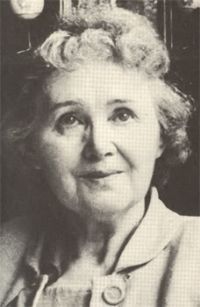
Portrait of Eugenia Smith Eugenia Smith Anastasia: The autobiography of H.I.H. the Grand Duchess Anastasia Nicholaevna of Russia (1963)

We became a world apart, detached from mundane things. Our bodies touched the ground, but our souls were far above in God’s world. Each day of persecution lifted us higher. We were helping Christ to carry His burden. We were marked to suffer, for Russia.
In our last days our privacy was so uncertain we never wholly undressed. The men were there with a repulsive curiosity. Instinctively we drew our skirts aside as one draws away from vermin. The new guards were not Russian at all. We heard every kind of language: Polish, Latvian, Hungarian, German and Yiddish.
Source: Gutenberg

Portrait of Eugenia Smith Eugenia Smith Anastasia: The autobiography of H.I.H. the Grand Duchess Anastasia Nicholaevna of Russia (1963)

Yurovsky was an assumed name. He and many others had changed their names so as to attribute their crimes to the Russian people. There is no doubt that many Russians were involved in crime but when the character of the revolution was revealed and much Russian blood had been spilled, then it was too late for those who supported the revolutionists to repent. The revolution was a foreign importation of Lenin and Trotsky—it destroyed the soul of Russia. They attacked the churches and smeared the altars with human blood, those altars that had stood there since Byzantine times.
Source: Gutenberg

Portrait of Eugenia Smith Eugenia Smith Anastasia: The autobiography of H.I.H. the Grand Duchess Anastasia Nicholaevna of Russia (1963)

Since Leonid was an orphan, Alexei’s ambition was to give him the best possible education and care for him as long as he would be in need.
Now that Nagorny was gone, Father himself carried Alexei down into the courtyard for his daily airing of thirty minutes. Father’s tenderness choked us afresh each time. All the time it was evident to us that Father was buckling under the weight of his own injured back. We had little heart to go out at all into a cheerful courtyard full of heartless men.
Source: Gutenberg

Get perspective with Kwize: daily news enlightened by great literature